

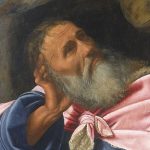
St. Elias is called by God into the solitude of the torrent Charith, east of the Jordan. There, in silence, penance, and contemplation, he becomes the great prophetic model of the solitary life and the spiritual father of the Carmelite tradition.
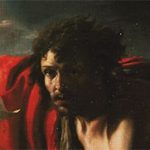
St. John the Baptist, in the spirit and power of Elias, lives a solitary and penitential life in the desert beyond the Jordan. His hidden life prepares the way for the coming of the Redeemer.
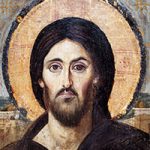
Jesus Christ, the Eternal Word made flesh, lives for many years in the silence of Nazareth, hidden in prayer, labor, and obedience with the Blessed Virgin Mary and St. Joseph. After His baptism, He is led by the Spirit into the desert, where He fasts for forty days and triumphs over the temptations of the devil.
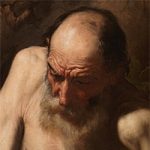
During the Decian persecution, St. Paul flees into the Egyptian desert and embraces the solitary life for more than ninety years. Shortly before his death, he is visited by St. Anthony, who venerates him as the first hermit.
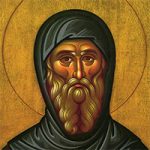
St. Anthony, moved by the Gospel counsel to sell all and follow Christ, gives away his possessions and withdraws into the desert. His life, written by St. Athanasius, inspires countless Christians to embrace the monastic life.
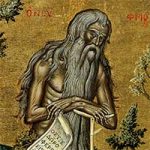
The monastic life spreads throughout Egypt, Syria, and Palestine. Around great fathers such as Macarius, Pachomius, Chariton, and Hilarion, the deserts are filled with hermits, monasteries, and small communities dedicated to prayer, penance, and divine contemplation.
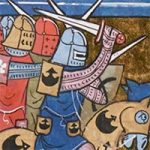
During the Crusades, Latin hermits settle on Mount Carmel near the spring of Elias. There they embrace a common eremitical observance, living in solitude, penance, and contemplation in imitation of St. Elias and the ancient Desert Fathers.
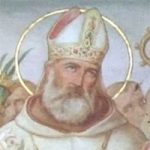
St. Albert, Patriarch of Jerusalem, writes the Carmelite Rule for the hermits of Mount Carmel. This Rule codifies their semi-eremitical and contemplative way of life and becomes the foundation of the Carmelite Order.
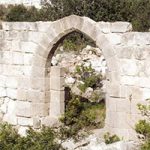
As wars and instability increase in the Holy Land, many of the hermits of Mount Carmel begin to migrate westward, establishing houses in Cyprus, Sicily, England, and eventually mainland Europe. Though some Carmelite presence remains in the East, the Order begins its transition into Europe.
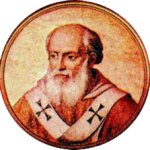
Pope Innocent IV adapts the Carmelite Rule to the Order’s new circumstances in Europe. The Carmelites are permitted to live in towns and cities, and over time the formerly eremitical Order takes on a more cenobitical and mendicant form of life.
With the fall of Acre and the capture of Mount Carmel, the last Carmelite houses in the Holy Land are destroyed. The hermits who remain are killed or driven out, and the Order’s physical connection with Mount Carmel is severed.
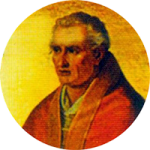
Pope Eugene IV further mitigates the Carmelite Rule.

St. Teresa of Jesus founds the monastery of St. Joseph in Ávila. This small house of prayer, poverty, silence, penance, and enclosure marks the beginning of the Discalced Carmelite Reform and a return to the original contemplative spirit of Carmel.
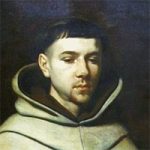
St. John of the Cross joins St. Teresa’s reform and helps found the first house of Discalced Carmelite friars at Duruelo. There the friars live a life of great austerity, solitude, and contemplation.
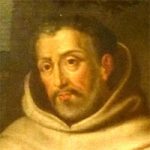
Venerable Thomas of Jesus, a brilliant student at Salamanca, is moved to tears while reading St. Teresa’s description of contemplative prayer. Soon afterward, he enters the Discalced Carmelites. As a young religious, his study of the Rule and early Carmelite sources awakens in him a desire to restore the Order’s original eremitical life.
The first Carmelite Holy Desert is founded at Bolarque in Spain according to the vision of Venerable Thomas of Jesus. It is designed as a secluded complex of hermitages around a central chapel, explicitly reviving the solitary and exclusively contemplative life of the first hermits of Mount Carmel.
The Holy Desert of San José de las Batuecas is founded in the mountains of the Sierra de Francia, between Old Castile and Extremadura. It soon becomes the best-known and most influential of the Spanish Deserts. Venerable Thomas of Jesus spends more than seven years there as a hermit and composes important works on prayer and contemplation.
The Constitutions of the Spanish Discalced Carmelites give formal structure to the Holy Deserts. They declare that the principal end of these houses is to help Holy Church through continual prayer, vigils, penance, and other good works.
In 1622, Pope Gregory XV canonizes St. Teresa of Ávila, solemnly declaring her a saint in the bull Omnipotens sermo Dei.
The Holy Deserts flourish throughout the Discalced Carmelite Reform. Deserts are founded in Spain and beyond, including Portugal, Italy, Mexico, and other regions. These houses preserve, within the reformed Order, the ancient eremitical spirit of Carmel.
The Carmelite Desert of Las Palmas becomes one of the notable Holy Deserts outside mainland Spain. Its remote setting expresses the same ideal of solitude, silence, prayer, penance, and withdrawal from the world.
Over time, the Holy Deserts form a network of Carmelite houses dedicated to solitude and contemplative renewal. In them, a small number of friars live permanently, while others come for periods of retreat, silence, and deeper prayer.
Secularization, political upheaval, anti-clerical legislation, wars, confiscations, and exclaustration laws lead to the closure or ruin of most of the Holy Deserts. By the early twentieth century, the ancient eremitical observance has nearly disappeared.
On August 24, 1926, Pope Pius XI issued the Papal Brief Ad Sanctissimi, officially declaring St. John of the Cross a Doctor of the Universal Church. Because of his profound spiritual writings, he was simultaneously honored with the traditional title of "Mystical Doctor" (Doctor Mysticus).
During the Spanish Civil War, St. María Maravillas de Jesús and her Discalced Carmelite nuns take refuge at Las Batuecas. Her presence there helps reconnect the historic Desert with living Carmelite observance.
Through the efforts of St. María Maravillas de Jesús, Las Batuecas is returned to the Discalced Carmelite Order. On November 28, 1950, eremitical life is formally restored there, making Las Batuecas once again a living witness to the solitary and contemplative spirit of Carmel.
The Discalced Hermits of Our Lady of Mount Carmel are canonically erected as a community dedicated to reviving the ancient eremitical and fully contemplative Carmelite charism. Drawing from the Primitive Rule of St. Albert, the first hermits of Mount Carmel, the Desert Fathers, and the tradition of the Holy Deserts, they strive to live a stable form of Carmelite eremitical life ordered wholly to prayer, penance, solitude, and divine contemplation.