The Holy Desert of
ST JOSEPH OF LAS BATUECAS
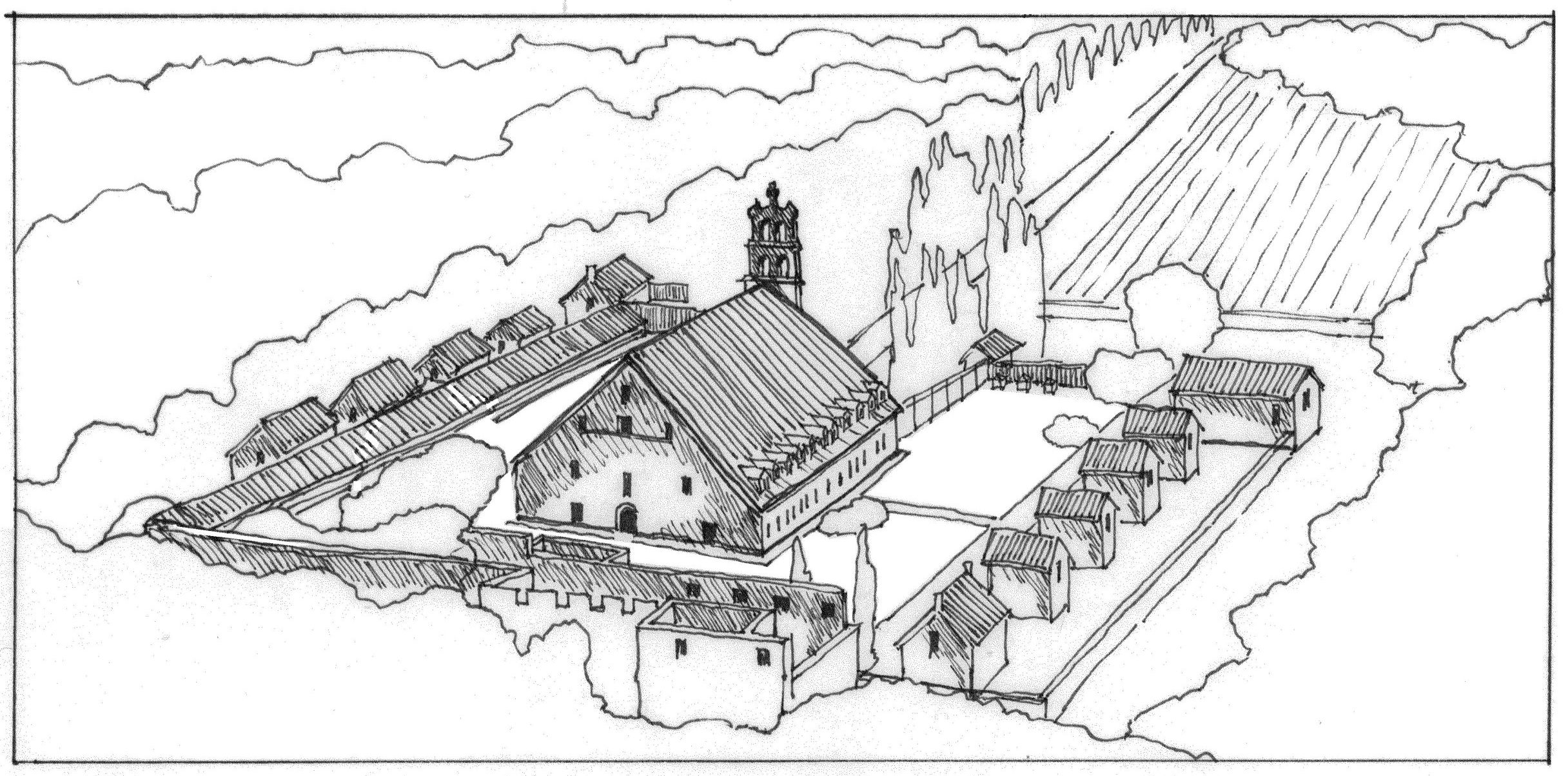
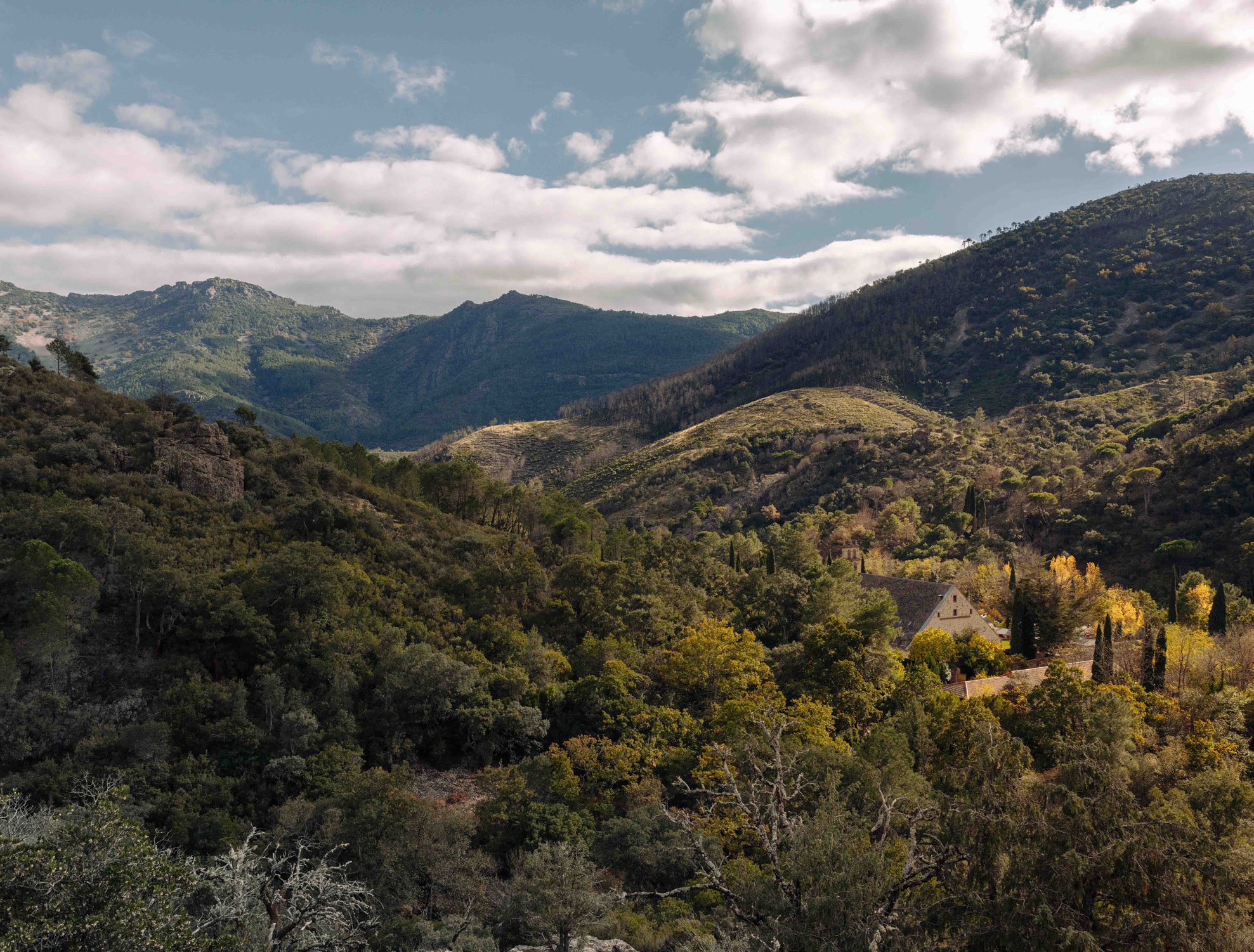
Nestled in a cleft of the rock valleys southwest of Salamanca, Las Batuecas is a bastion of peace at the edges of human habitation. Kept cool by the Batuecas river and the shadows cast by the steep profile of the surrounding mountains, the monastery at Las Batuecas was a haven for those seeking the peace which the world cannot give.
Testimony of its Ancient Fervor
From The Holy Deserts of the Discalced Carmelites by Friar Bruno Mary of the Holy Cross, O.C.D. (Benedict Zimmerman)
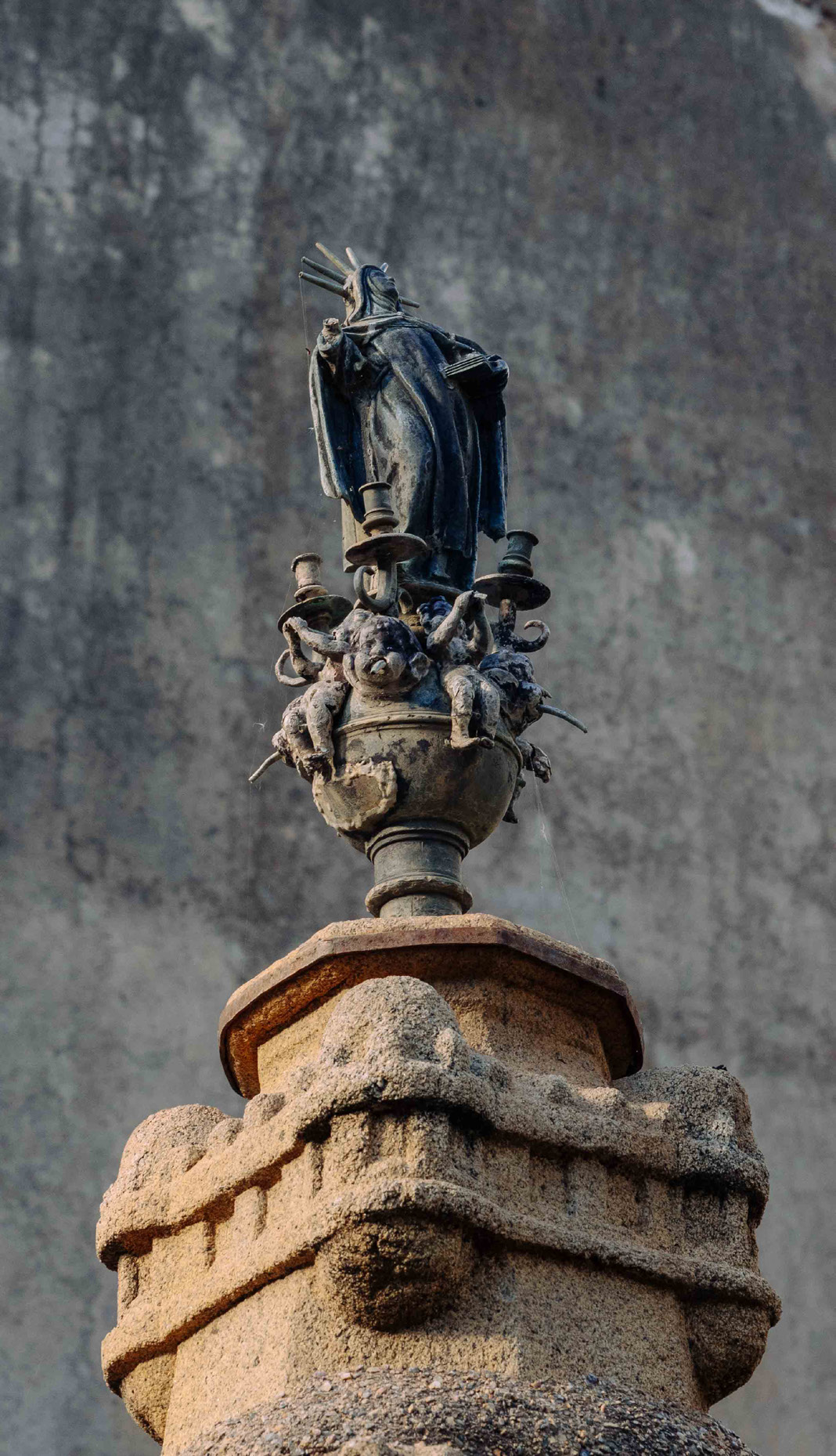
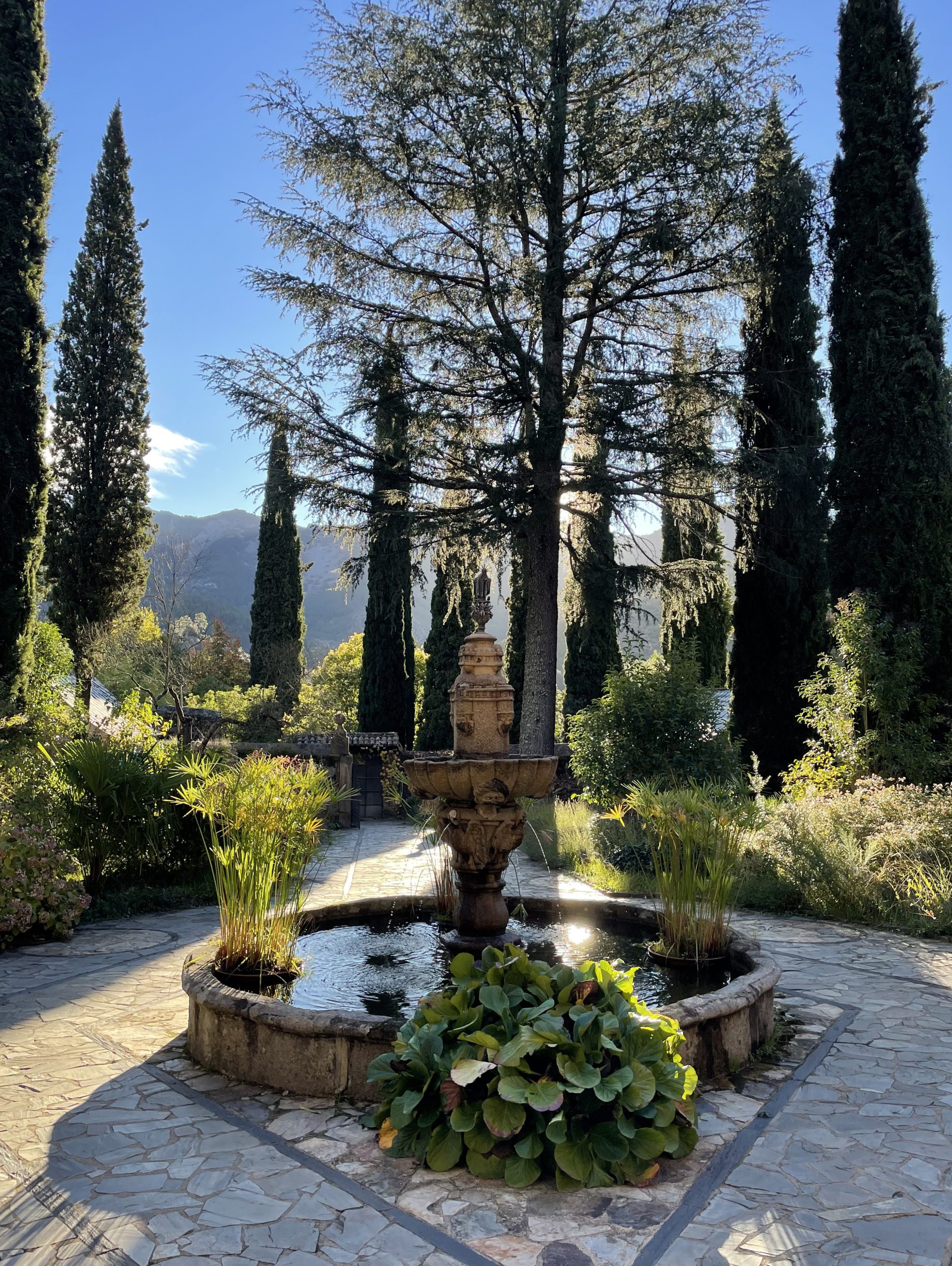
A statuette of St. Teresa crowns the central courtyard fountain at Las Batuecas, enshrining her who won access to the heights of contemplation and love through cooperation with Divine Grace, who now dwells in the mansions of the Lord forever.
“When in September of the year 1600, Father Thomas was elected Definitor General, he had the consolation of transporting the Blessed Sacrament to the new church and thus solemnly inaugurating the Desert. They had chosen with great care the 24 religious who were to make up the spiritual structure once the material structure had been happily completed. The zeal of these first hermits was such that the Superiors often had to keep them from the limits of discretion with great effort. Other than the testimony of Antoine de Yepes of which we quoted a few words, we also have the testimony of the Dominican Master John of the Puente who spent some time at Las Batuecas in the month of September 1609 and eloquently recounted his experiences and observations.
Speaking of the hermits’ manual labor, he explains that each carried from time to time to the Superior the fruit of his labor. One made sandals, another mended robes, a third was in charge of laundry, others made crucifixes and other objects of devotion from cork, which were presented to the benefactors of the monastery, who received them as if they were made of gold or covered in precious stones.
Father Thomas was elected Prior of Las Batuecas in 1604 and soon the anchoritic life developed so much that probably nothing like it had been seen since the patriarchs of the desert of Thebes. The Chronicler gives examples of the heroic obedience of our hermits.
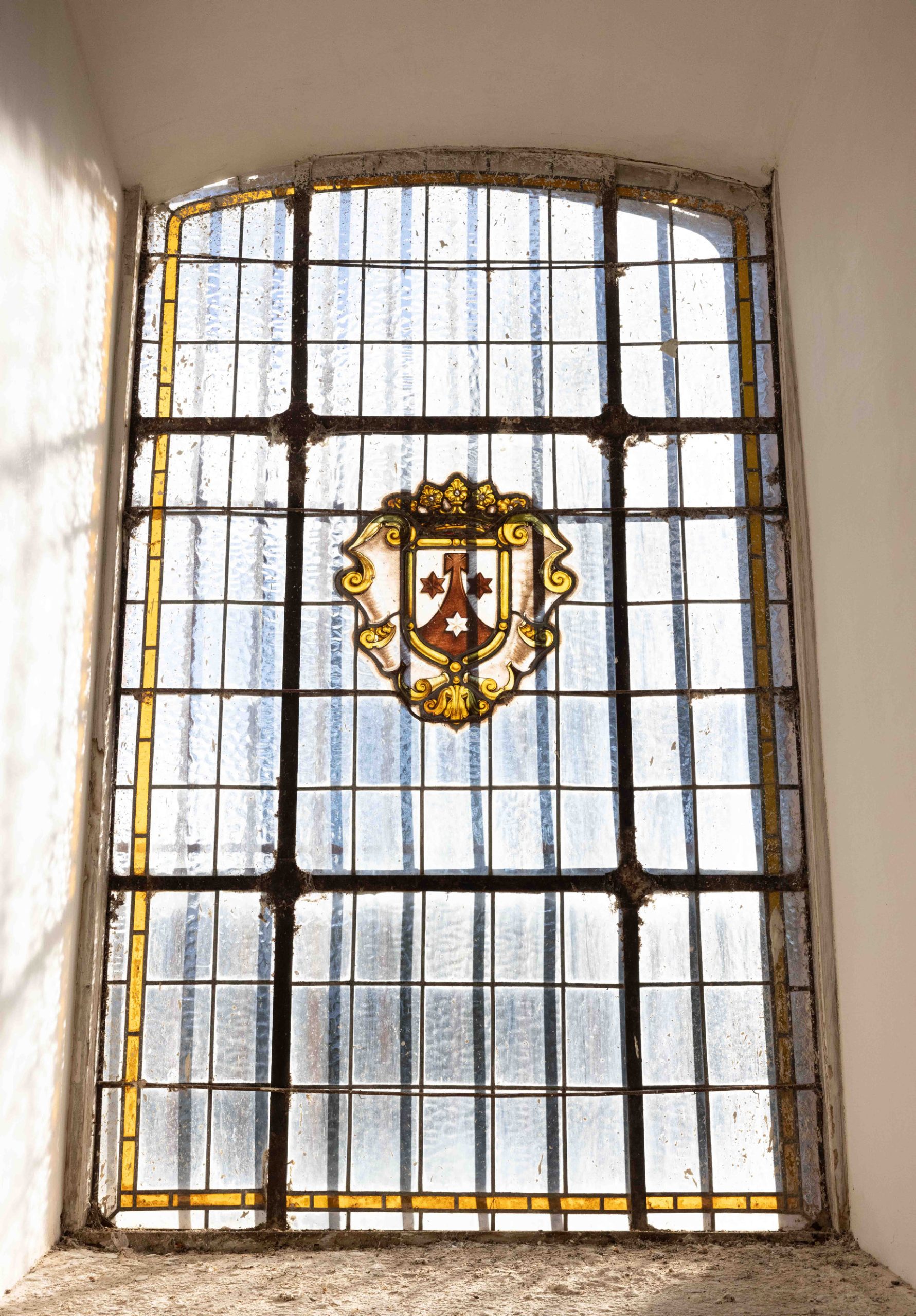
Most of the light in the nave comes through the large, clear glass window on the front facade, which faces East.
Another time, the rain had turned the stream into a torrent that threatened to wash away the footbridge leading to the remote hermitages. A brother ran to the Prior to beg him to make the sign of the cross over the bridge, for several others had been removed and already the beams and planks of the bridge were tilting so much under the pressure of the waves that at every moment a collapse was expected. Father Thomas did what was asked of him. The workers noticed two men dressed in white that held the bridge and supported it from opposite sides. They took them at first for hermits but then remembered that the hermitages were not inhabited at that time of year. The blessing of the venerable priest had a supernatural effect, as the bridge of stone outside of the cloister was taken away by the waves, tree trunks floated, while the frail bridge of planks stayed intact.
Abbreviated Timeline
Setting and Architecture
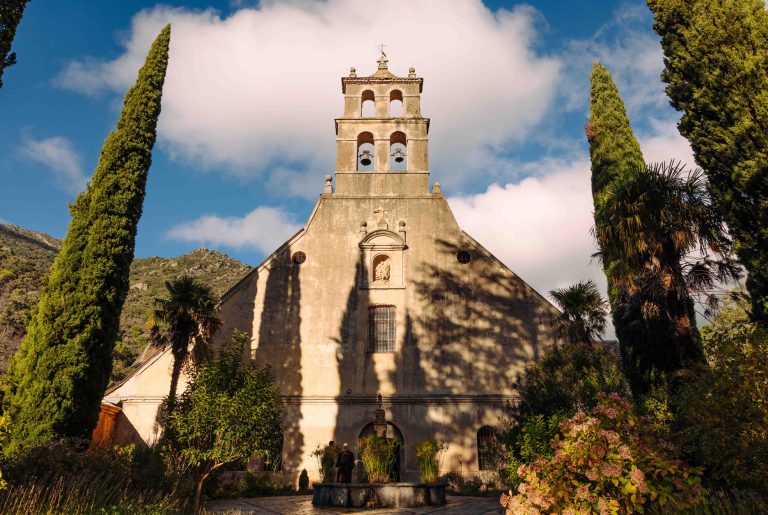
Facade of Central Monastic Building
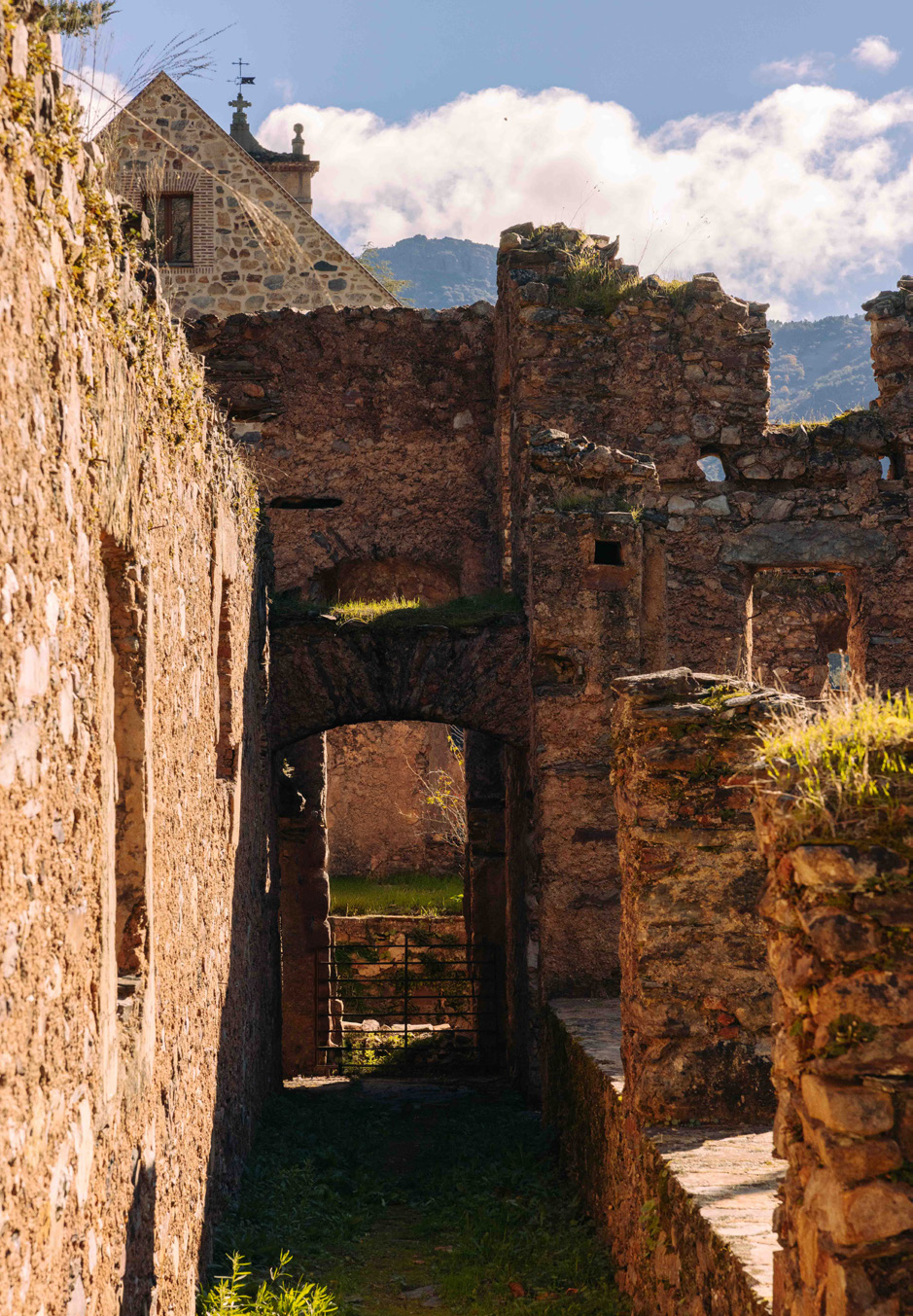
The Holy Desert of Las Batuecas, despite its incredibly peaceful and beautiful surroundings, has been through as much destructive change during the tumultuous late modern era as many others, having been suppressed and abandoned and then destroyed by fire. However, in God’s providence, it was acquired and restored by Mother Mary of the Miracle of Jesus, who dwelt there only for a few years before it was reoccupied by Carmelite Fathers. Another restoration and renovation began in 2003 and has proceeded in various phases, bringing the complex of buildings to the state in which we find them now; a working monastery, albeit with substantial portions at the western rear left in their ruined state.
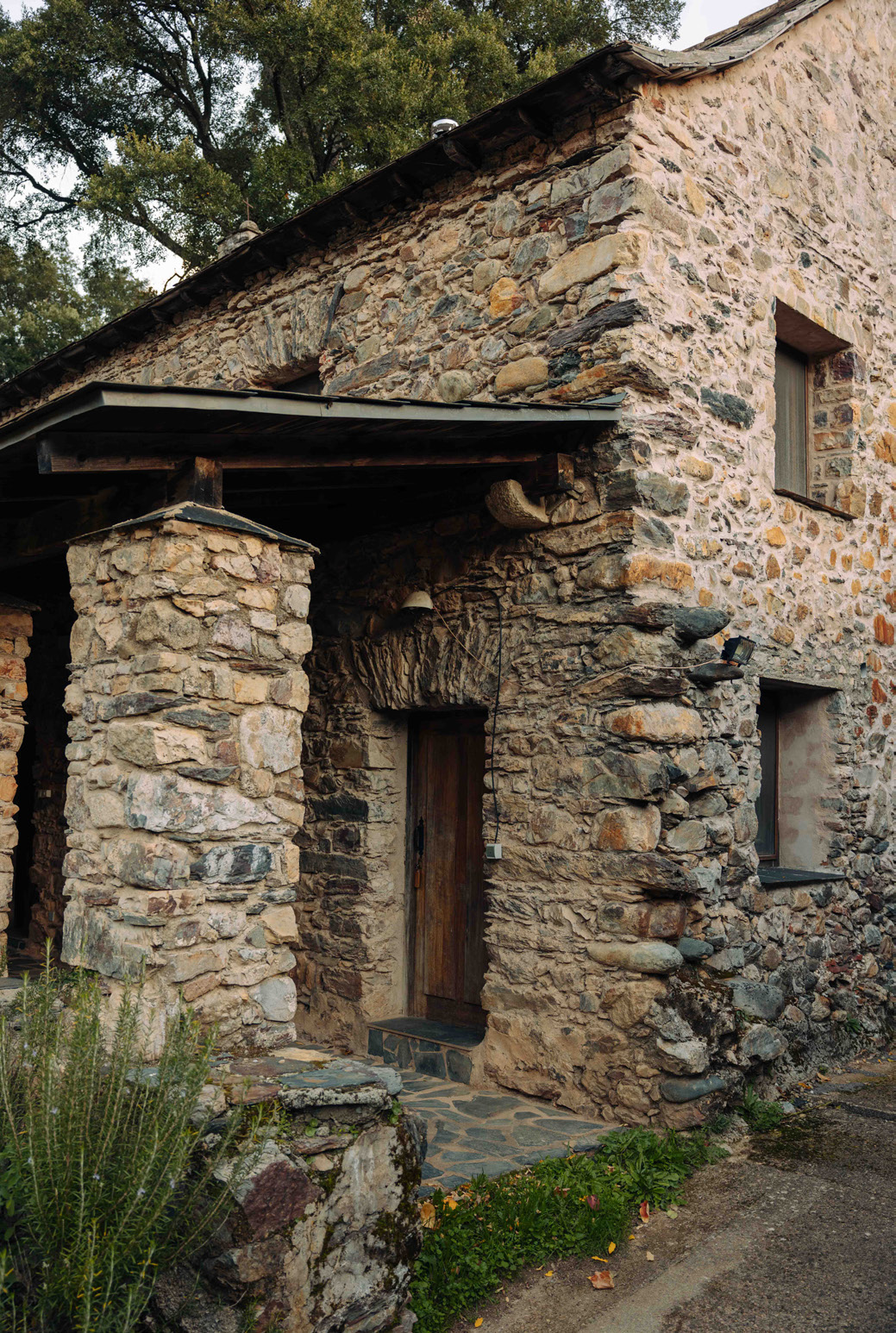
Northeast Cloister Corner
The architectural fabric of Las Batuecas is cut from a single cloth; the wall construction, lintels, sills, brackets, and roof tiles, are all constructed from local field stone and slate. The stone is rustic but beautiful, creating a pleasing but subdued palate of gray and orange tones. At the corners of buildings, in keeping with the necessities of traditional load bearing masonry, larger stones lock together as rustic quoins to brace the building against the brunt of structural assaults it will inevitably face.
The slate is extremely strong and remarkably adaptable to different conditions. The slate roof tiles are chipped into a scallop shape, while the roofs themselves are formed with a gently curving swept eave, giving the roofs an aesthetic as unique as Las Batuecas. At the head and sills of windows, slate pieces about an inch thick span the several feet of the opening and hold up solid masonry above them. At other openings, such as the cell door pictured here, very thin pieces are arrayed into a traditional jack arch. At still further places, solid pieces of slate several feet thick surmount openings with all the sober and tranquil weight of the heroic sacrifice which is monastic life.
In addition to the stone and slate, rough hewn beams and rafters are also made from local stock. Around the cloister walkway, stone brackets carry a ledger beam, which together with the architrave on the piers carry the principal rafters. The very uniform appearance of the four-hundred-year-old-monastery is probably a result of recent renovations, as originally it likely would have been entirely covered in painted stucco, as is still extant at several ruined hermitages.
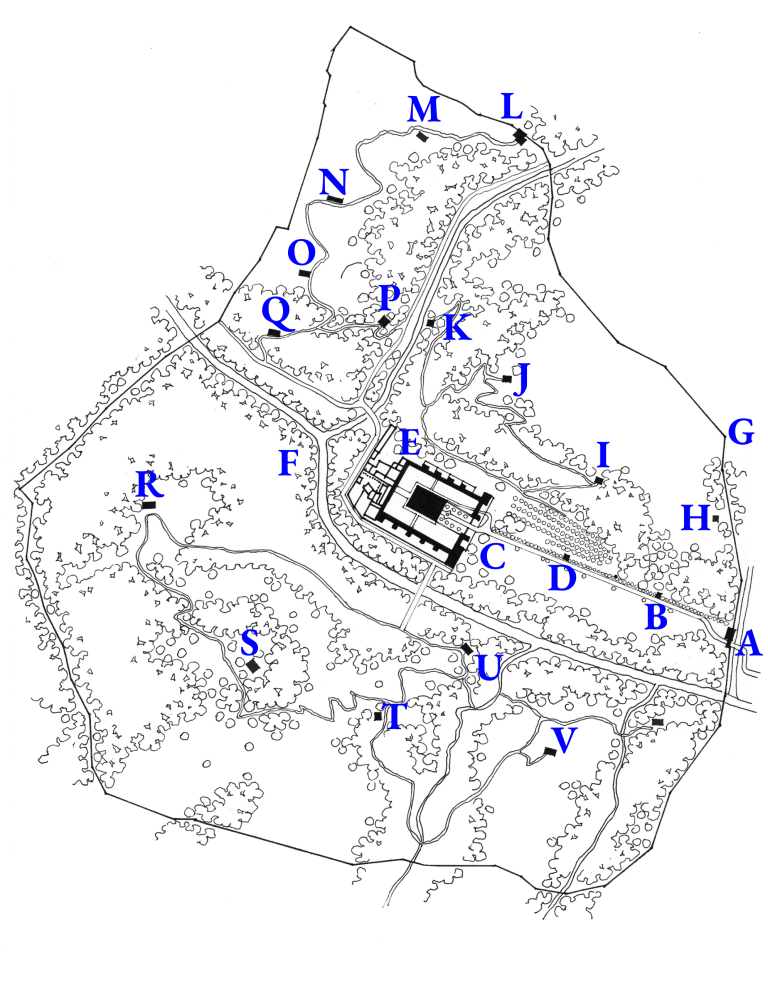
Site Plan
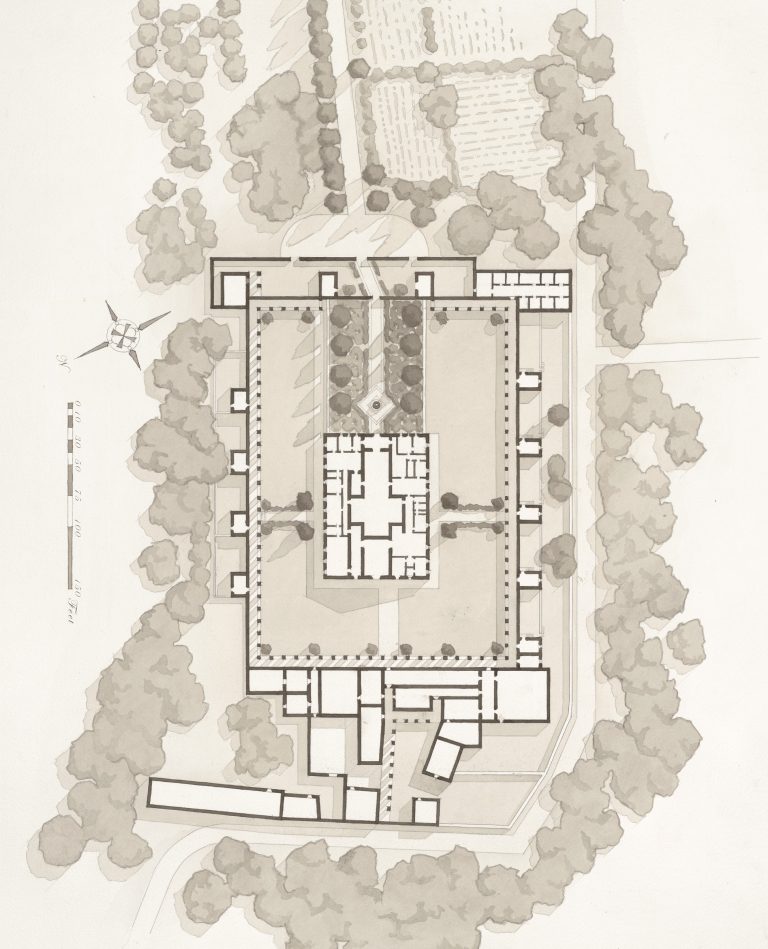
Monastery Plan
The Las Batuecas Desert, while far from the largest in terms of enclosed land, has a very gracious cloister, as well as sizable work space at both the central building that houses the chapel, and at the now ruined buildings at the western side or rear of the monastery. A large library houses an impressive archive, and the historic chapter and refectory spaces were of a size to accommodate those dwelling at the dispersed hermitages in the hills above the main monastery.
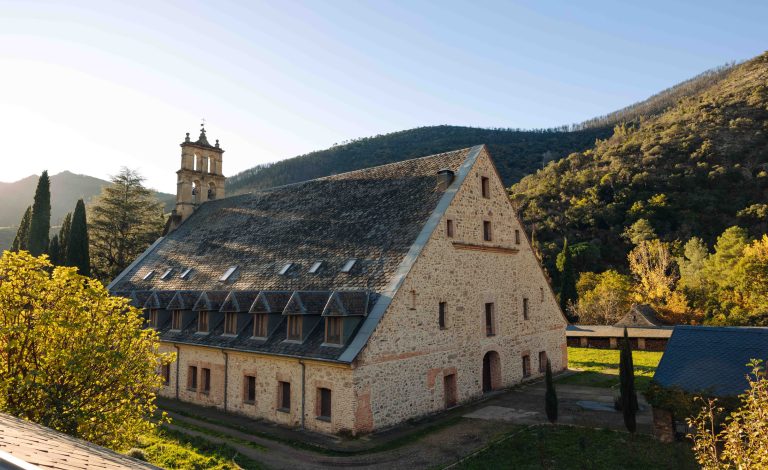
View of Cloister from Northeast
The central monastic building at Las Batuecas presents an unusual, almost agrarian form, with all of its program including a large chapel arranged under a single, very large pitched roof. The dormers allow light and air into the second story of the Monastery, while the prominent bell cote on the front facade declare through both sight and sound the presence of our Lord and His Church.
Photo Gallery
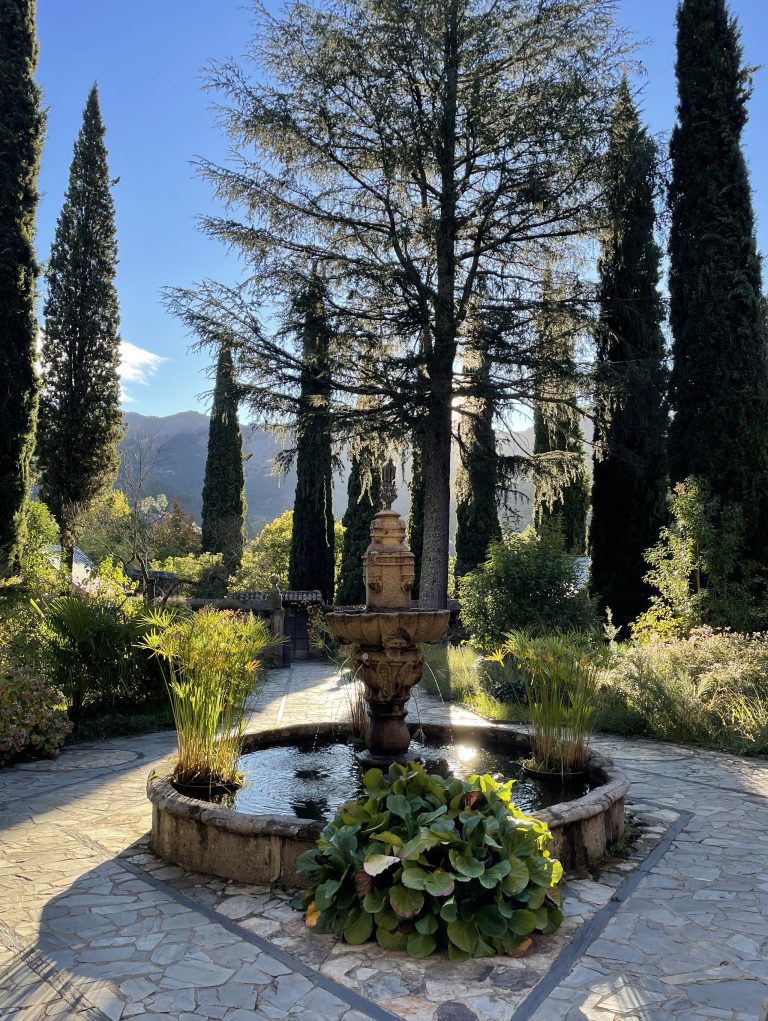
Within the garden courtyard in front of the chapel is an homage to St. Teresa of Avila, the ecstatic mystic who worked tirelessly to follow God’s Will in the reform of the Carmelite Order. The paving patterns and the fountain are an elaborate metaphor for her masterpiece, The Interior Castle, with the fountain itself representing the fullness of Grace in the last of seven spiritual chambers.
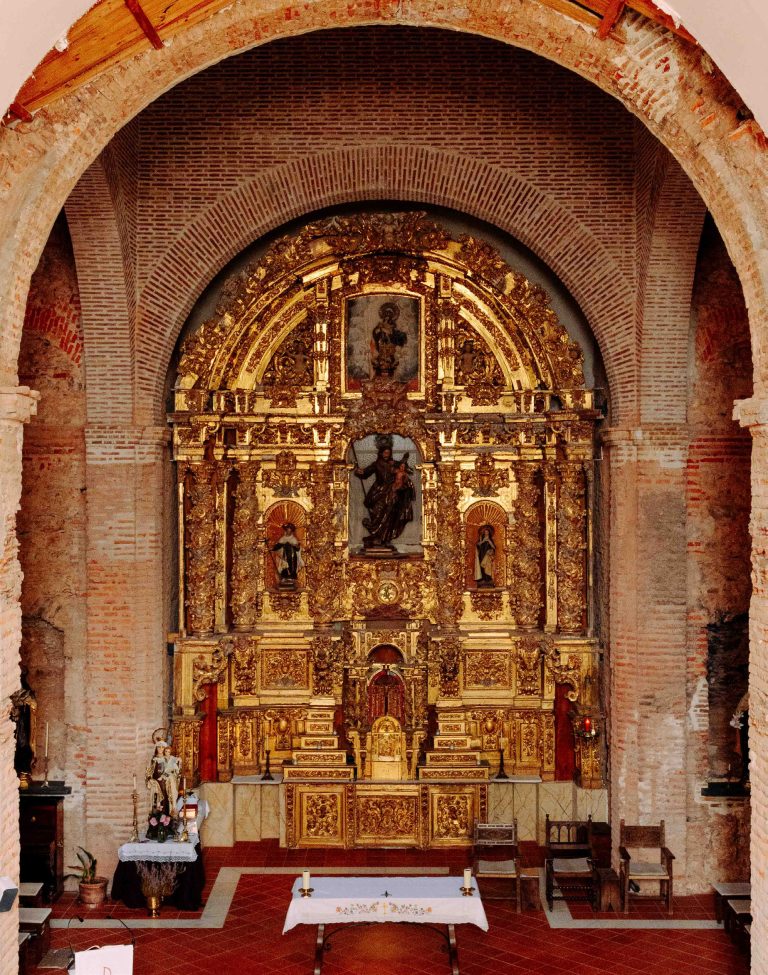
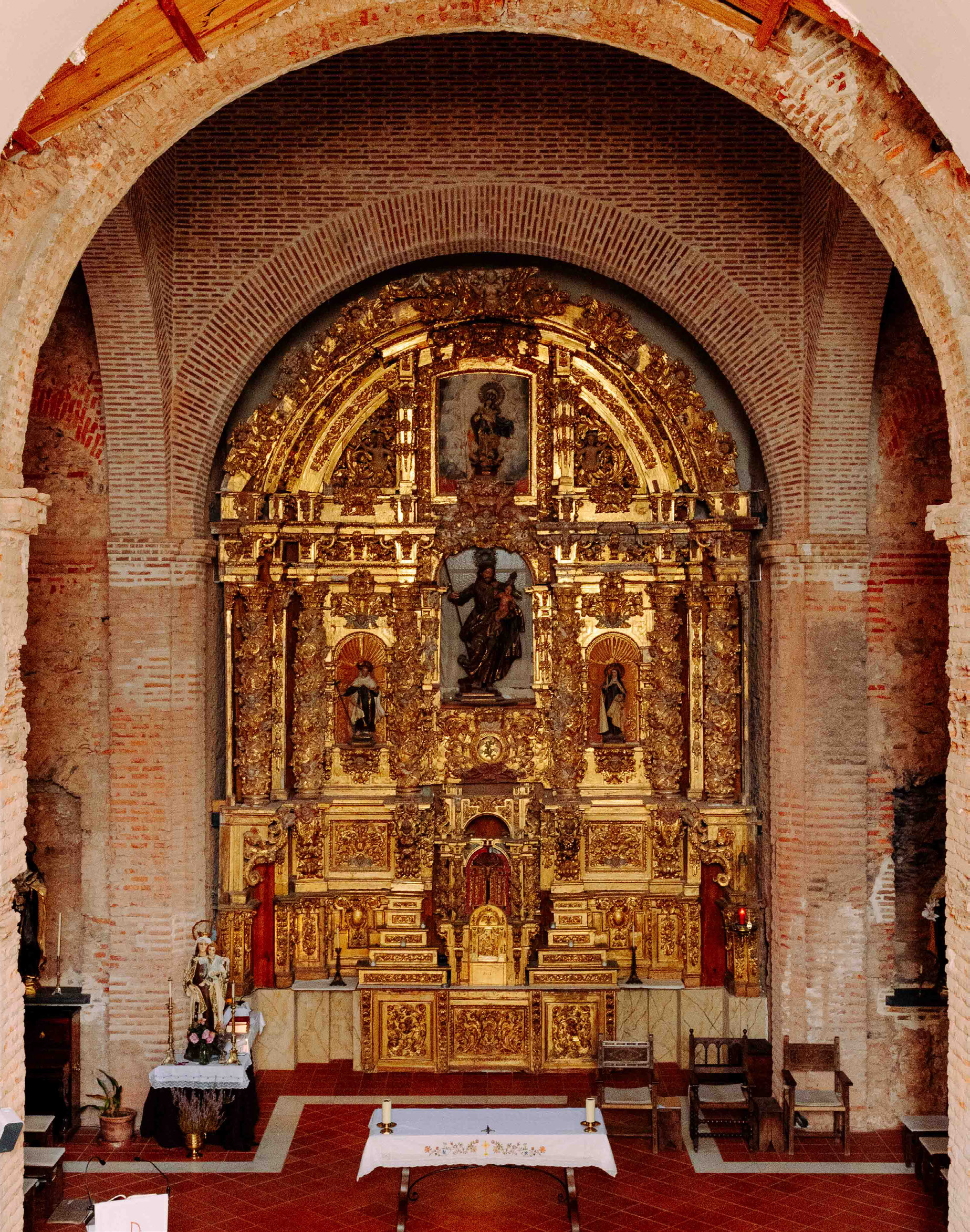
The chapel at the heart of Las Batuecas is now a patchwork of historical eras. An enlarged version of the original construction from 1600, its brick piers, walls, and vaults would without a doubt have been covered in a clean and simple plaster, while the glorious retablo is a recent acquisition from another historic church.
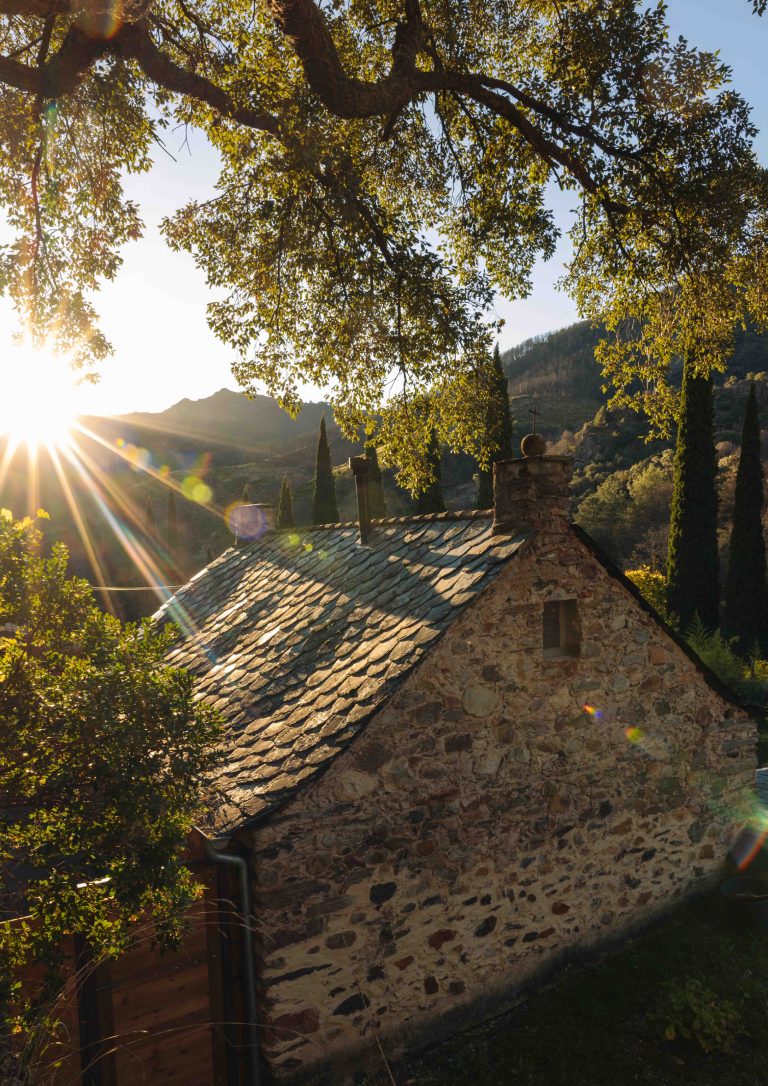
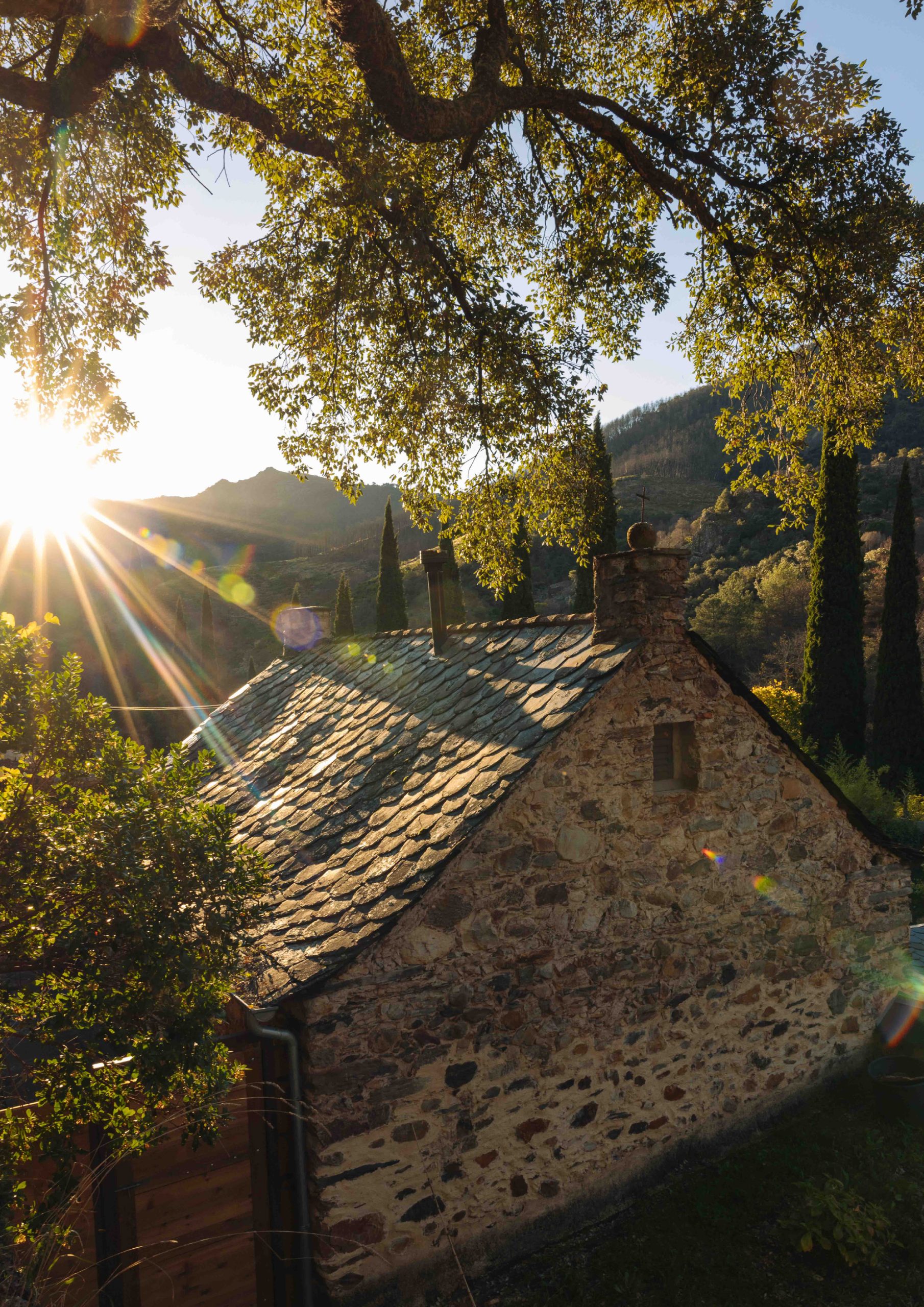
The morning sun emerges above the mountain ridges and filters through cork oaks of a venerable age on the north side of the monastery. Dawn in the valley occurs significantly later; in midwinter, the monastery only receives about four hours of sunlight. The raking light, beautiful in itself, also outlines the scalloped edge of the slate roof tiles in light and shadow.
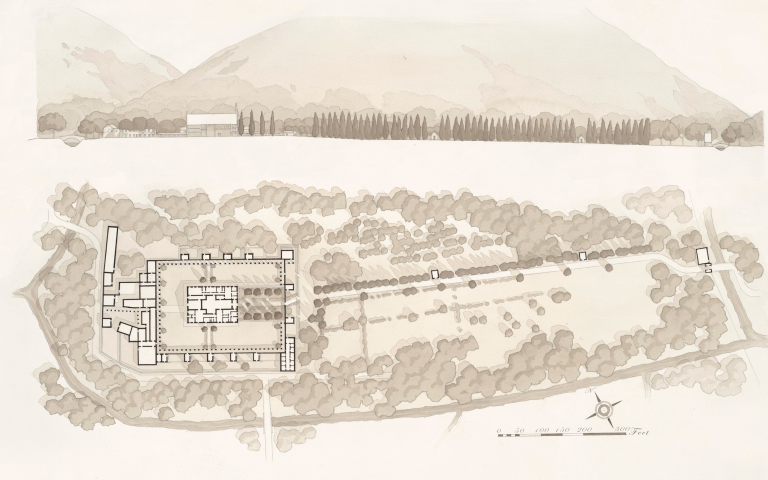
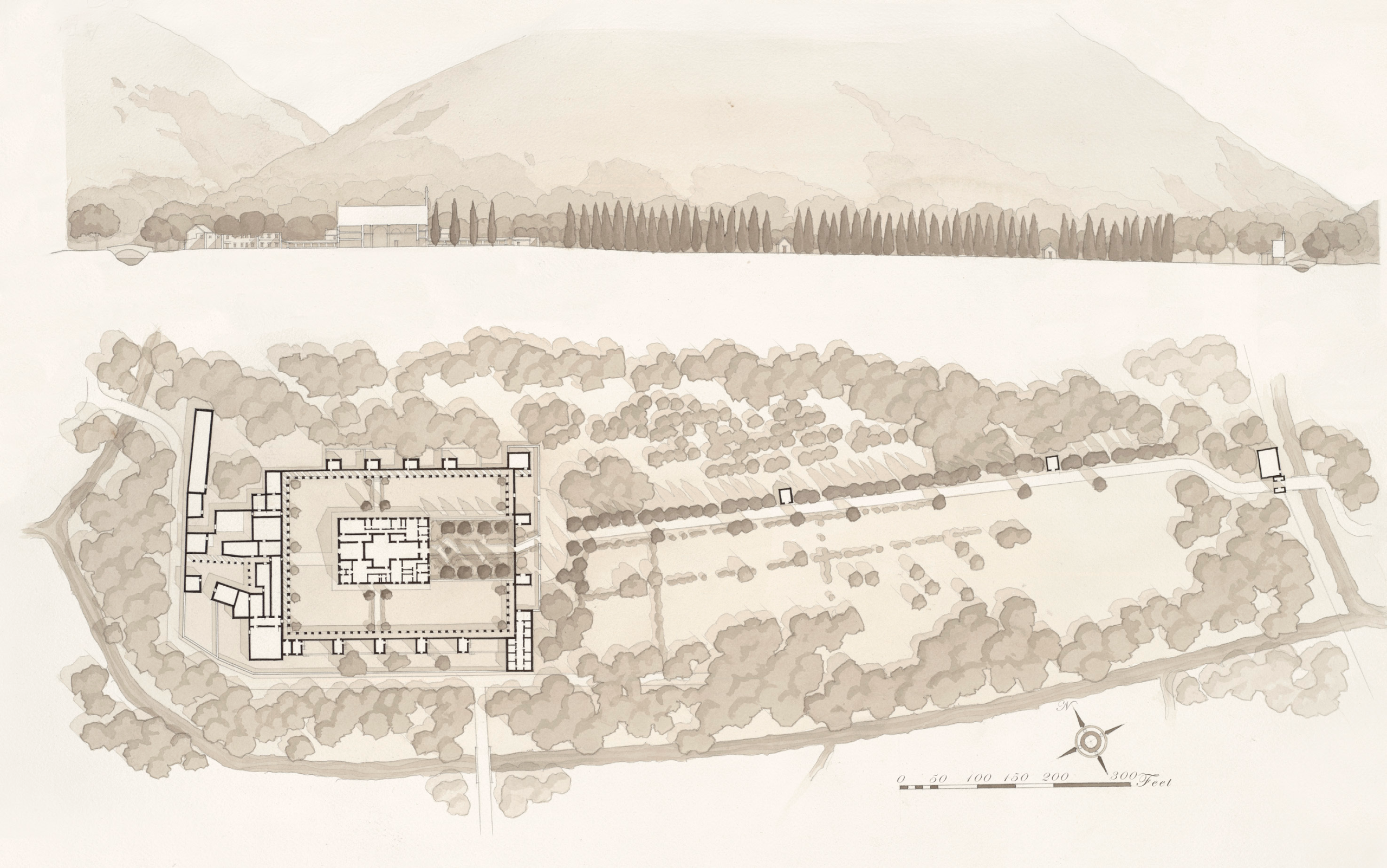
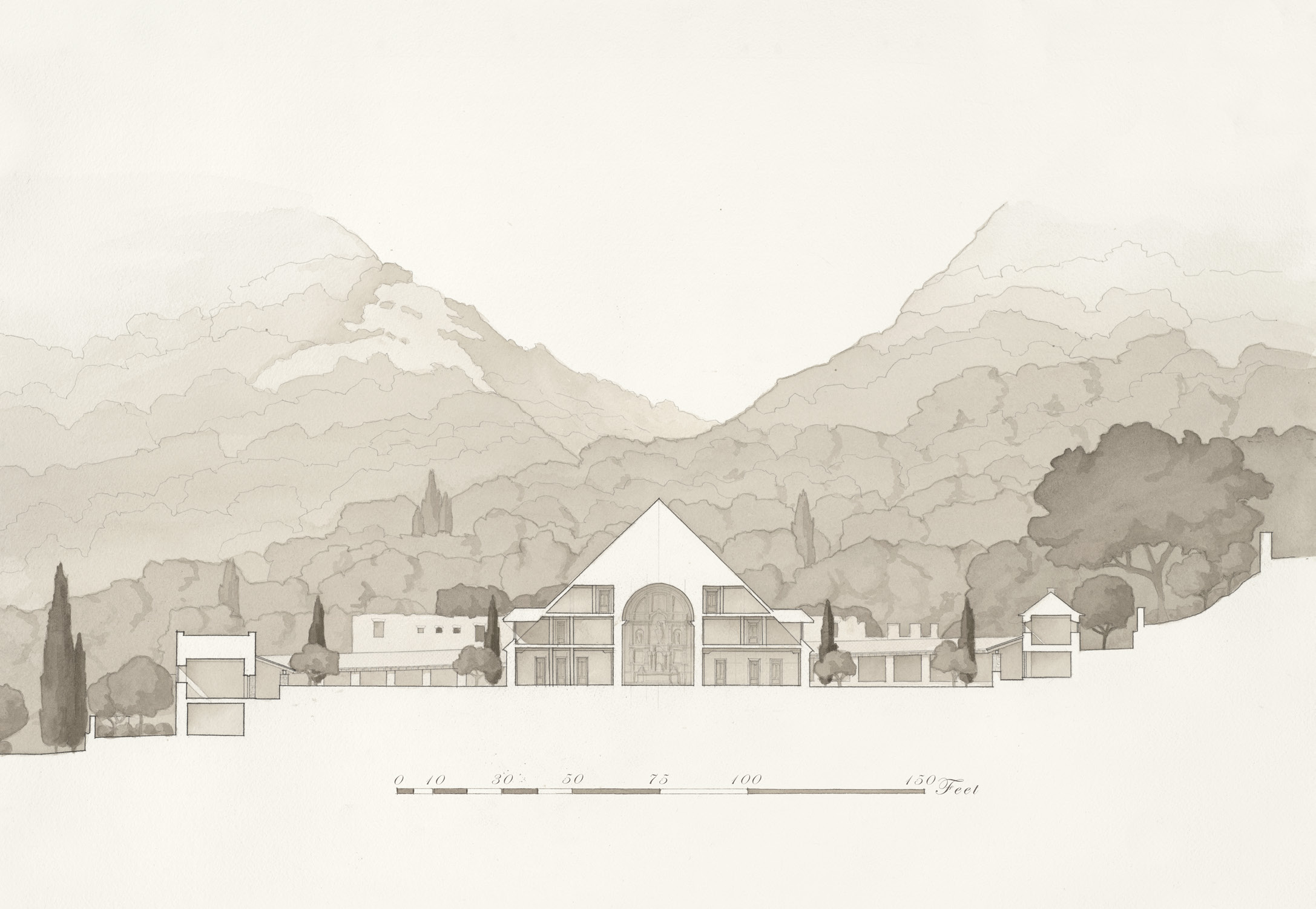
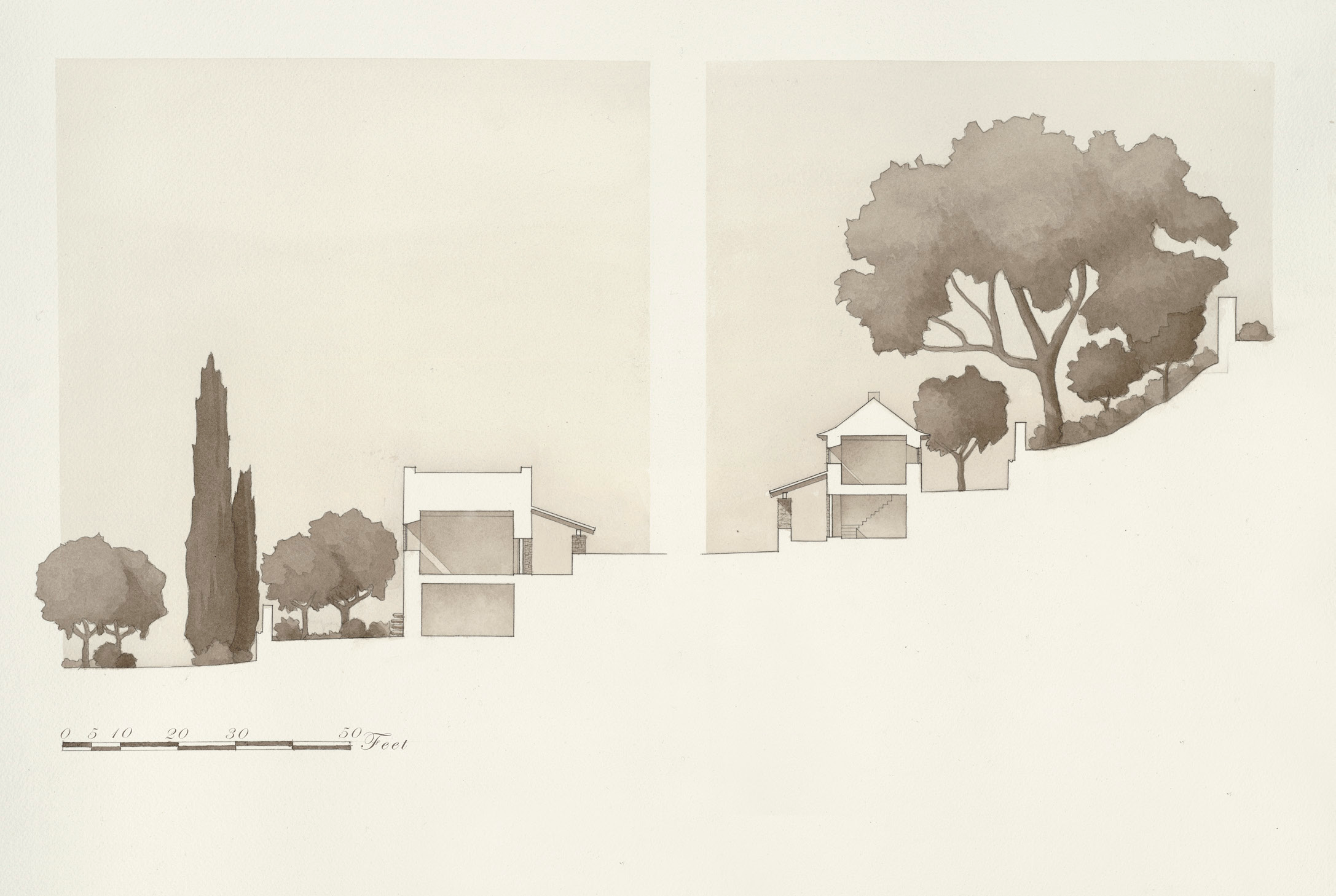
This was rendered site plan and section illustrate the dramatic positioning of the monastery, through its natural context as well as its intentional design. A grand allée of trees, which formerly was double sided, leads from the gatehouse to the central monastery. The Las Batuecas River, and the creeks that feed it from the mountains above, surround the monastery in the peaceful sounds and life giving qualities of fresh water, one of the critical reasons the site was chosen by Fr. Thomas of Jesus.
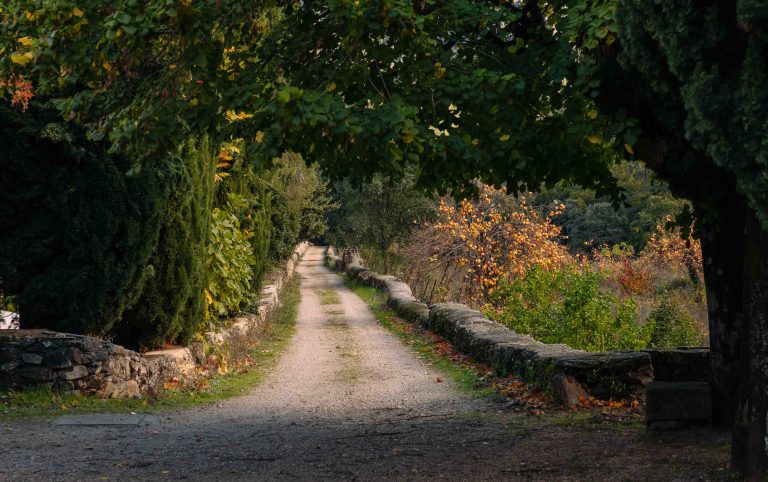
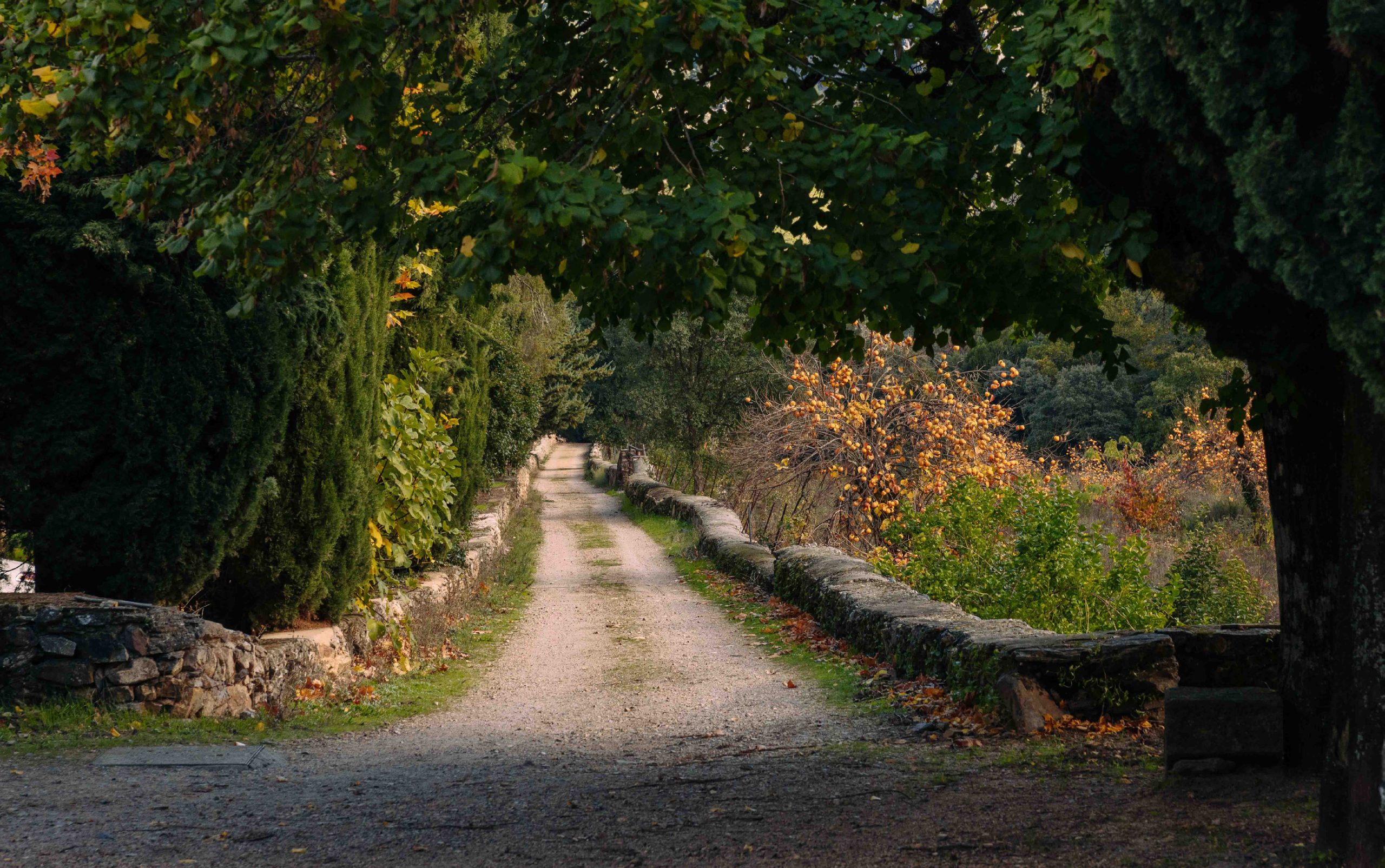
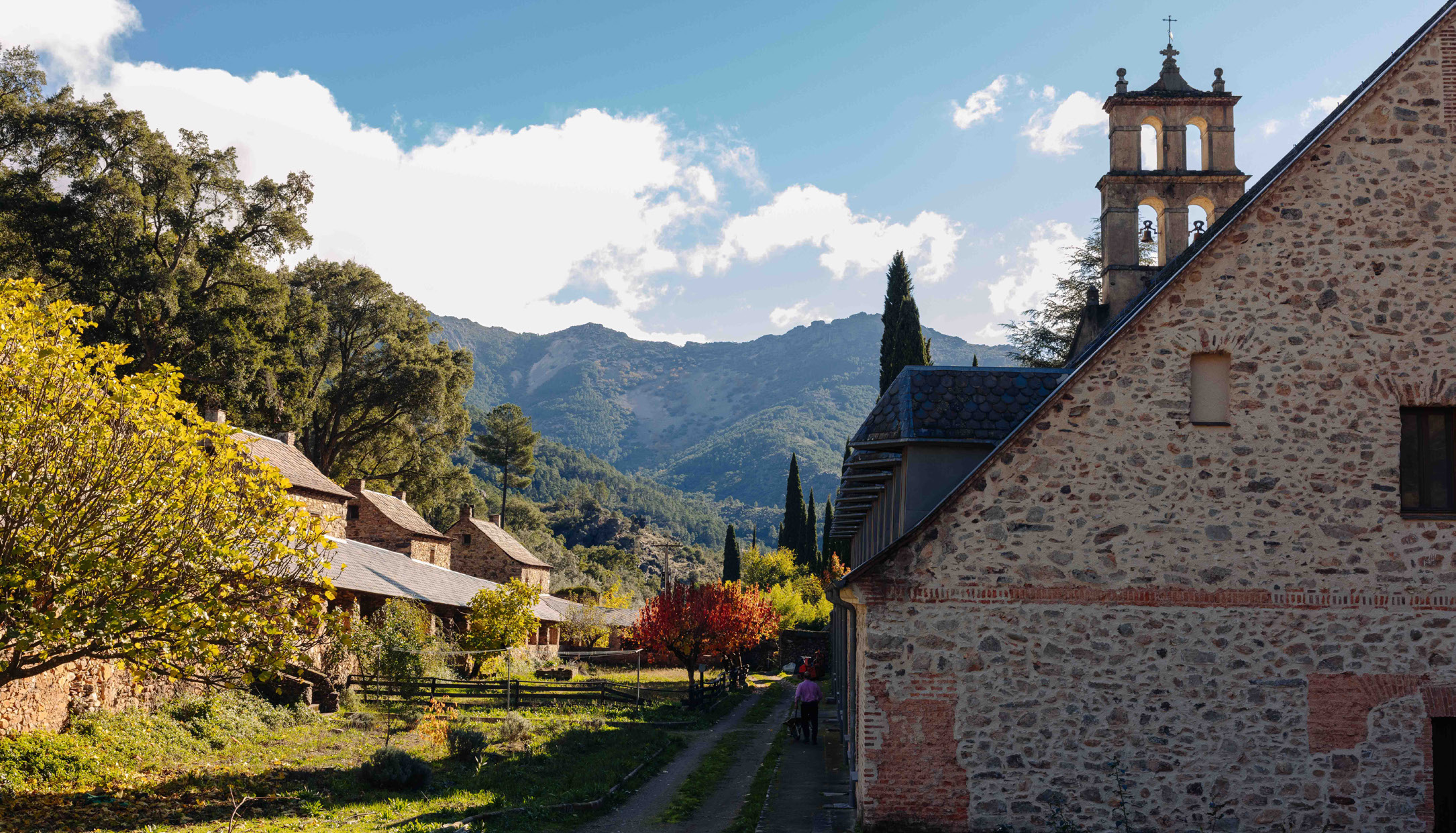
The allée that leads to the entrance of the Monastic enclosure is bordered on one side by massive columnar cypress trees and a cork oak forest, and on the other side by a short drop off to a series of cultivated areas. The low autumnal light casts a warm hue on the gravel path, accentuating the golden spray of color of a persimmon tree almost ready for harvest. According to historical accounts, both sides of the path were originally lined with cypress trees, silent sentinels of the path and its tranquil oratories and shrines.
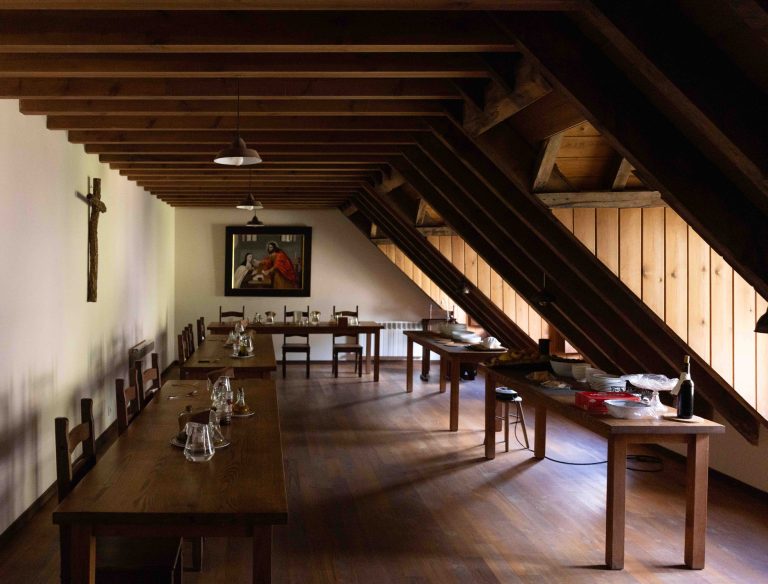
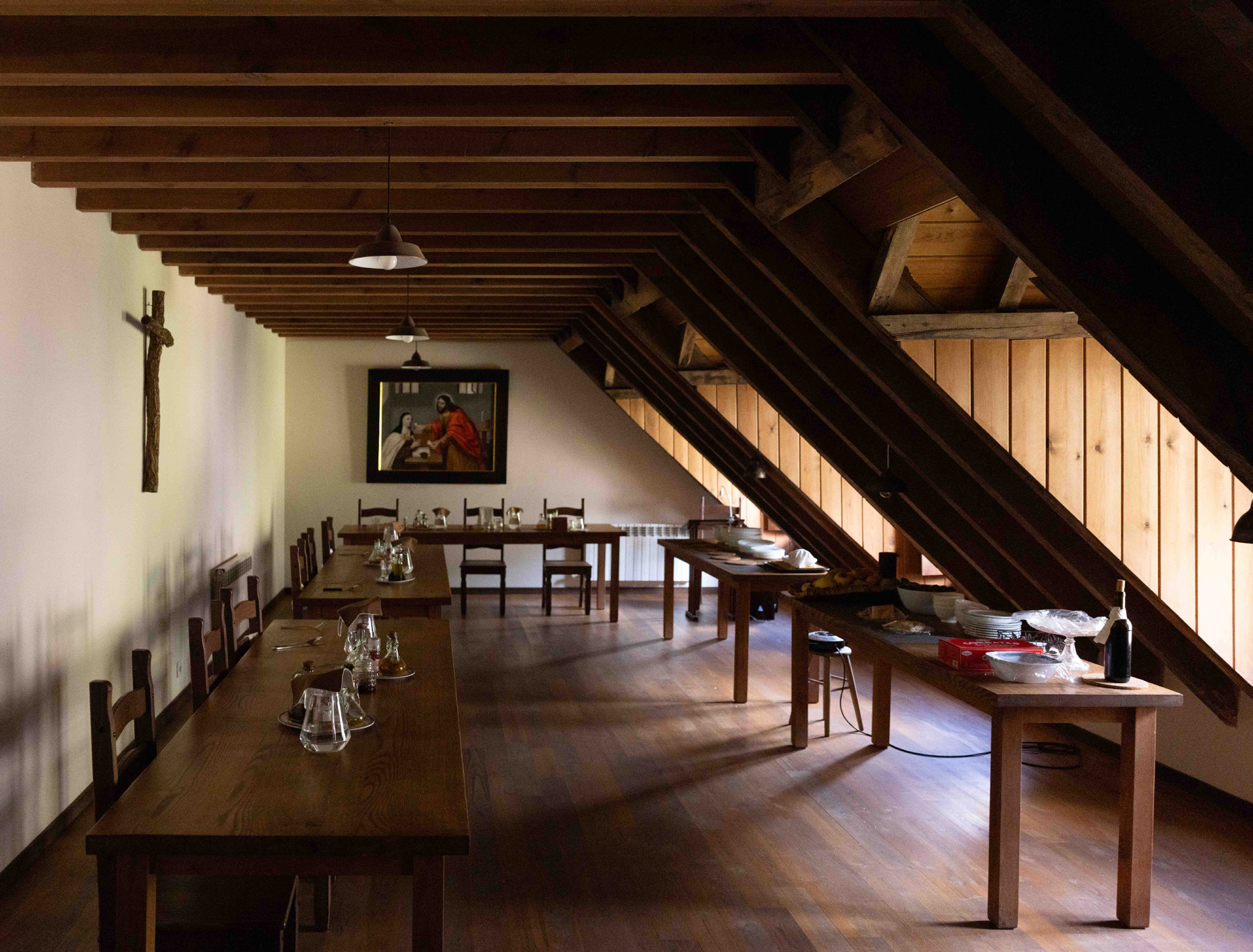
The current refectory, though much smaller than the monastery would have historically required, retains a spirit of spartan simplicity. Robust but unostentatious wood furniture and architecture reflect the plain, vegetarian meals that the monks consume, and the silence with spiritual reading which characterize monastic meals.
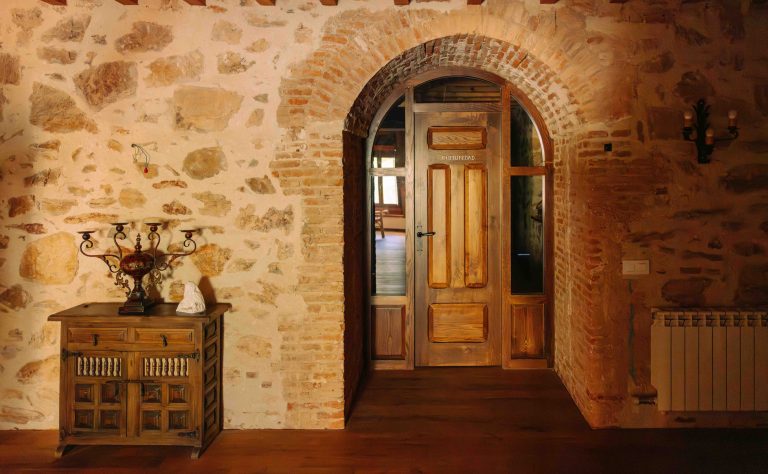
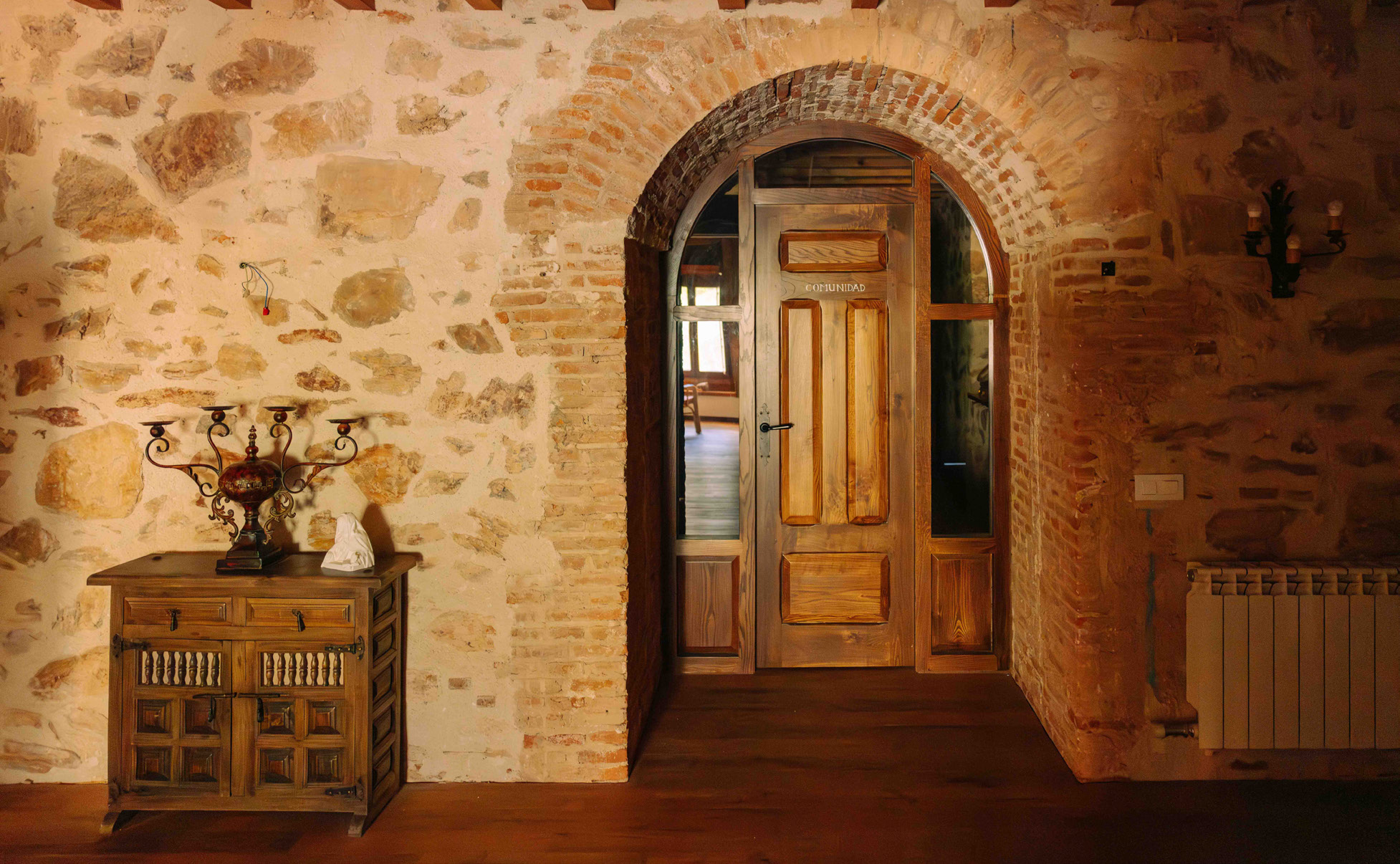
Where the upper level hallway meets the masonry core of Las Batuecas, stone, brick, and mortar fill the soul with a satisfying sense of solidity and nobility. Stained wood floors, doors, and furniture create the comfortable quality of home, without distraction or excess which are inimical to contemplative prayer. Light penetrates from the dormers into the center of the building, including at this door which leads into the area directly behind the chapel retablo.
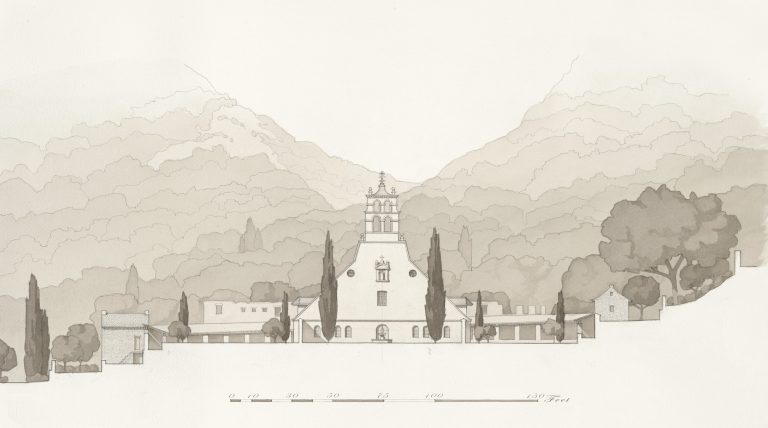
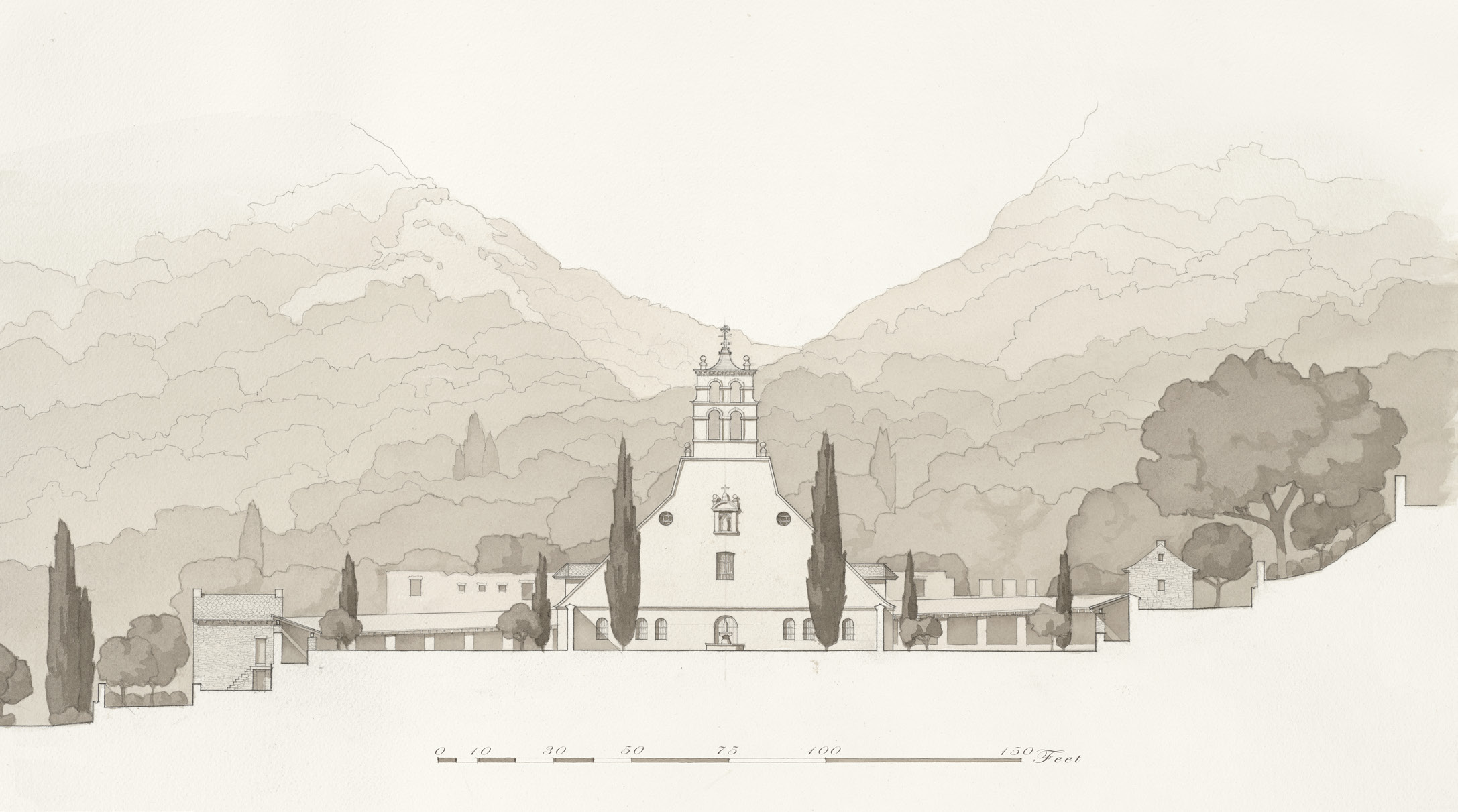
This section is parallel with its sister above, but it cuts through the cloister on a different plane so that it is possible to view the front facade of the monastery, as well as the sides of the north and south cells, and the cell gardens they border. On the main facade, over four hundred years old, a double bell cote dominates the immense plane created by the pyramidal building section.
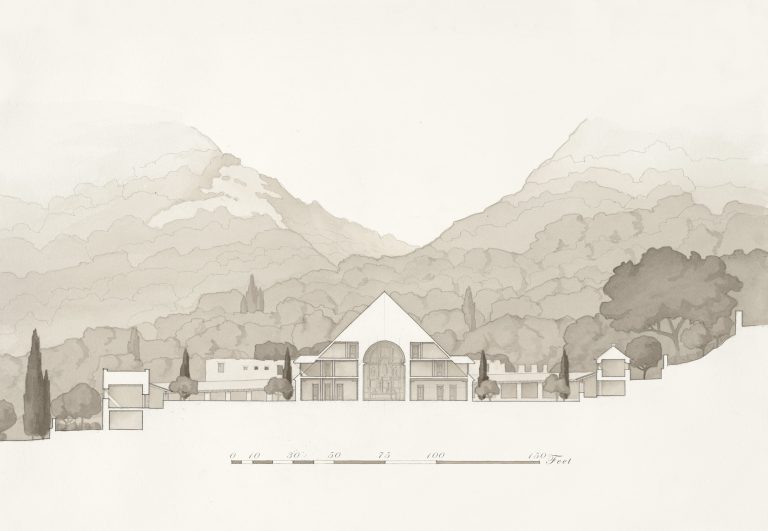
In this wash rendered architecture section, the genius of Las Batuecas is on full display. Terraces connected to the south and north cells create private garden space at each cell, provide thermal insulation for the living quarters therein, and create a level cloister. Thus the monastery perches on a serene plateau amidst the sloping cork forests of the valley.
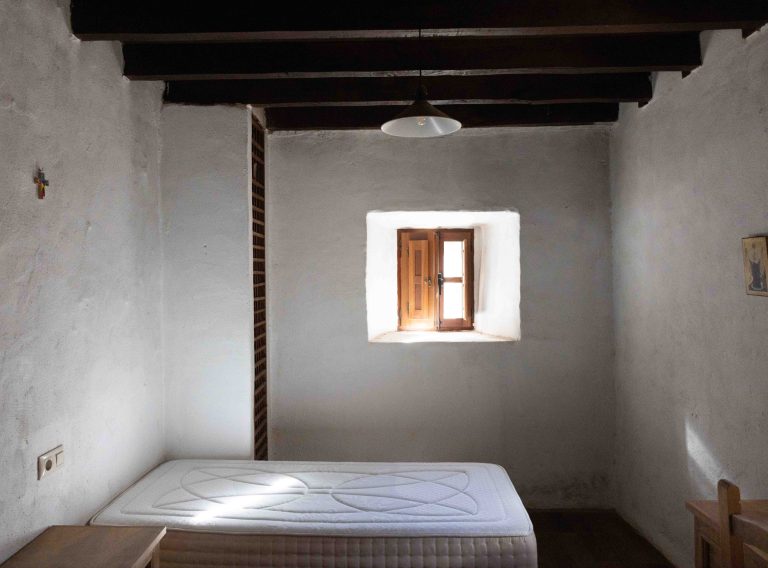
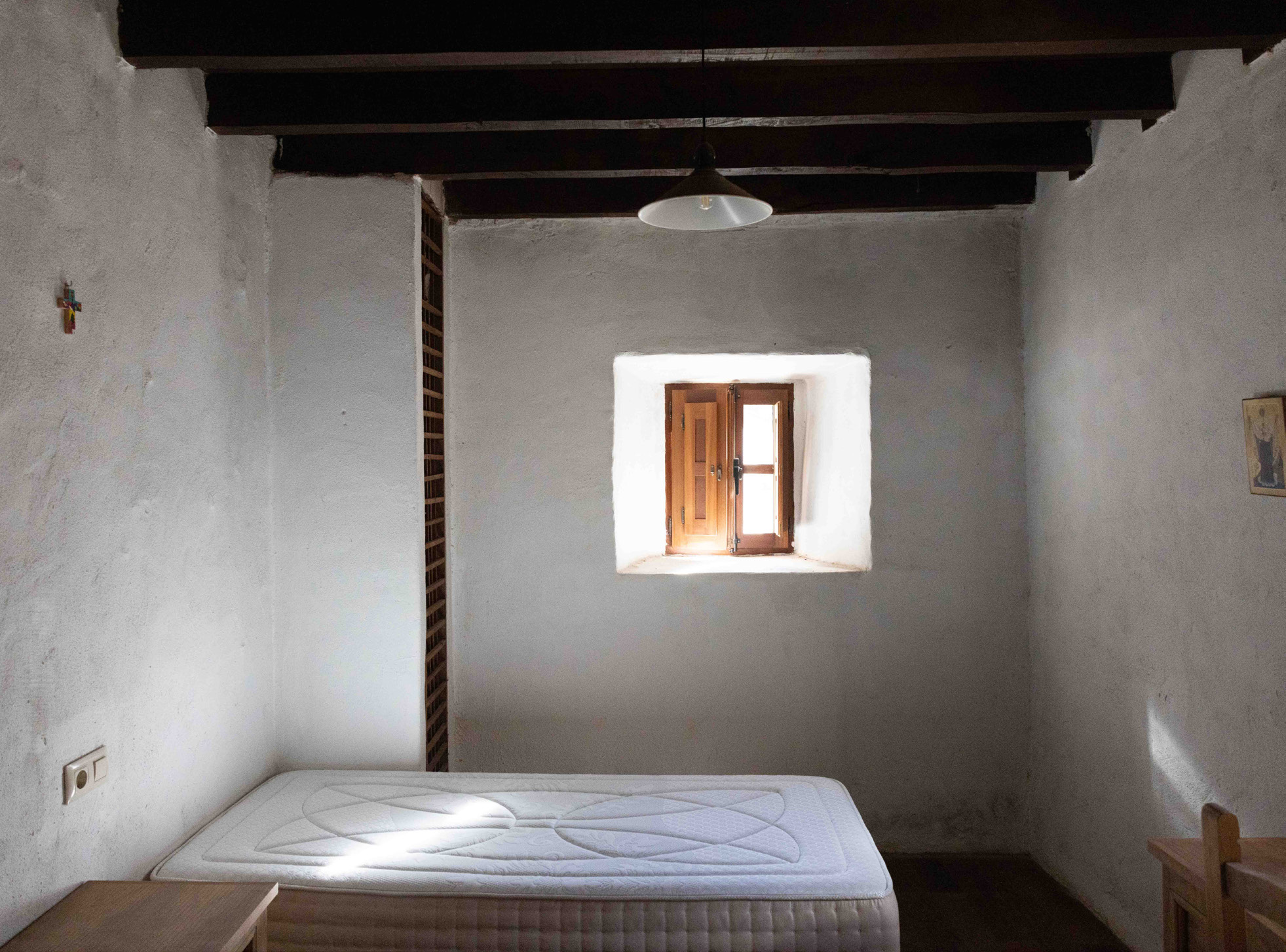
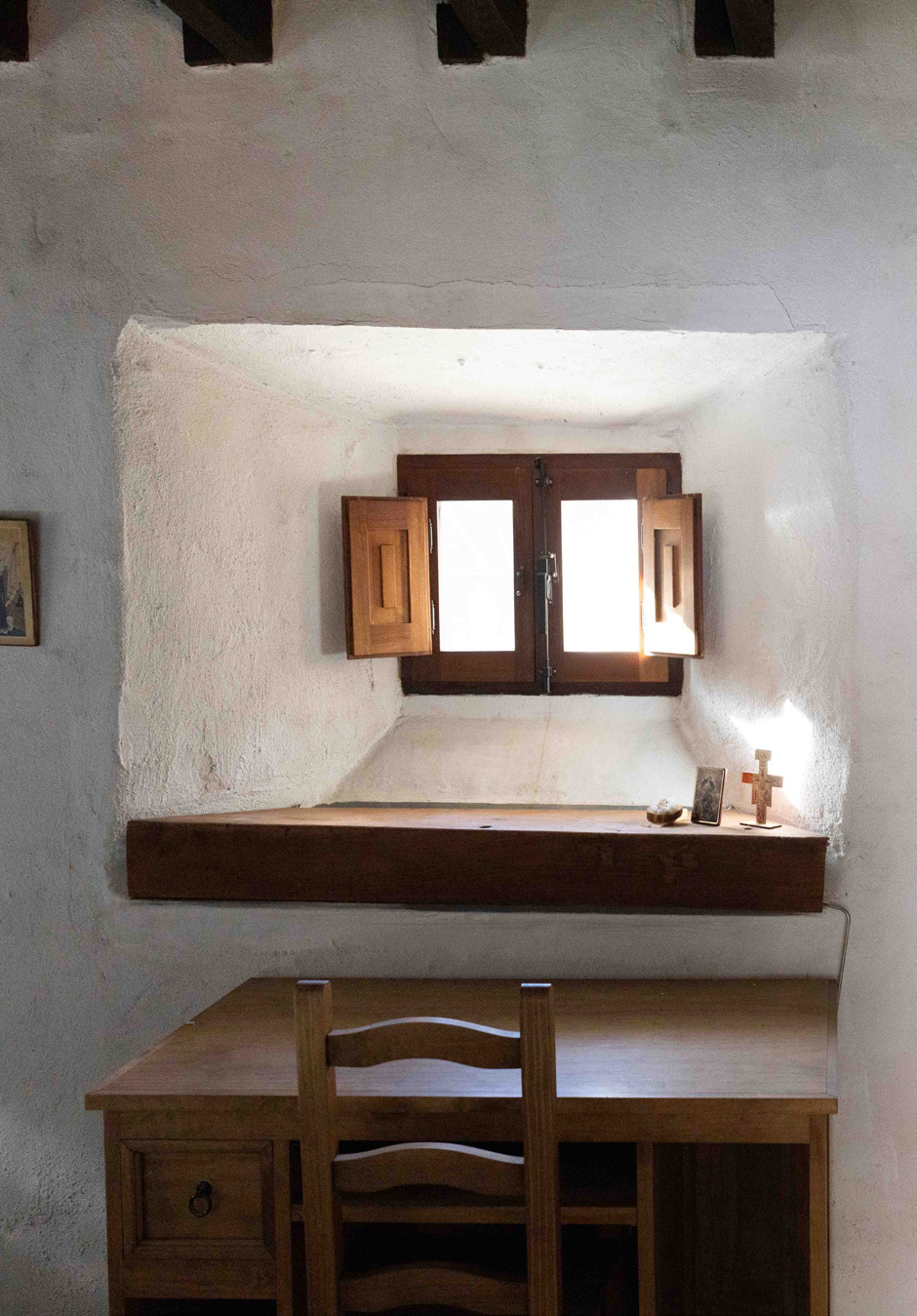
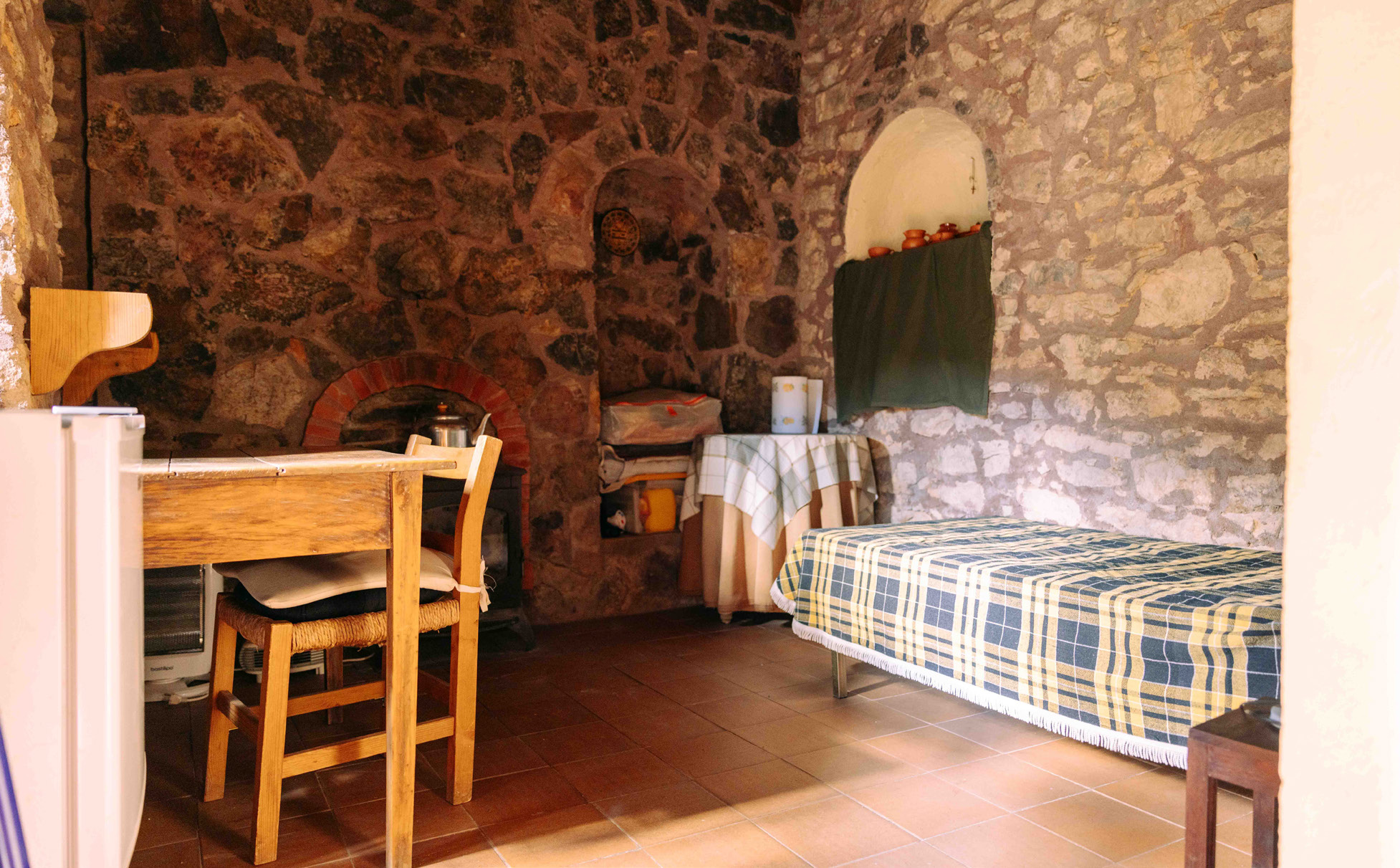
Despite the modern comforts introduced later, the upper level of this North cell portrays the modest and simple living quarters of the hermit. White washed plaster covers robust masonry walls, and wide splays help bring light from the small window into all corners of the room. Massive timber beams support a wood slat ceiling and a slate roof above.
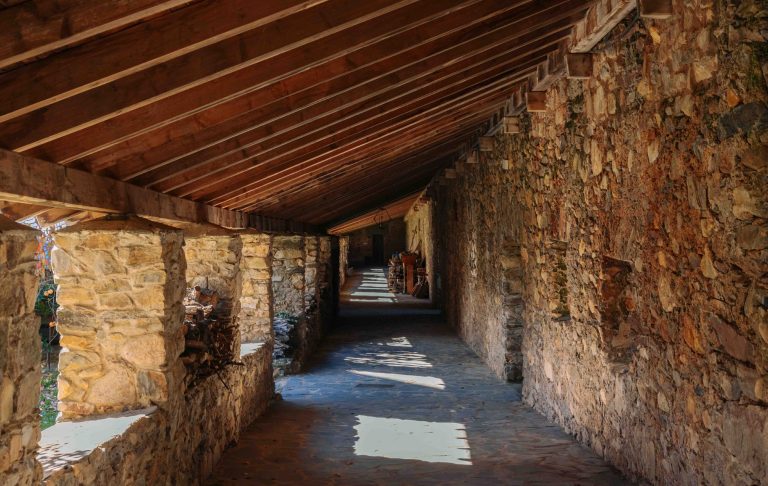
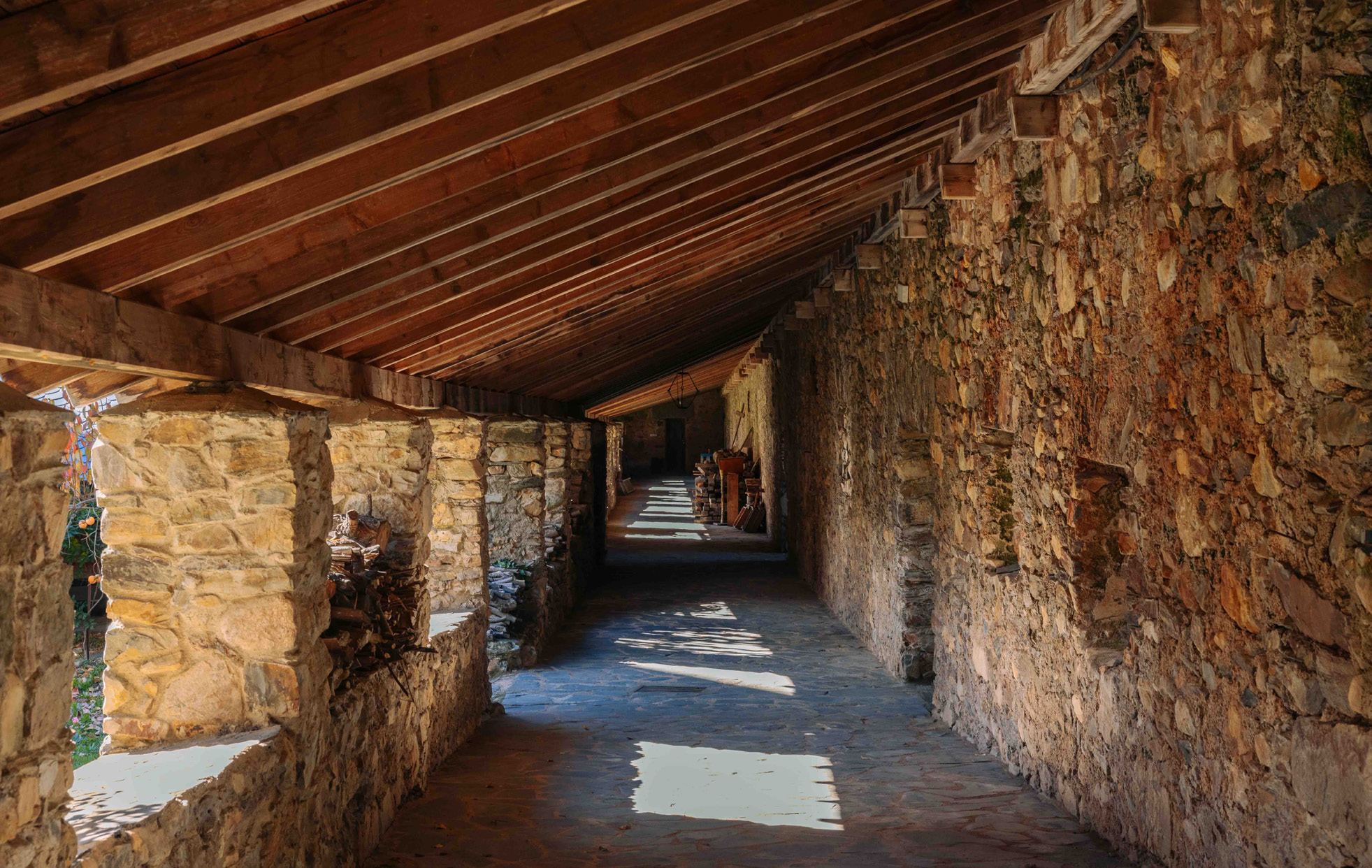
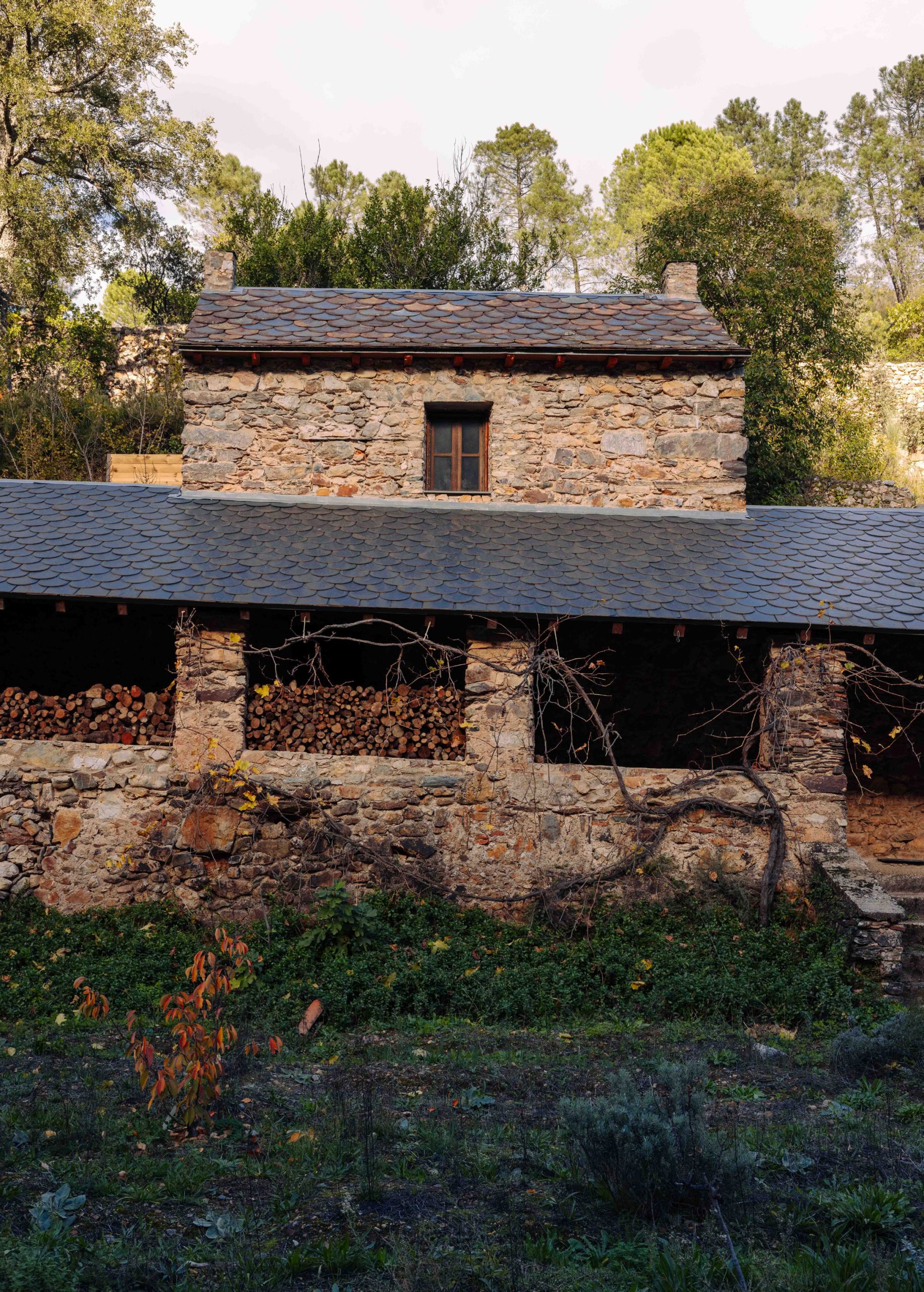
The cloister walkway at Las Batuecas is open air, and wide enough to accommodate several hermits passing either way without disturbing the quiet and privacy of their life of solitude. The alcoves between the simple, robust piers serve as wood drying storage, as each cell needs it own supply to sustain a livable environment during the winter.
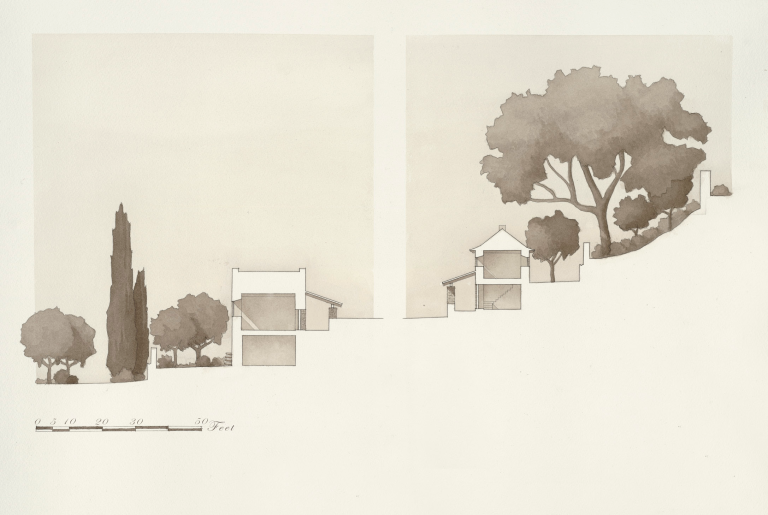
At the North cells, an interior staircase connects the lower and upper levels, while the cell garden is accessed from an upper level door. In the South cells, the lower level is accessed via exterior stairs, through an exterior door in the cell garden. The relationship of the cloister walkways is also opposite; on the South Side, the walkway sinks below the cloister to accommodate the site grading.
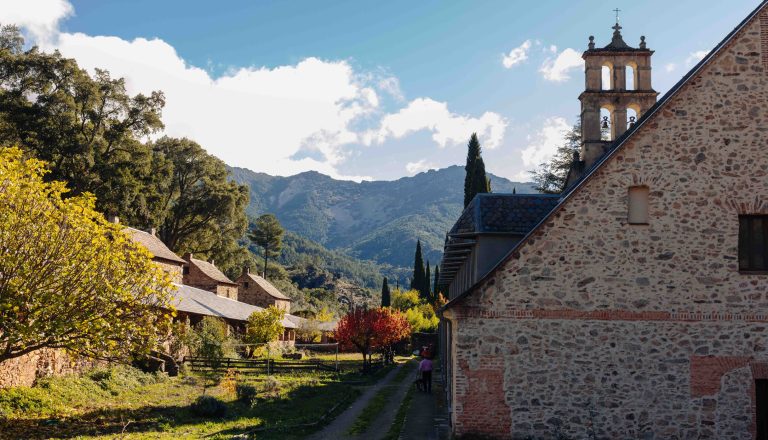
From the west end of the cloister looking east, the north cells, joined by the cloister, seem to gather to do homage to the prominent bell cote at the entrance to the chapel, while the mountains at the east end of the valley rise up in the blue distance.
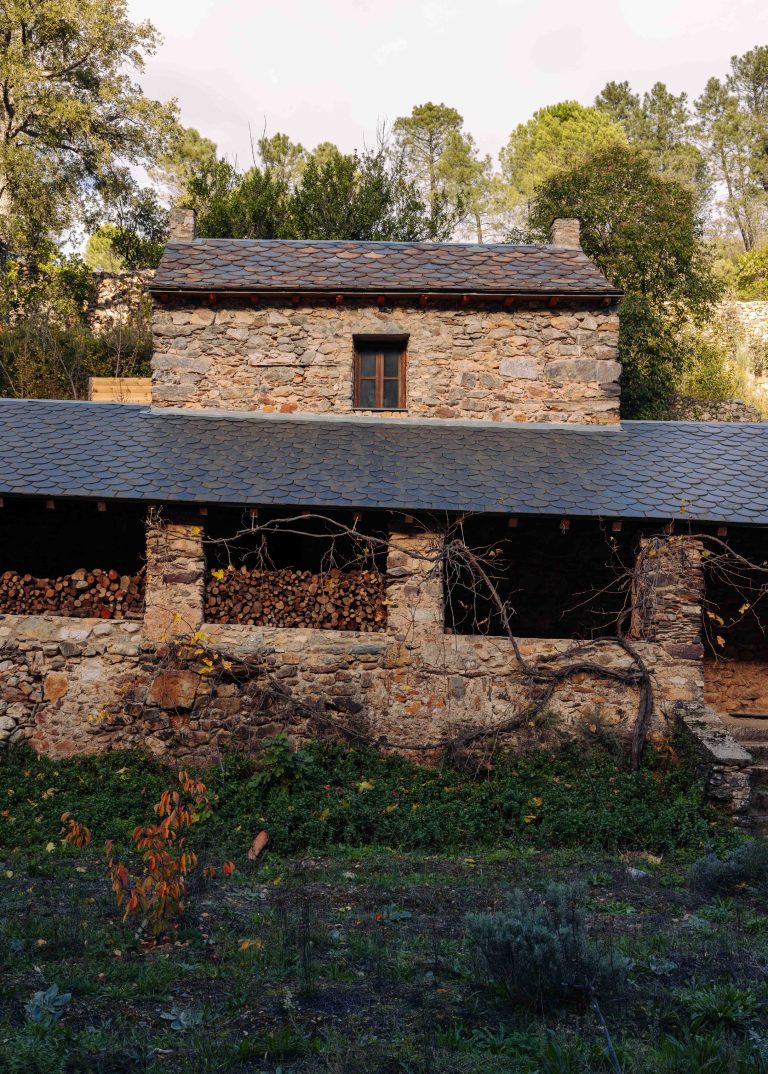
The North Cloister and an adjoining cell slope gently upward to the back of the site, almost imperceptibly when walking in the corridor. Robust, scalloped slate tiles on the roof of the cell are mimicked, albeit imperfectly, by newer, thinner tiles of the same shape on the cloister walkway below.
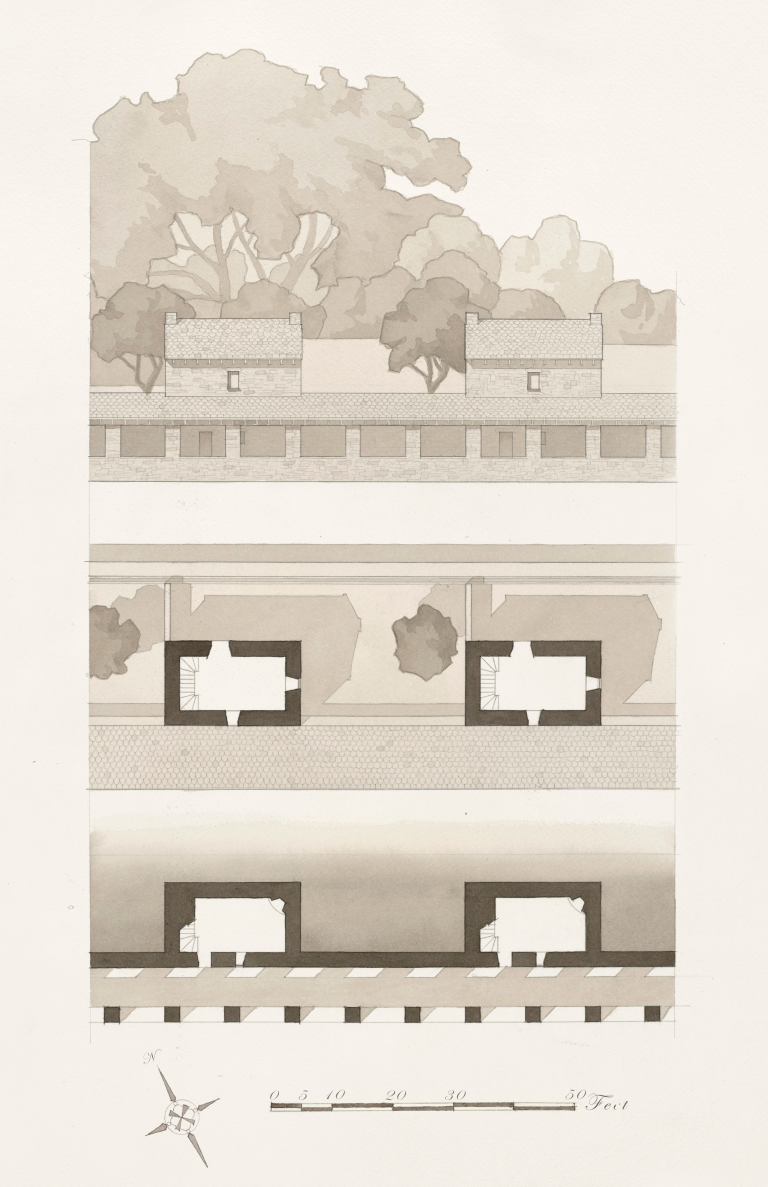
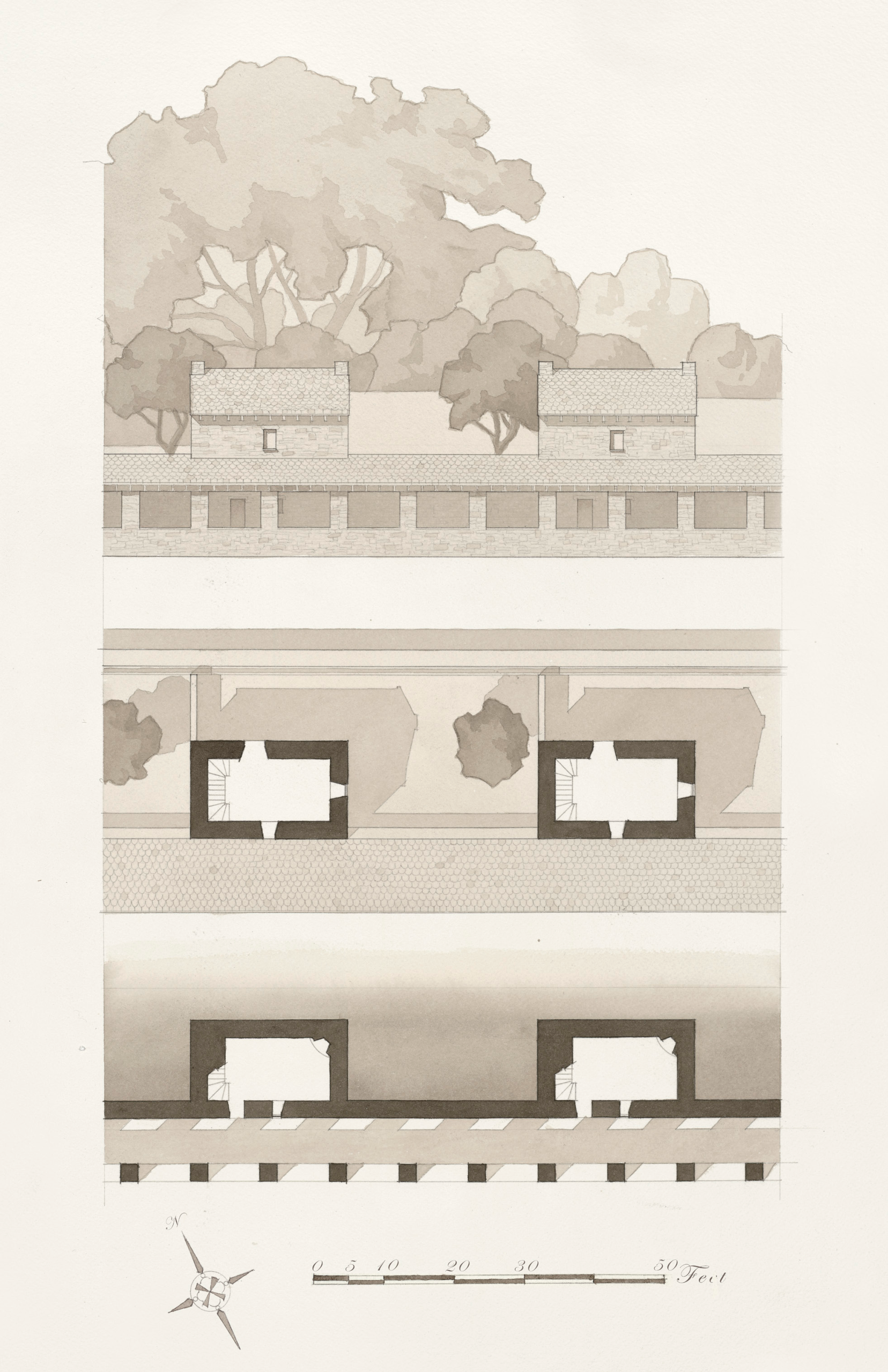
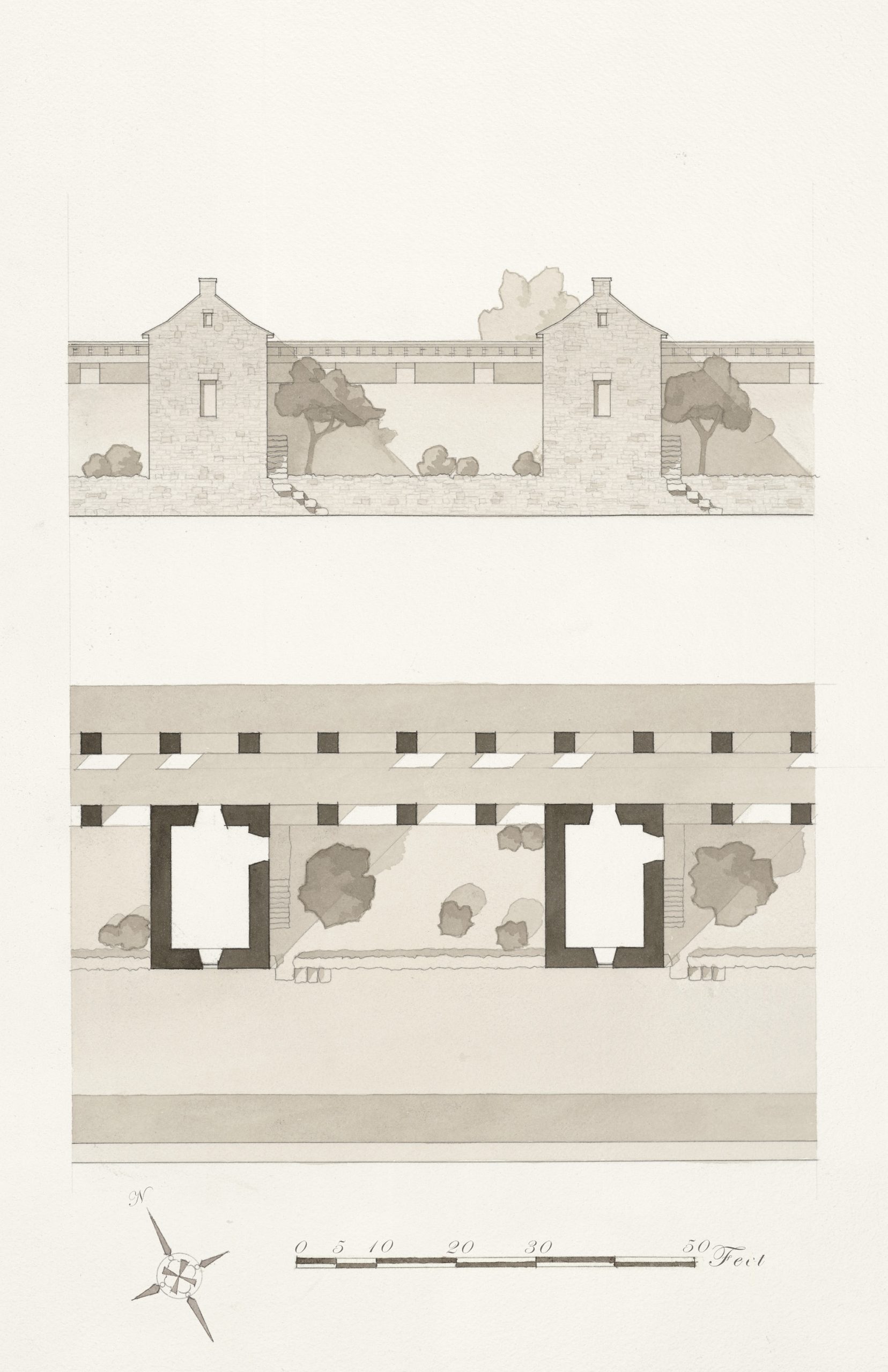
The North Cells are represented here in several orthographic views; Lower level floor plan, upper level floor plan, and cloister side elevation. Small accommodations, with massive walls, these cells provide a perfectly humble but dignified existence for the monastic hermit.
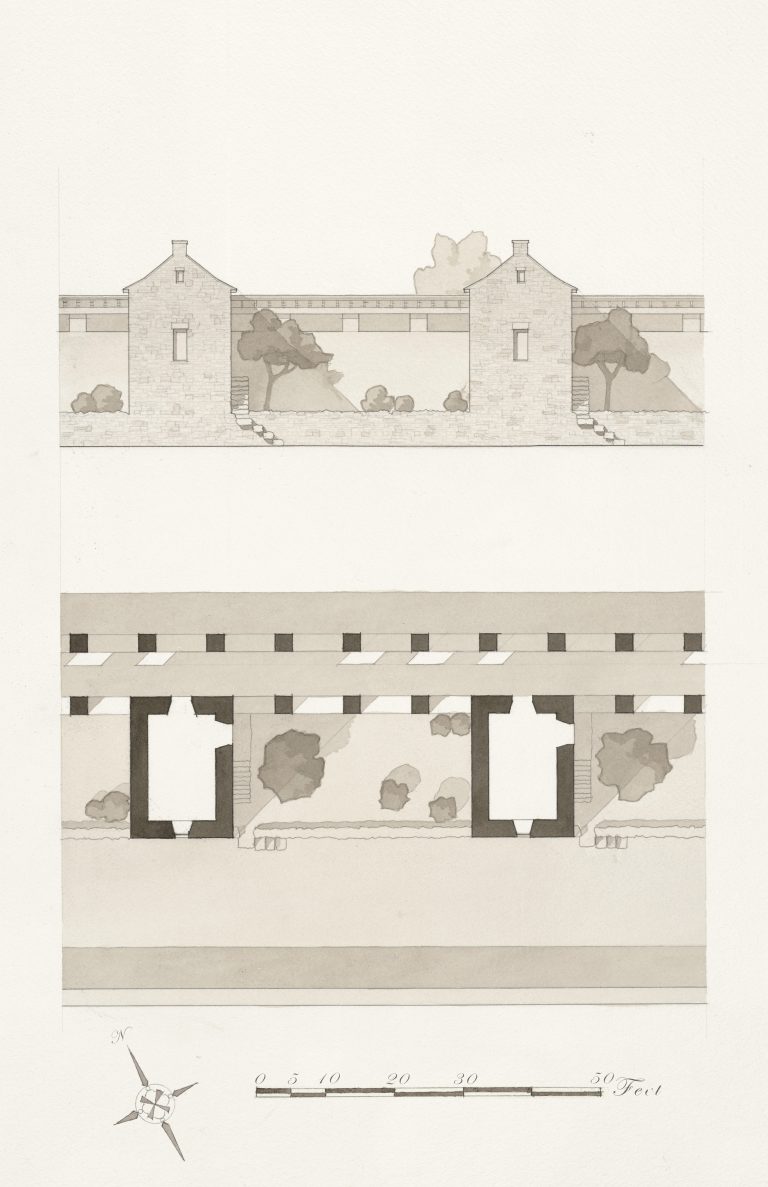
The South Cells are adjoined by a cloister which is open on both sides; however, the drop from the cloister above, to the cloister corridor, and then to the monastic enclosure wall below is so significant that a sense of private containment is unbroken. Contrary to the situation of the North cells, the retaining walls that surround the South cells ensure they are surrounded by open air.
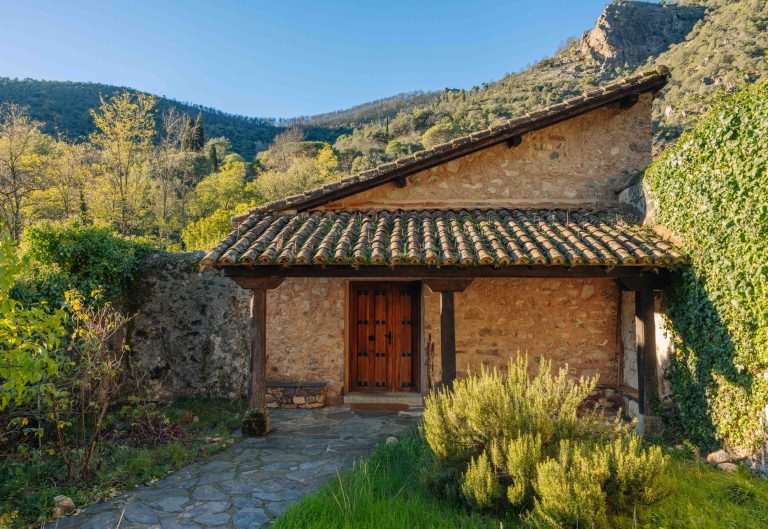
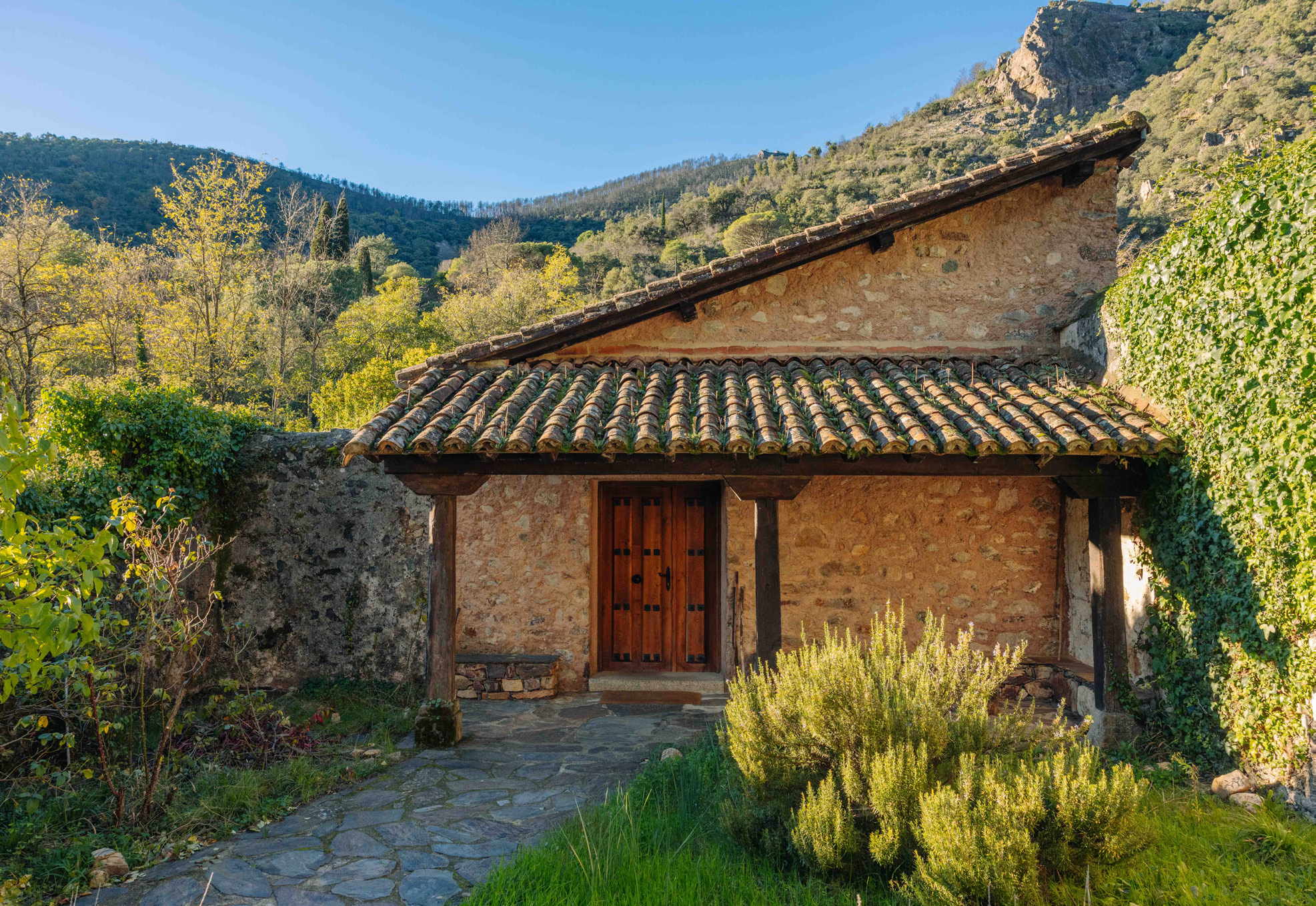
At the entrance porch of the Guesthouse, the robust timber columns and trestles hold up a wooden architrave, which in turn supports the terra cotta tile roof, which unlike the rest of the monastery, is barrel shaped. The blacksmithed door hardware and reinforcing continue the theme of durable, characteristic architecture that is never overwrought.
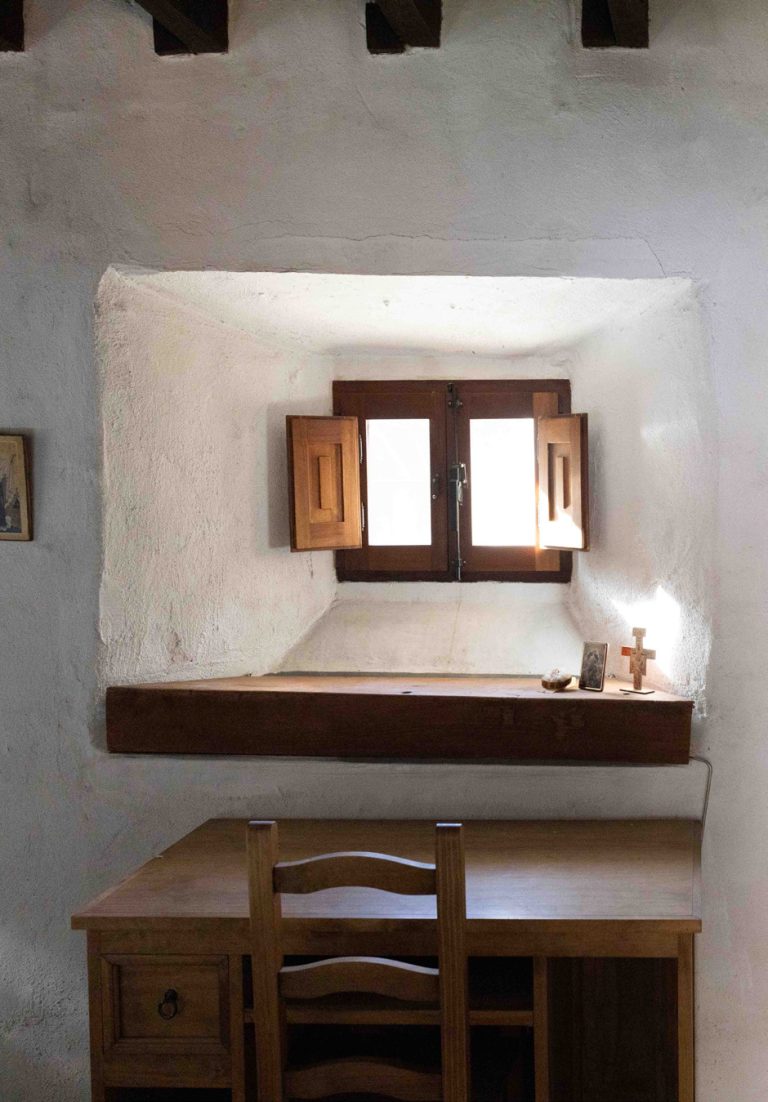
Splay windows are frequently used throughout the cloister, imminently useful for distributing light, while attractive in its simple but multifaceted geometry.
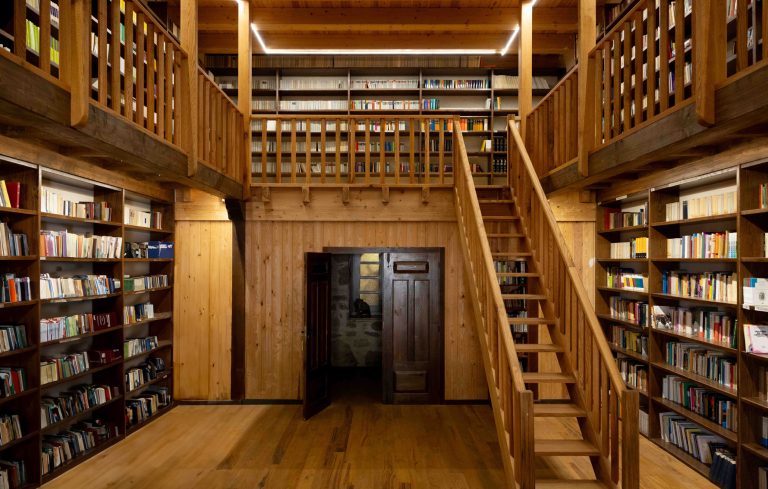
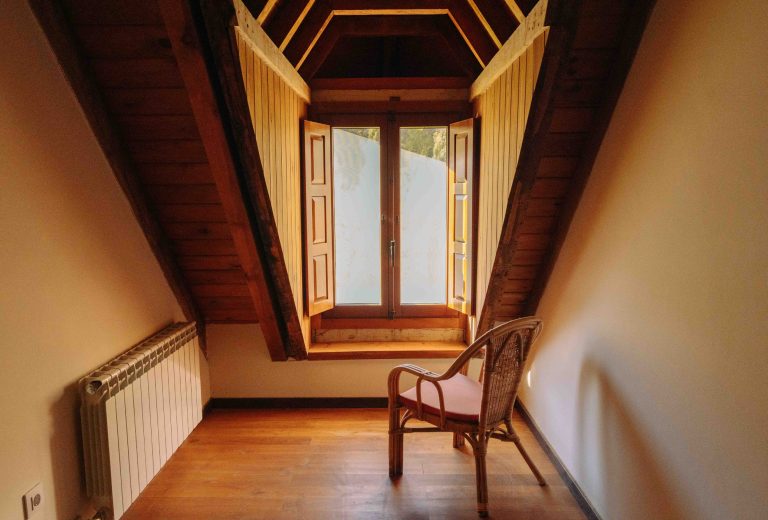
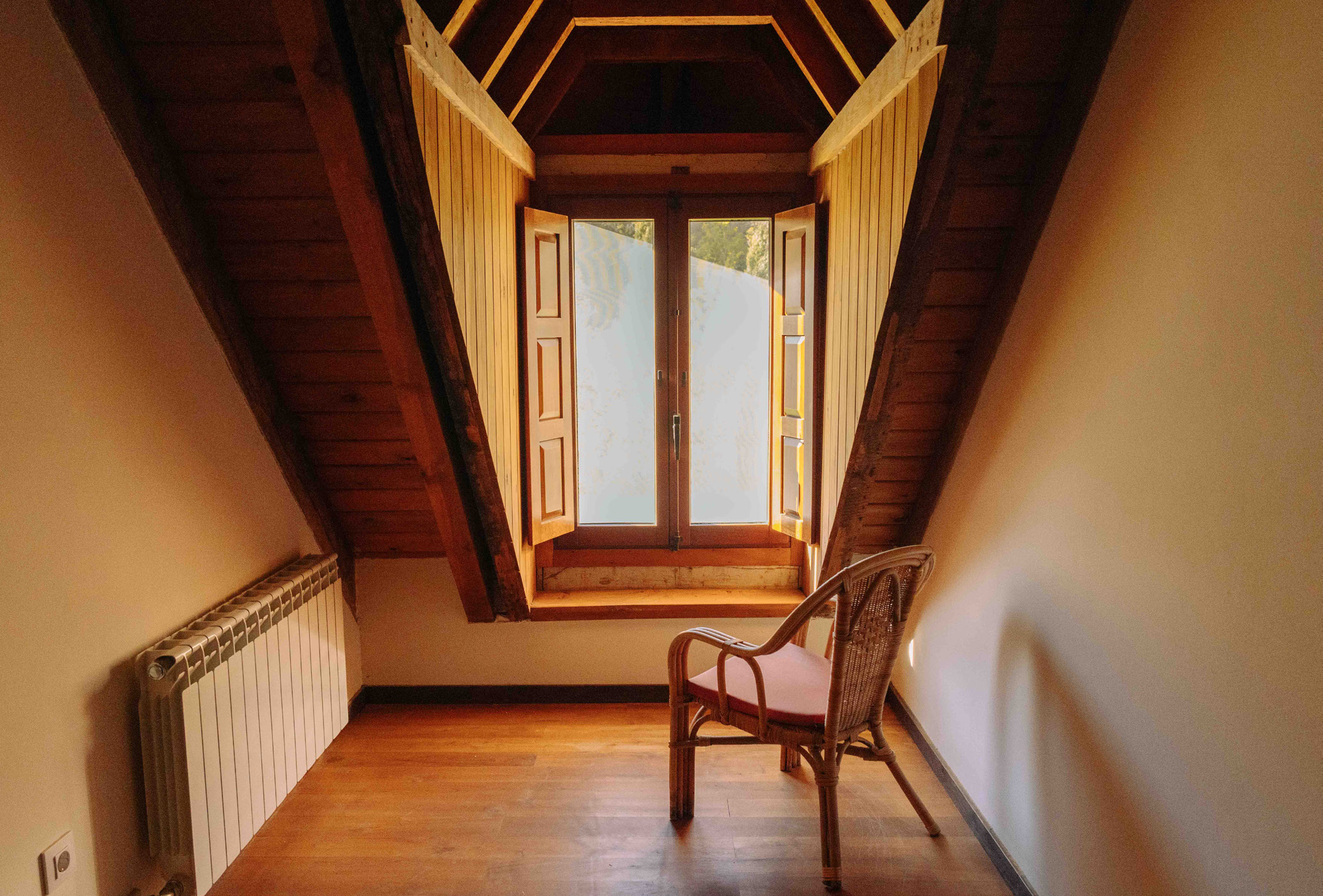
A quiet corner of the upper level hallway in the monastery has been reserved as a simple space for sitting, reading, and contemplation. Timber structure and panel shutters, in conjunction with unornamented walls and hardwood floors, effortlessly cast a serene atmosphere over the small and welcoming space.
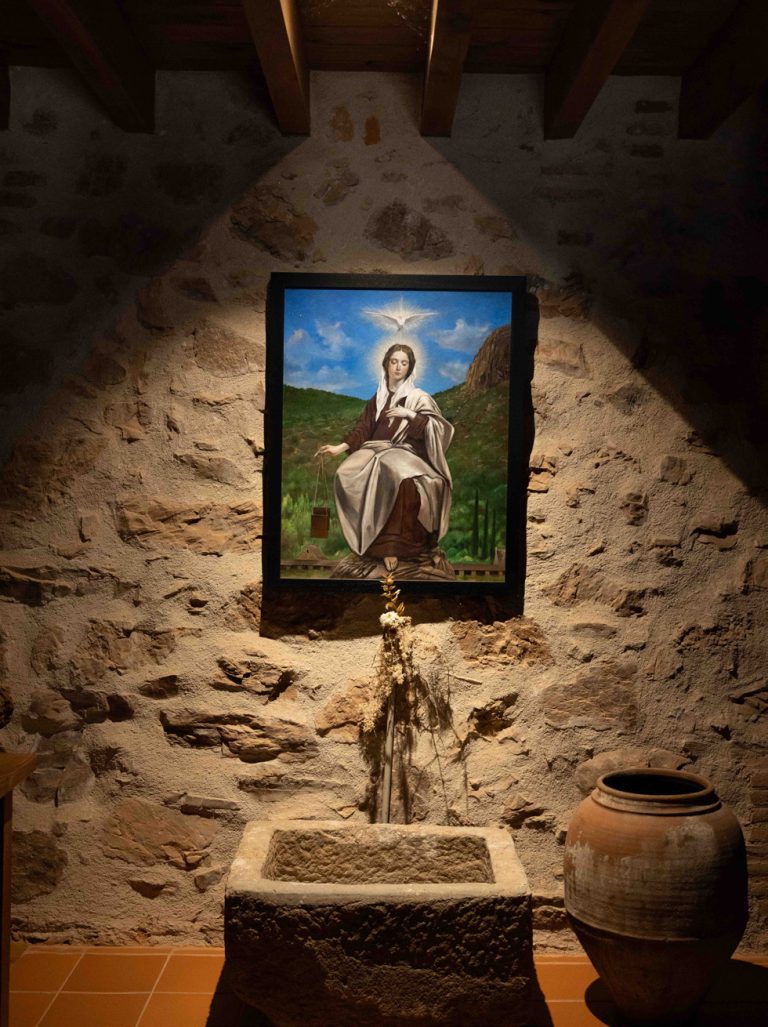
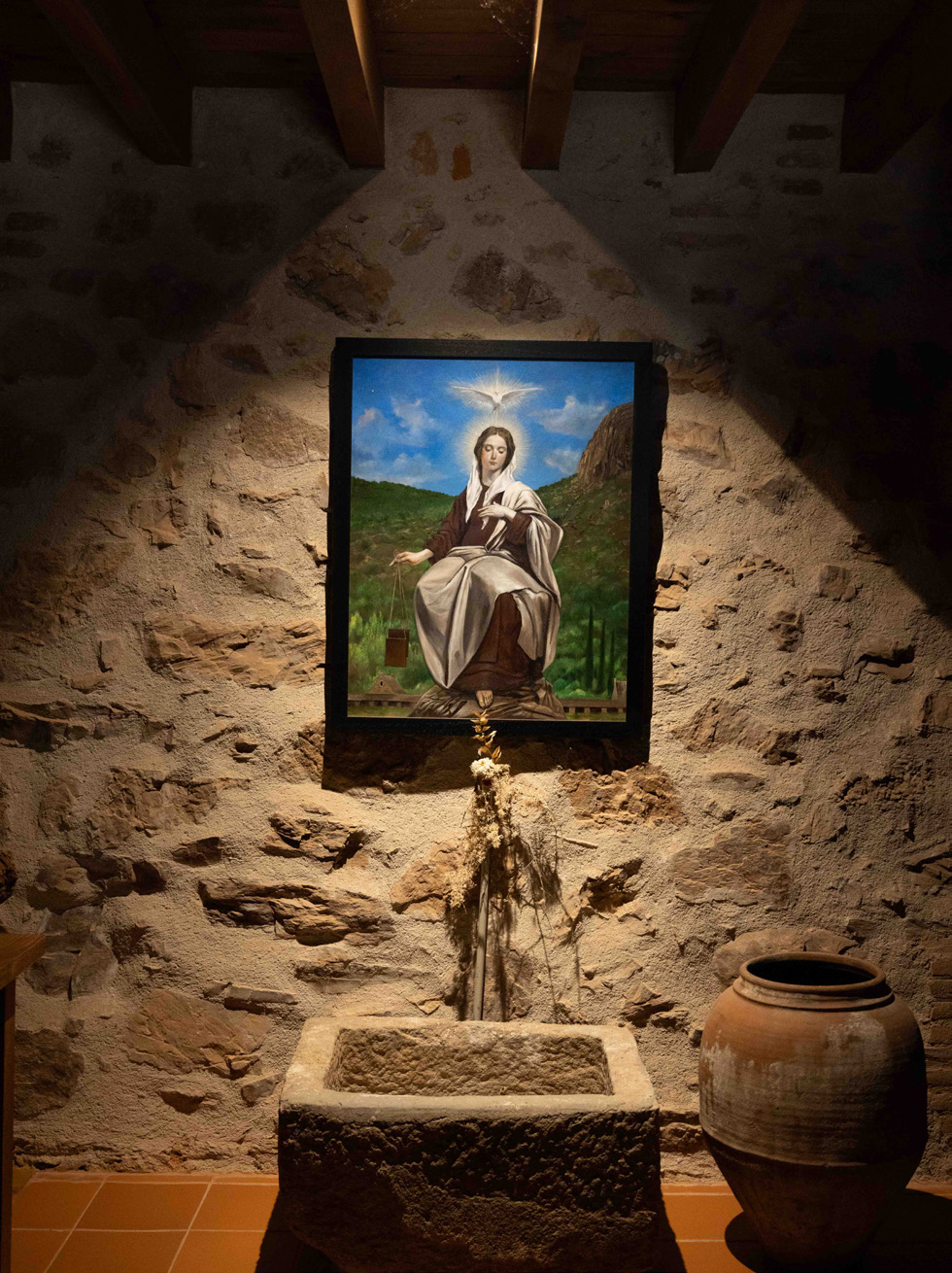
A contemporary painting of Our Lady of Mt. Carmel by one of the monks graces the corridor side of the chapel wall. Other artifacts, such as the stone fount basin come from past ages at the monastery.
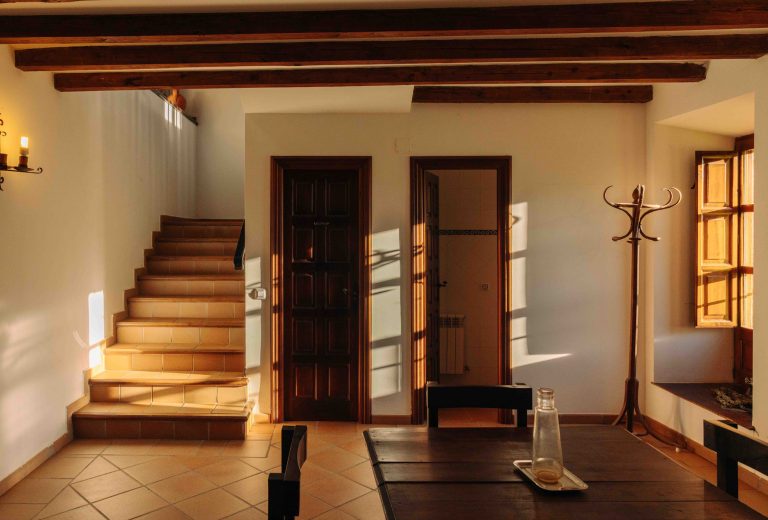
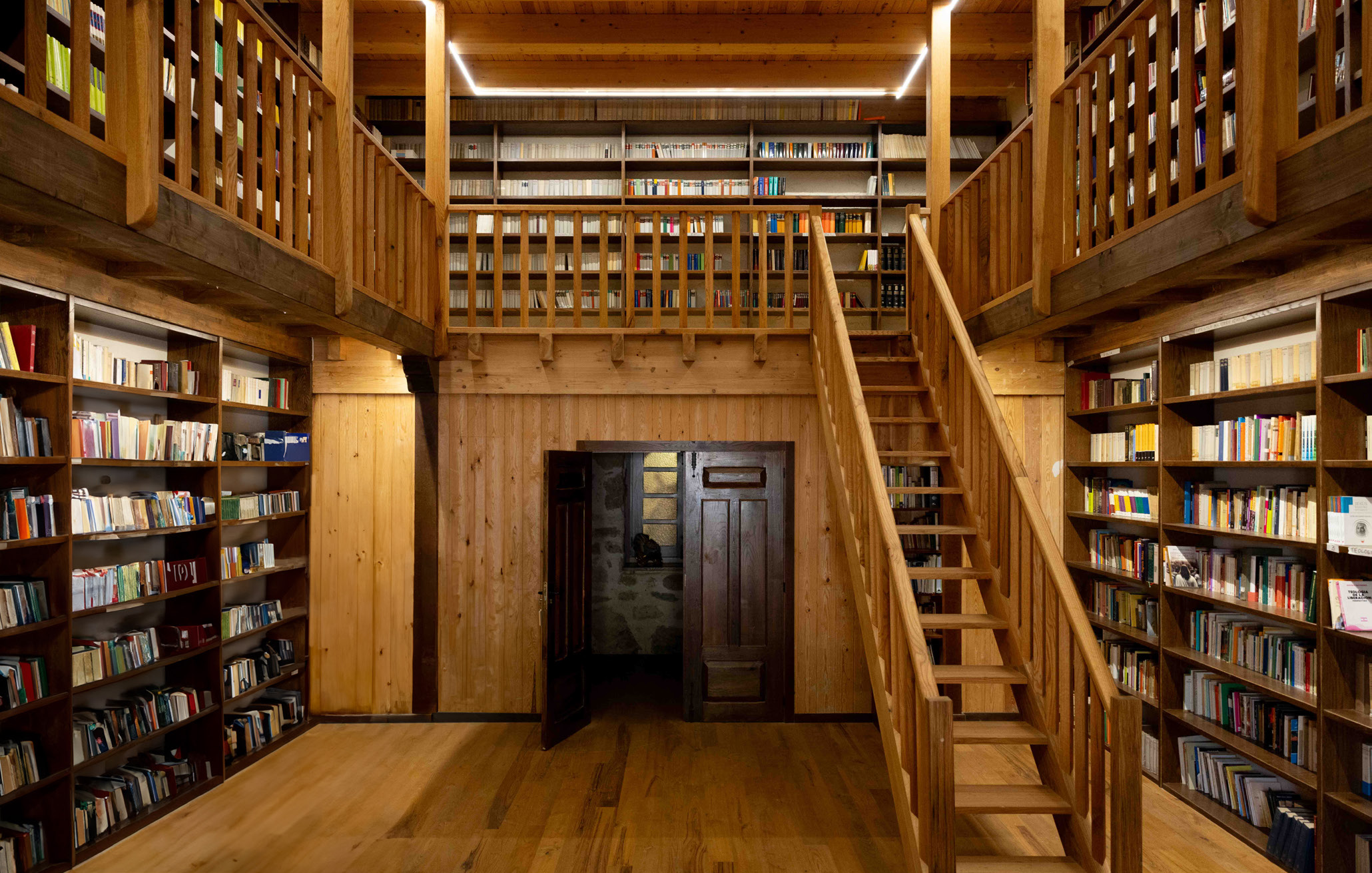
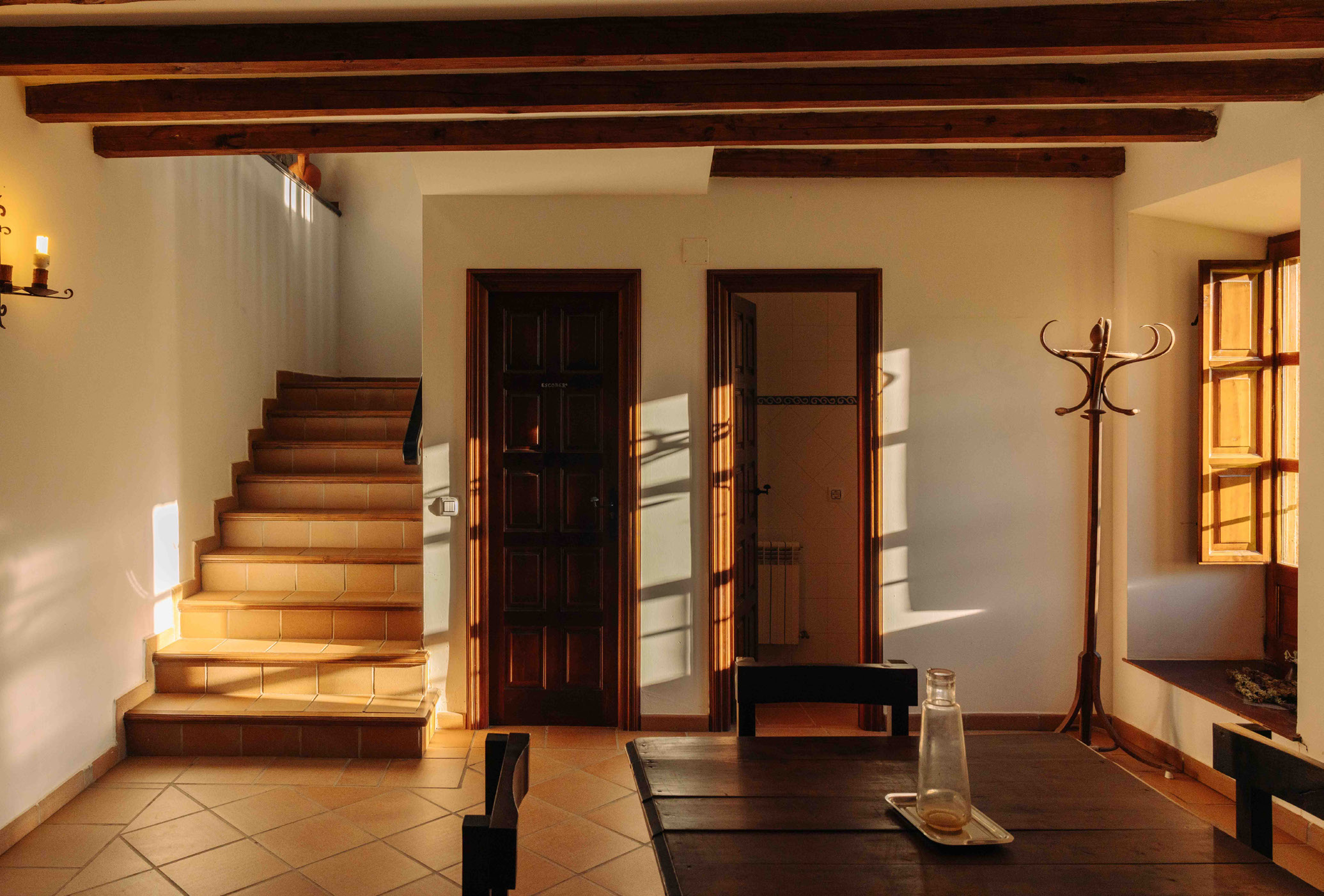
The lower level of the Guest House houses a small refectory, kitchen, and library, in addition to this small common room. Though replete with modern amenities, the masonry walls, terra cotta tile floors, humble wooden furniture, and exposed timber structure is consonant with the monastery at large.
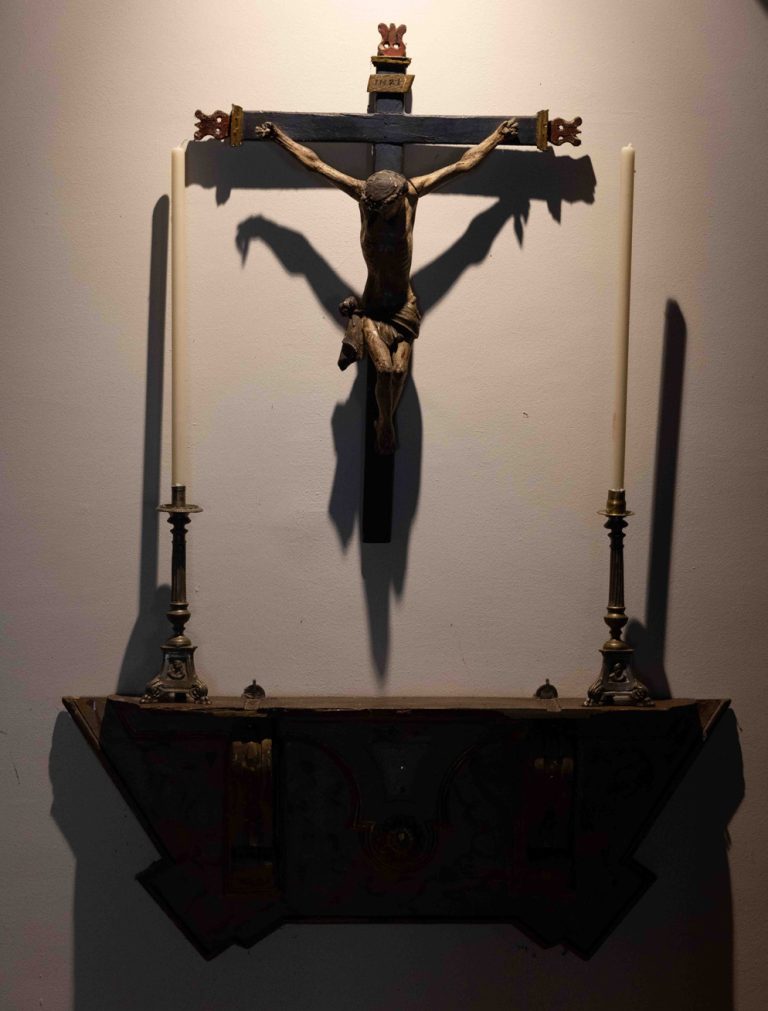
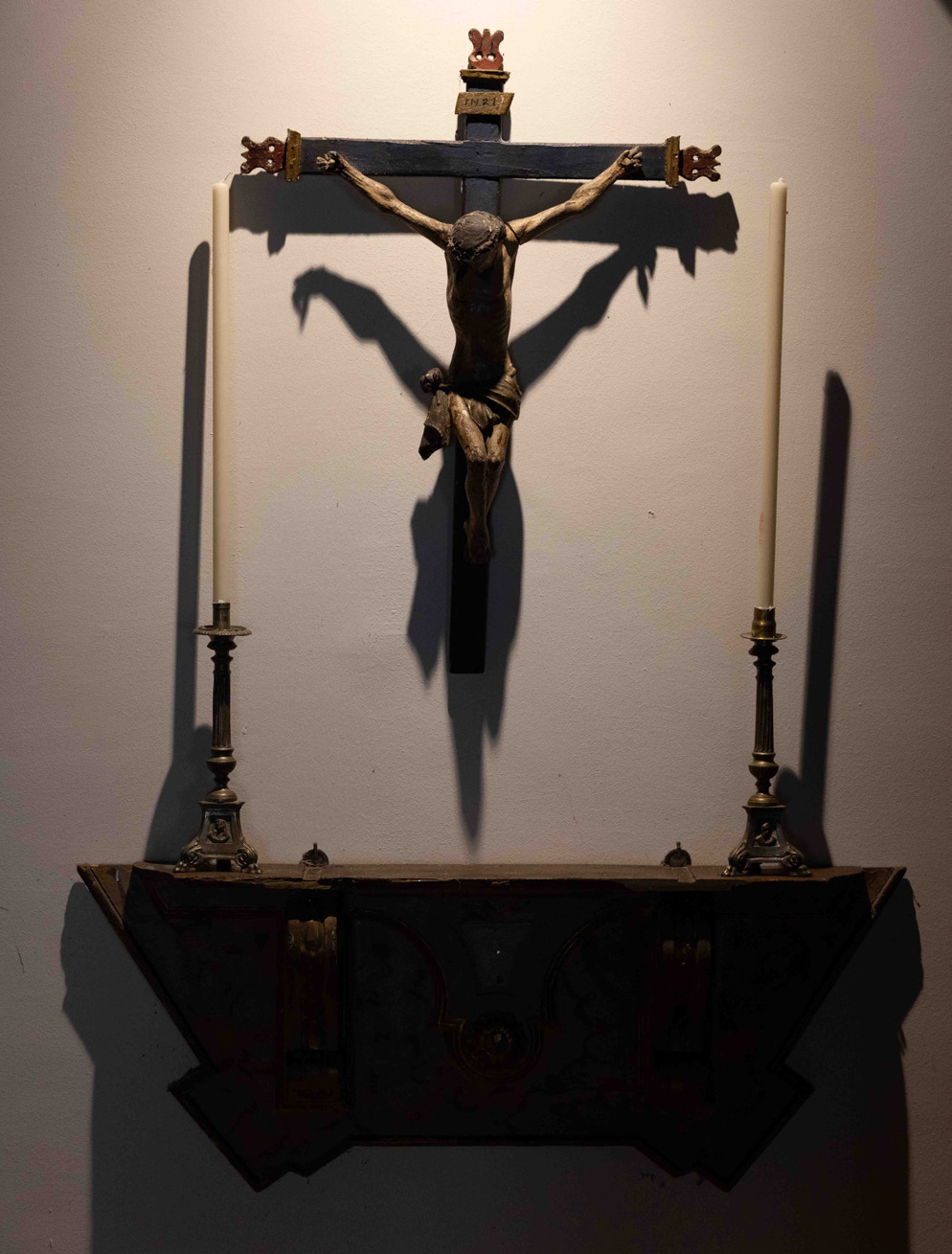
The handcarved cross and corpus are eloquent of Carmelite spiritual practice, so passionately devoted to Our Lord and His Cross.
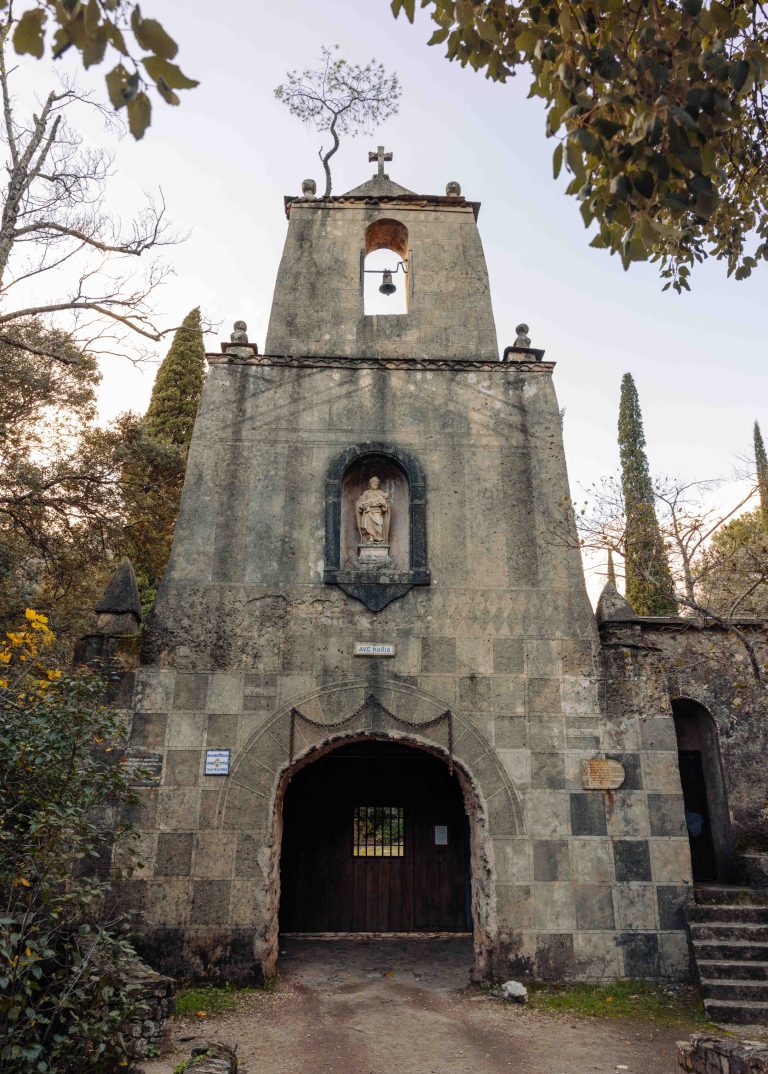
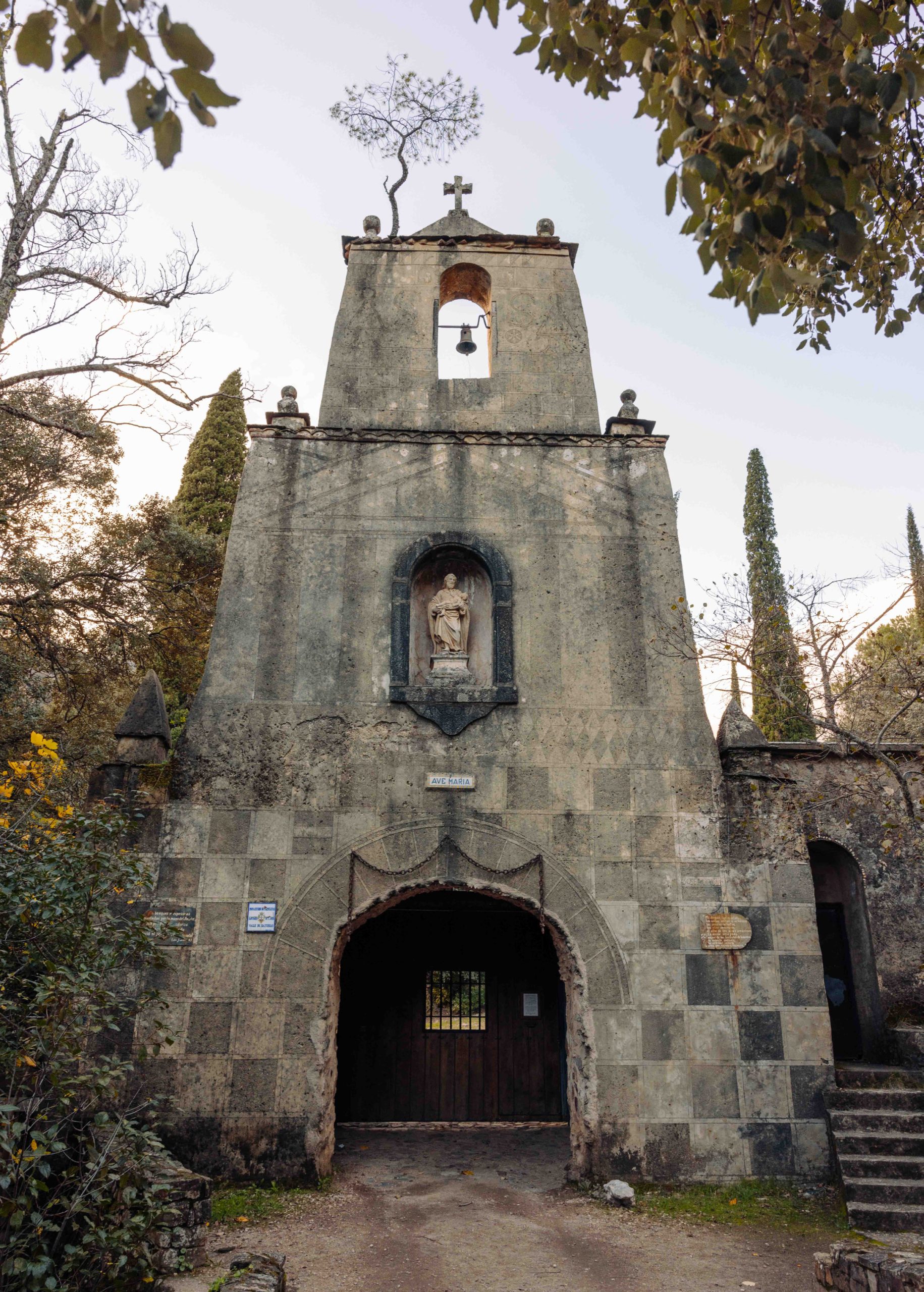
The triple tiered gatehouse merges a triumphant celebration of the entrance to the Desert with a certain humility of form and ornament. Gentle curving walls and sgraffito decoration (a process involving multiple layers of stained stucco) instruct all who approach in the enormous diohotomy of Carmelite life: the immensely important vocation to pray for the salvation of all; the immensely sacrificial life of poverty and ignominy.
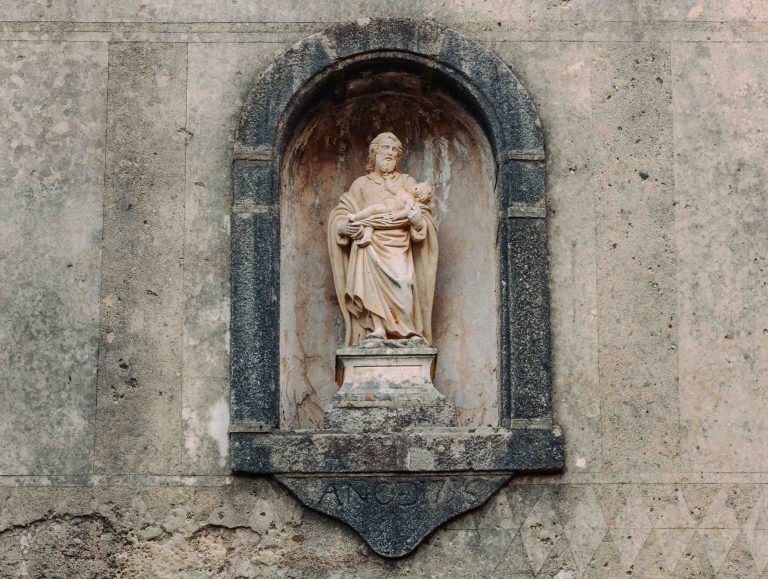
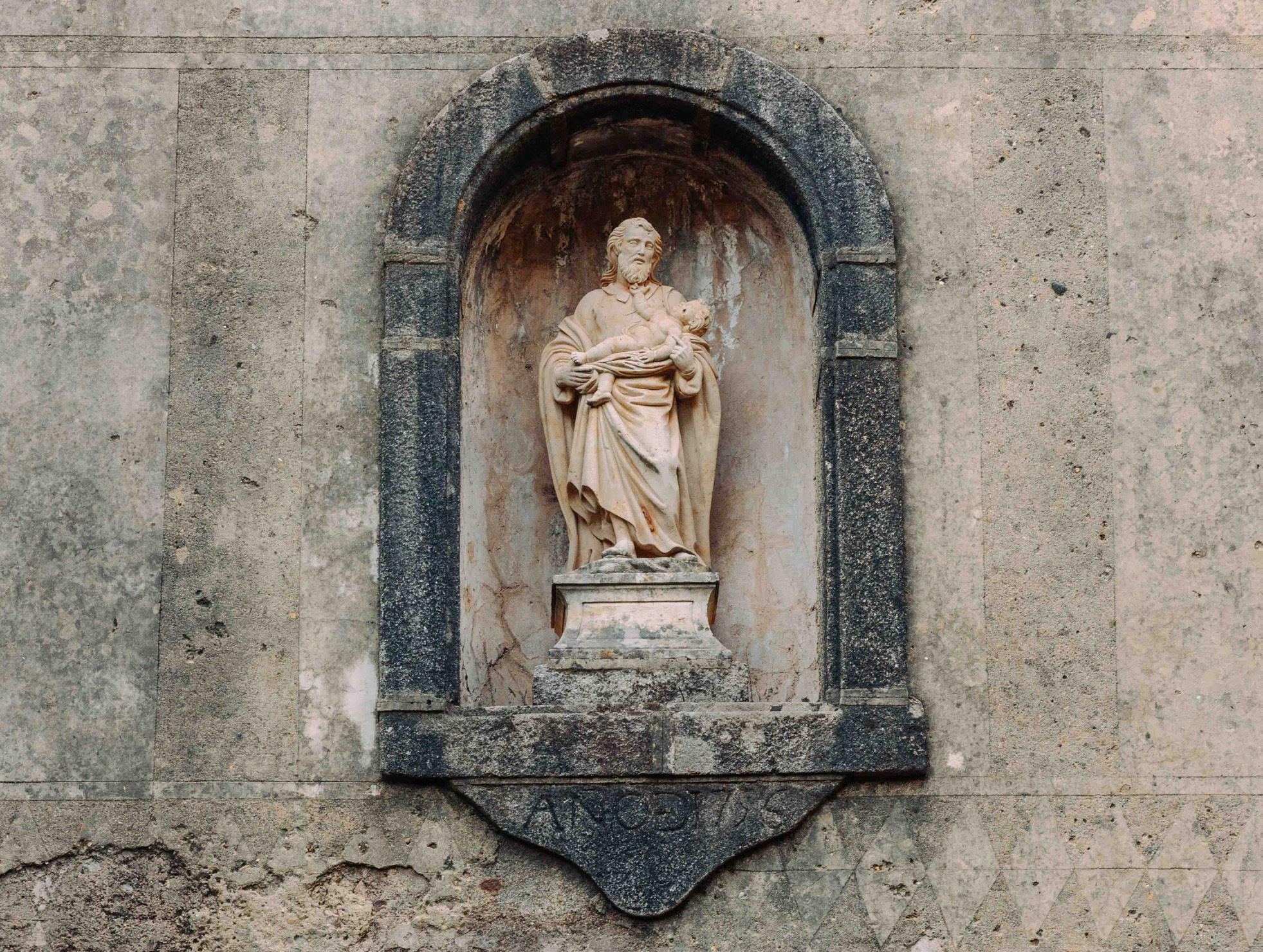
Above the threshold for all who enter into the desert stands St. Joseph of Las Batuecas holding the child Jesus, an embrace which mirrors the compassionate accompaniment God tirelessly maintains for those He calls to religious life. The statue niche is framed in stone, and surrounded by a scraffitto temple front and a simple diamond pattern dadum.
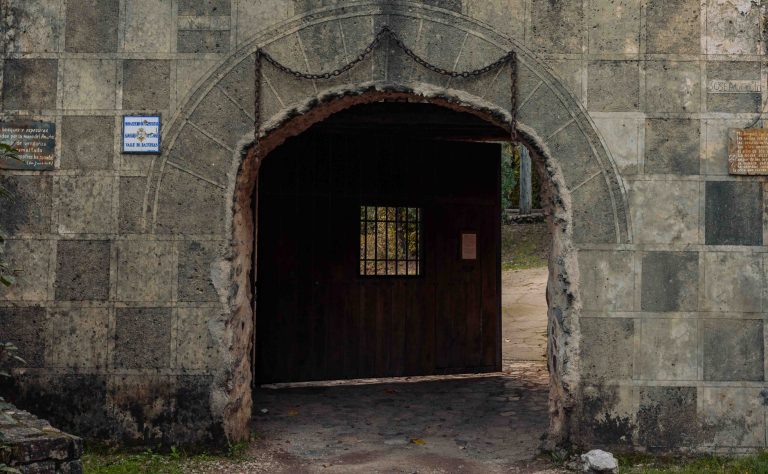
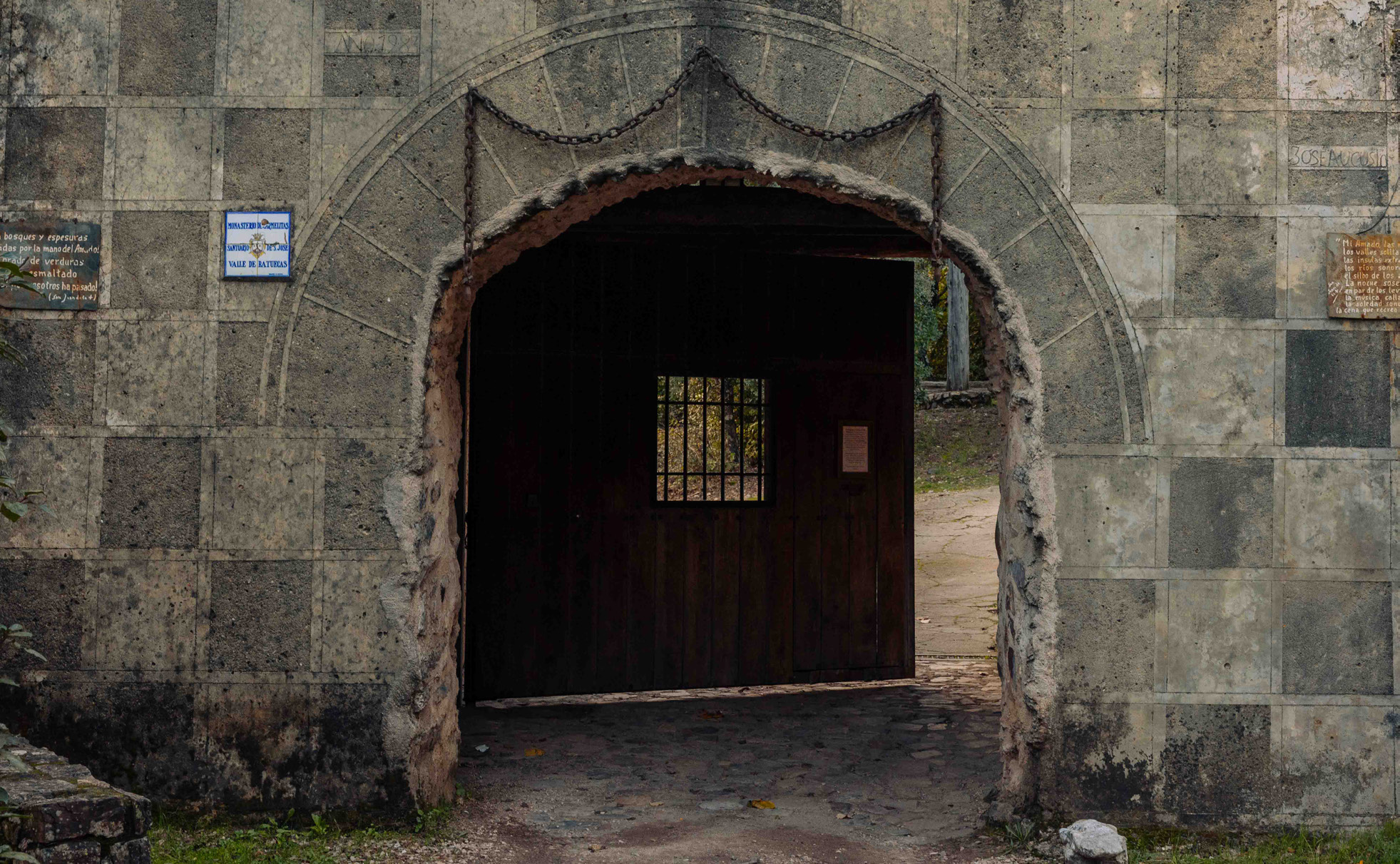
The Gate entry to the desert appears to have been modified to accomodate the passage of larger modern vehicles. Neverthless, the simple reticulation of the wall and arch into sgraffito squares gives the surrounding wall a frugal but decorous aspect. The chain hung over the opening is an evocative symbol, which may represent among other things the leaden weight of sin and wordly pursuits which the hermit fully renounces upon his entry into the Desert.
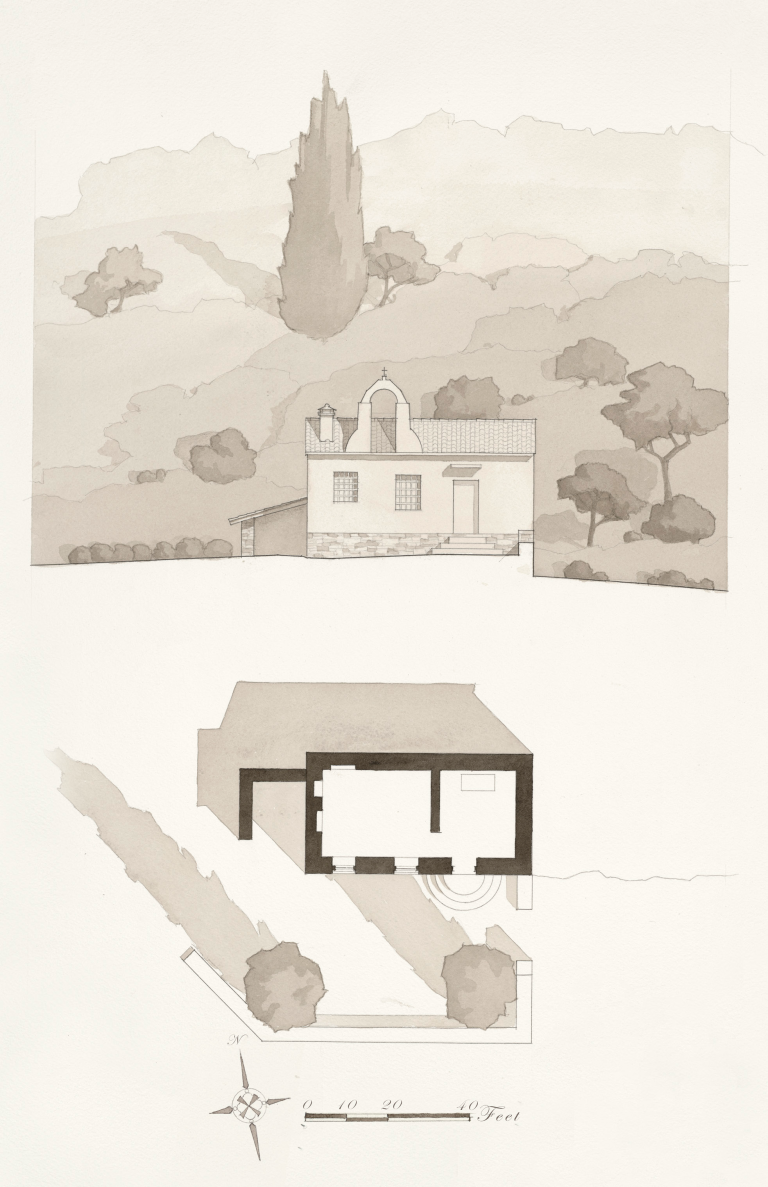
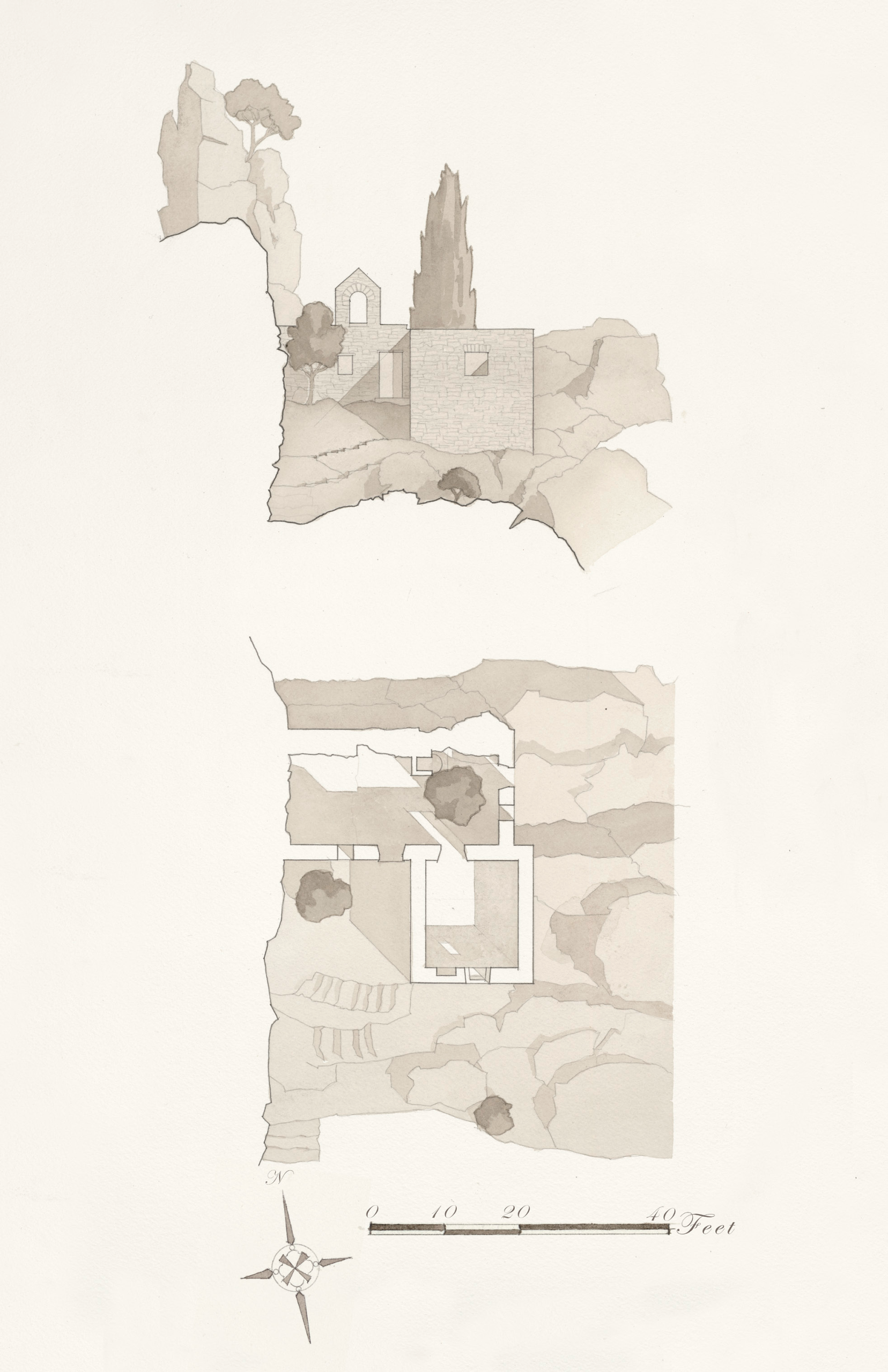
The St. Elijah hermitage is constructed upon the mountain slope, almost halfway up from the Las Batuecas riverbed below to the rocky crags at the peak, where the hermitage of St. Onuphrius perches with the fearlessness of a bird of prey. Unlike the simple wall stabilization at other hermitages on site, St. Elijah has been fully re-roofed and modernized.
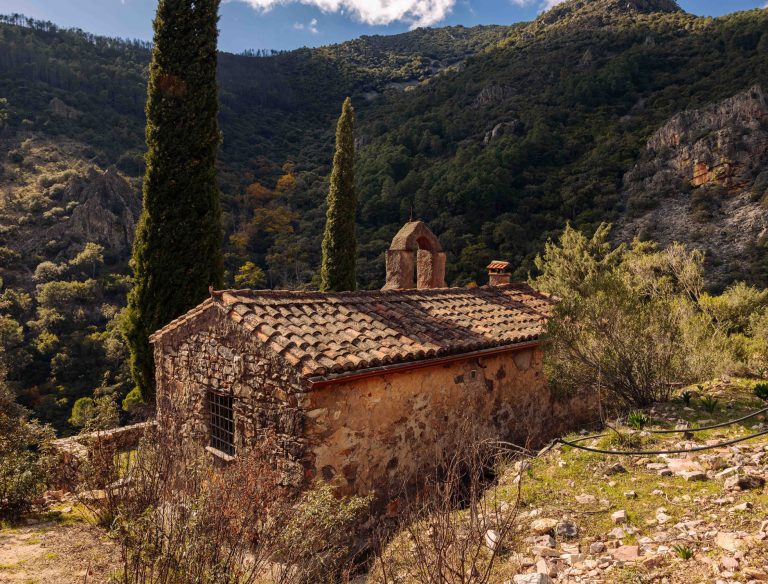
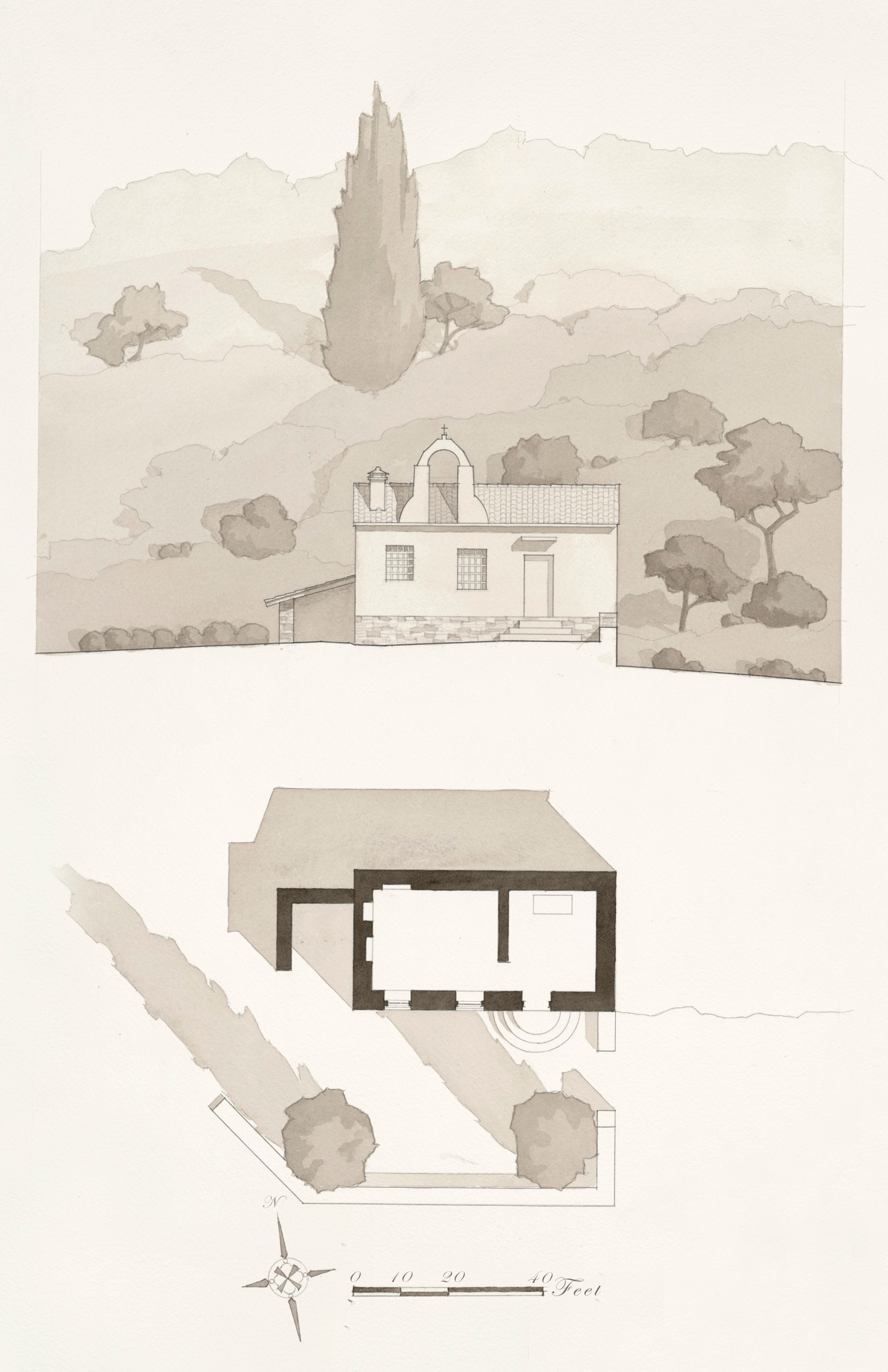
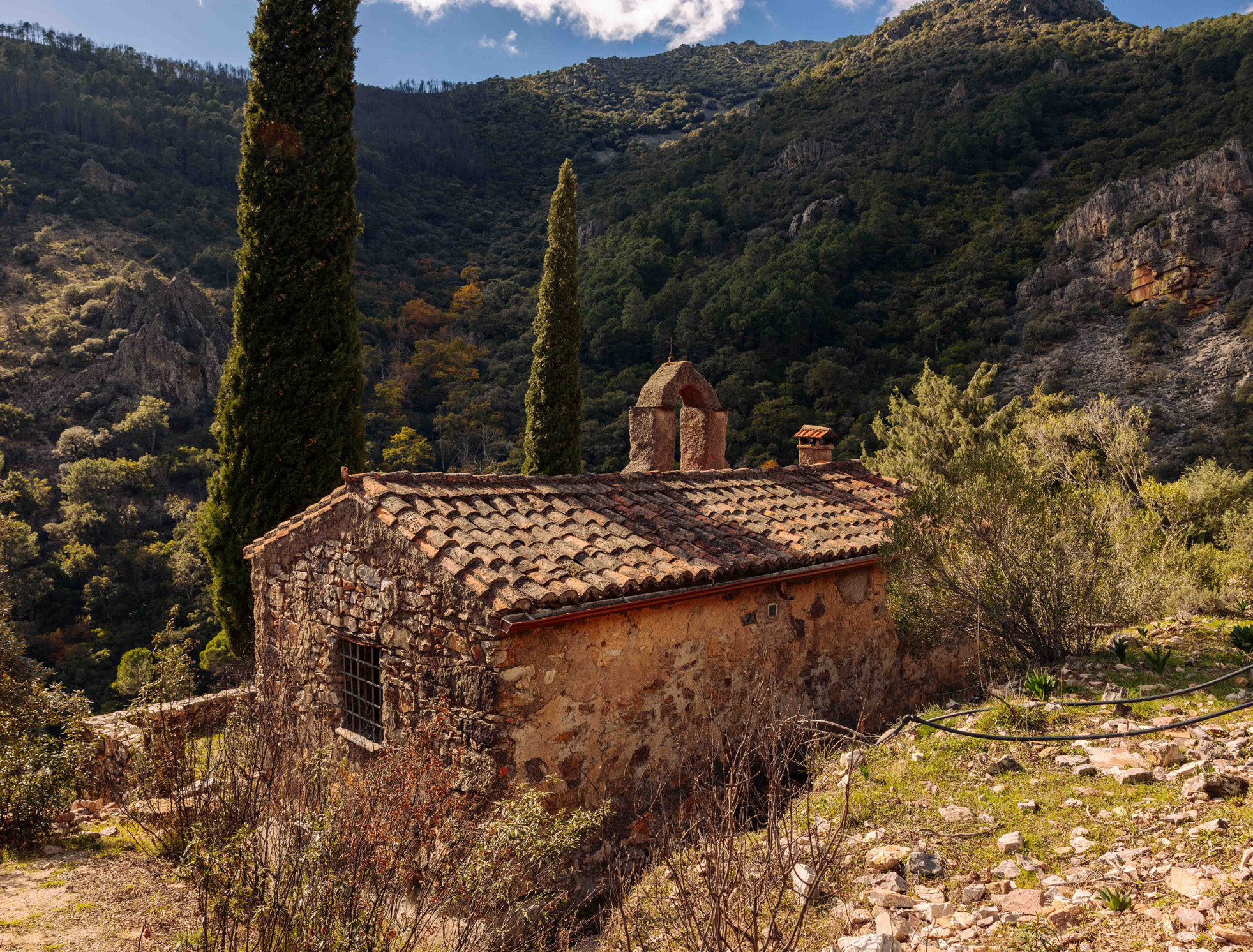
Despite modern restoration, the bell cote and terra cotta roof give us an impression of how the historic hermitages would have appeared, though as on other buildings at the monastery, a painted plaster would likely have covered the walls. It is unclear if the gracious terrace and columnar cypresses predate the modern era.
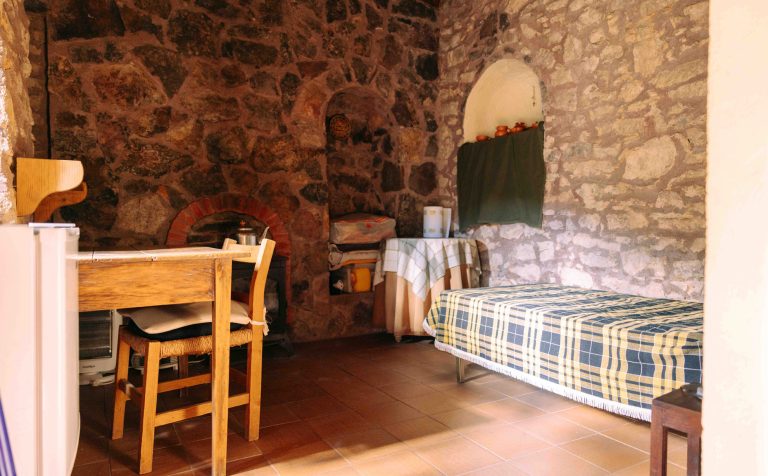
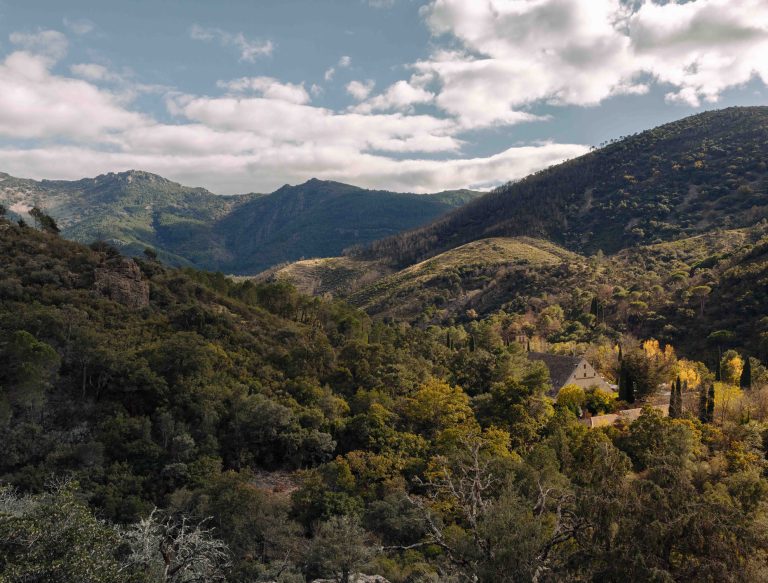
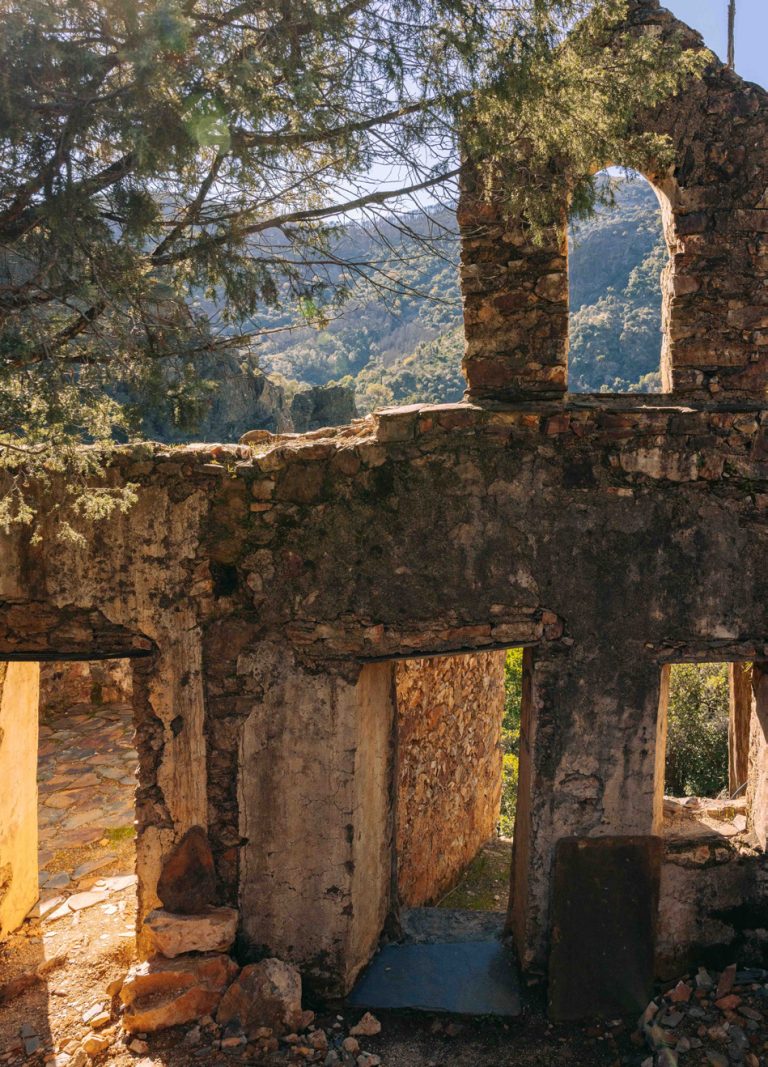
The St. Francis Hermitage is at the far northwestern corner of the Desert, touching at its exterior wall the enclosure wall of the entire desert. But there need be no concern for privacy or interruption; for at this extremity the desert wall lines a cliff face which drops hundreds of feet to the riverbed below.
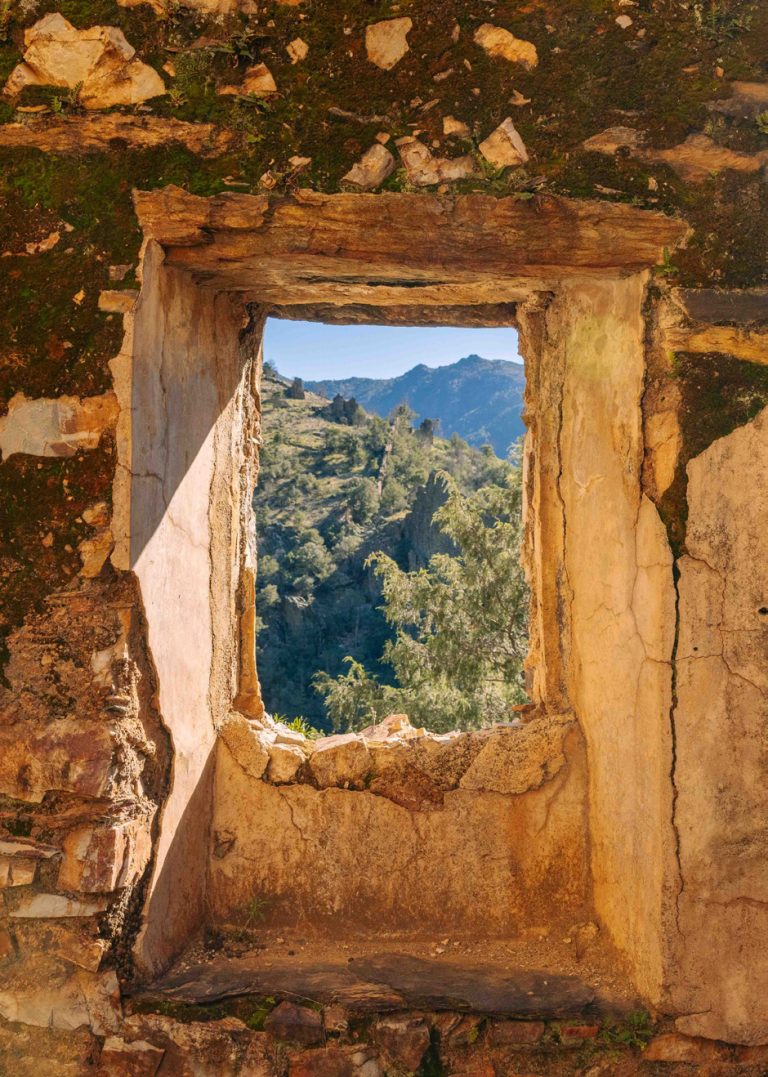
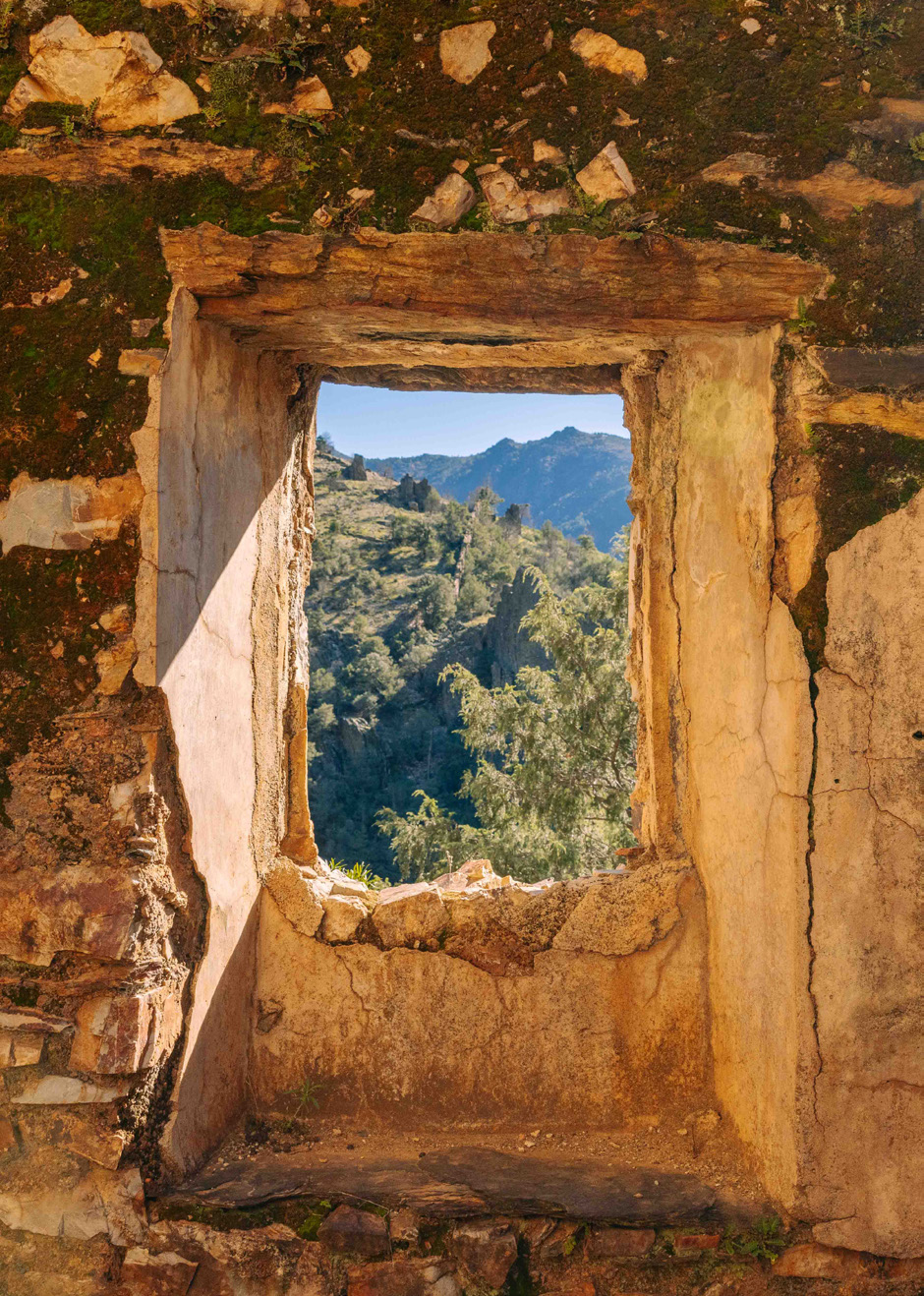
The view from the St. Francis Hermitage, for the fortunate ascetic, is impeccable. Through the small window on, the hermit could view the Desert wall marching up the slopes to the East.
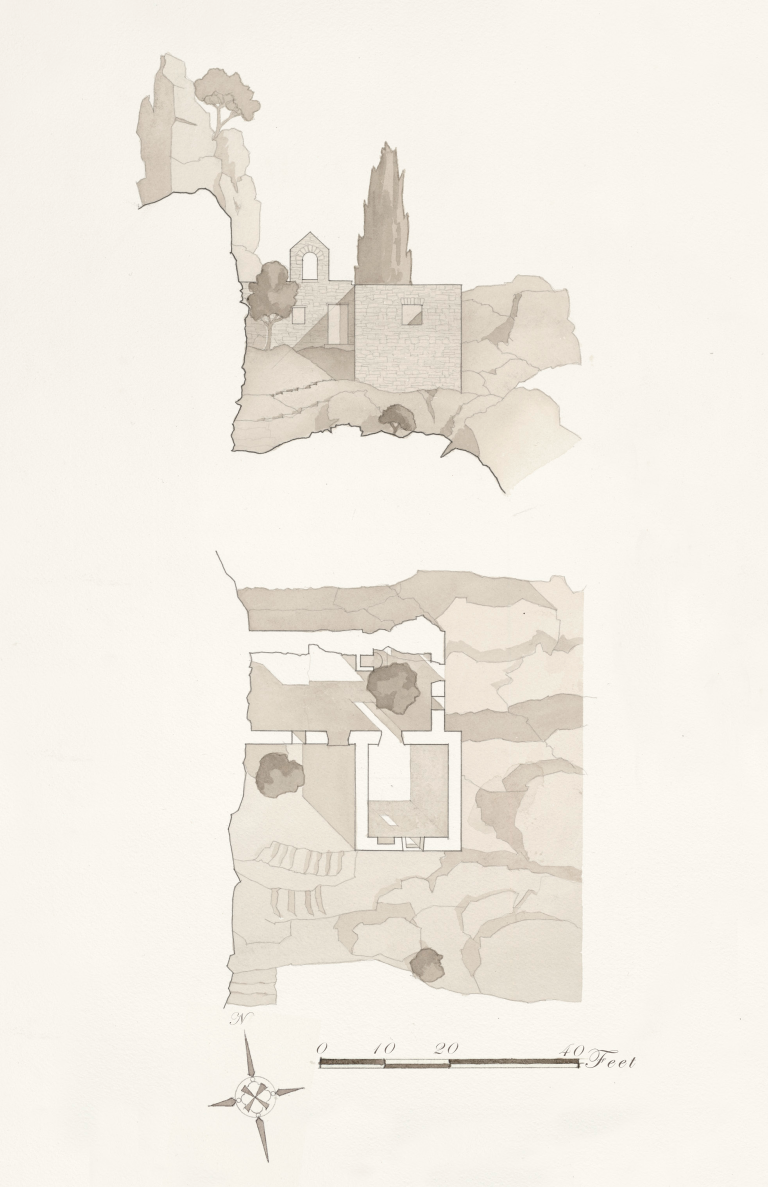
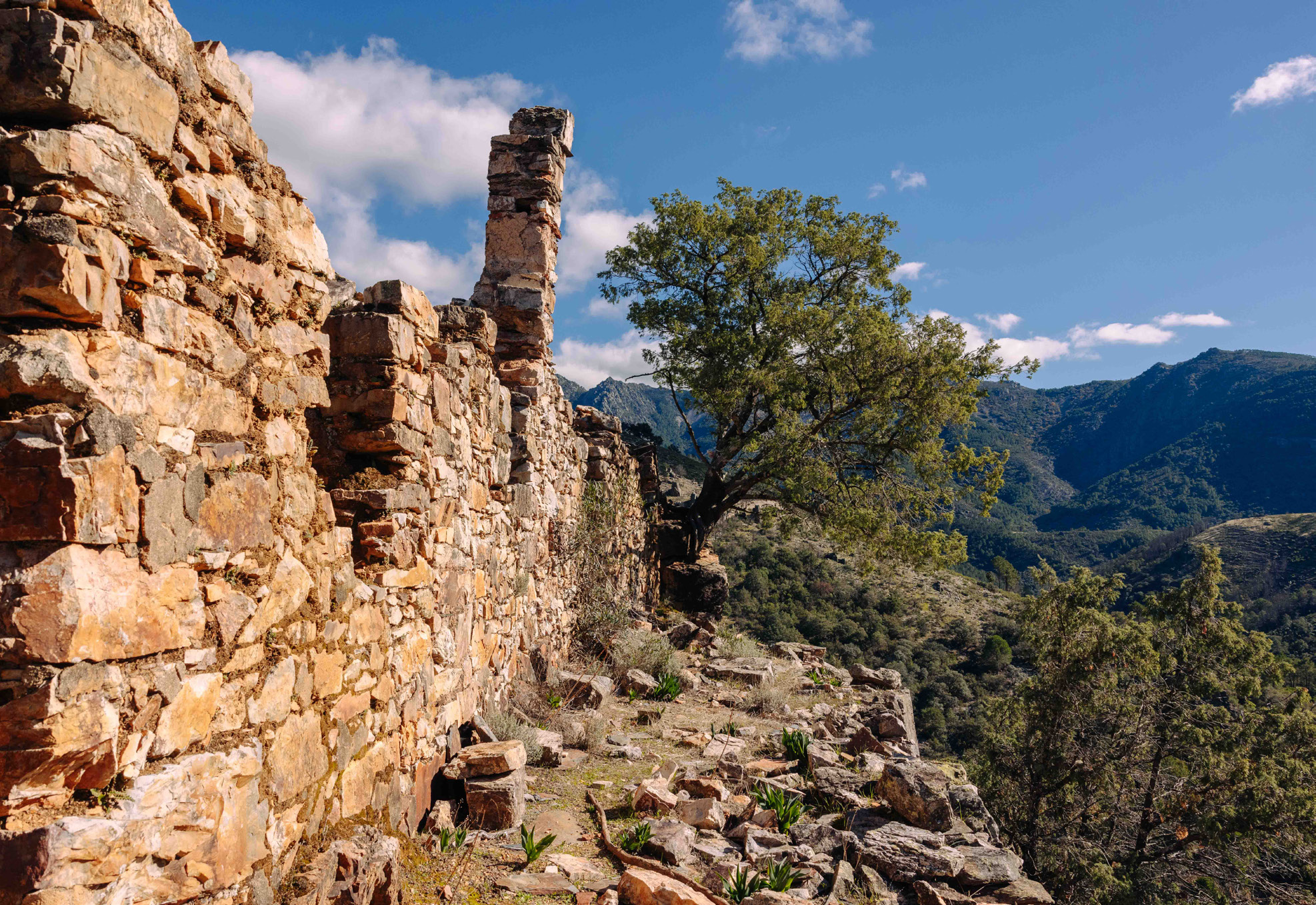
The St. Francis hermitage is nestled into the cliff face very near to the absolute summit contained by the Desert, such that a great portion of its exterior enclosure consists not of walls constructed by human hands, but enormous rocks carved out by God and the onslaught of Earthly time. Like the trees that grow among the scrabble of dirt amongst the rock, the existence of the hermitage here seems impossible but for the grace of God.
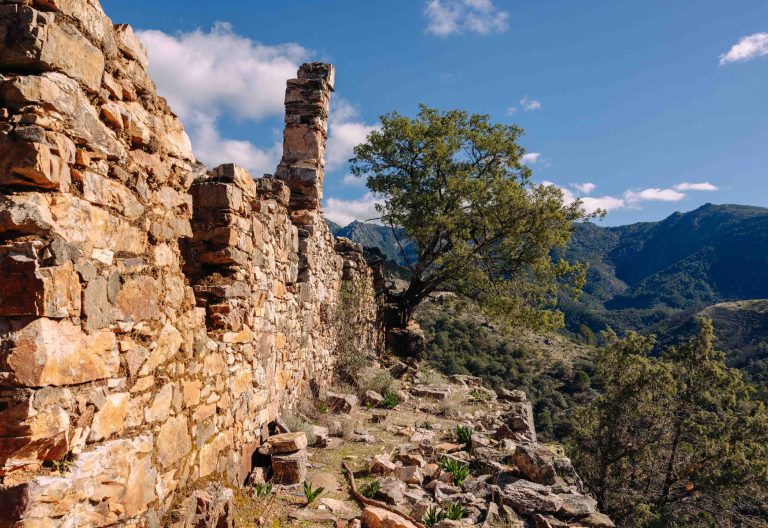
The St. Onuphrius hermitage is sited, if possible, even more dramatically than St. Francis. On a lofty shelf, the narrow hermitage is three walls braced against the highest vertical face of the rock. The decades demand more and more of its exterior walls to be knocked down; but the view remains as breathtakingly vast and beautiful as ever.
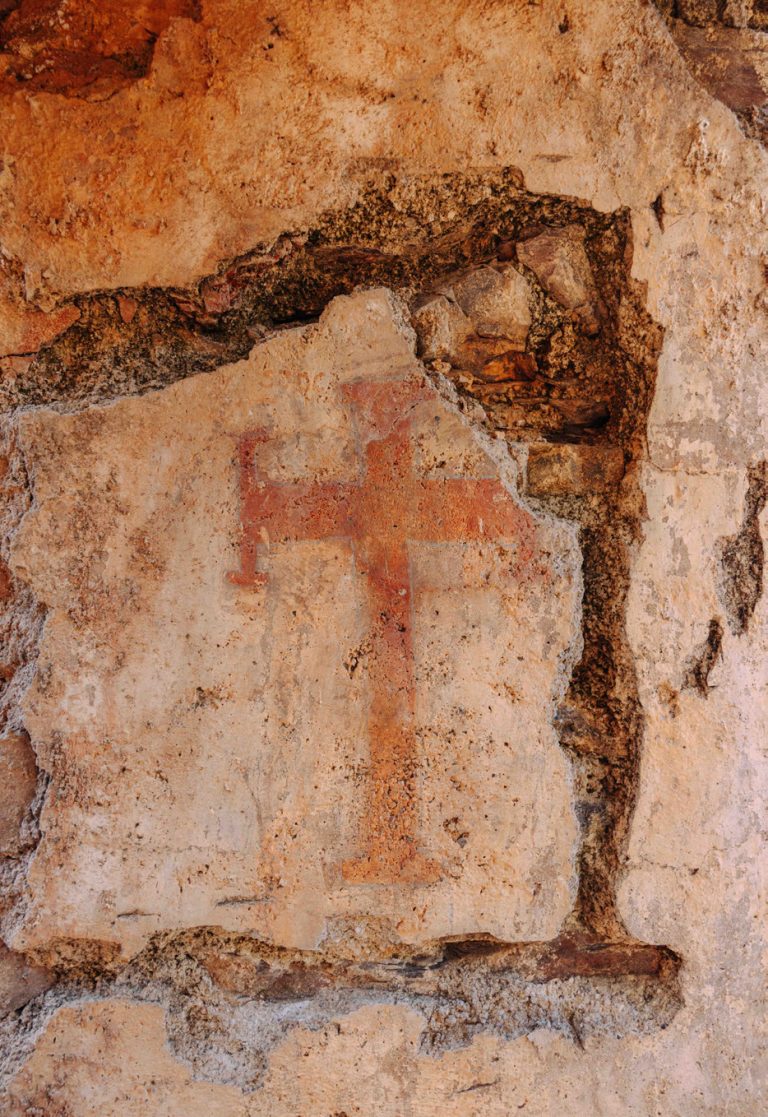
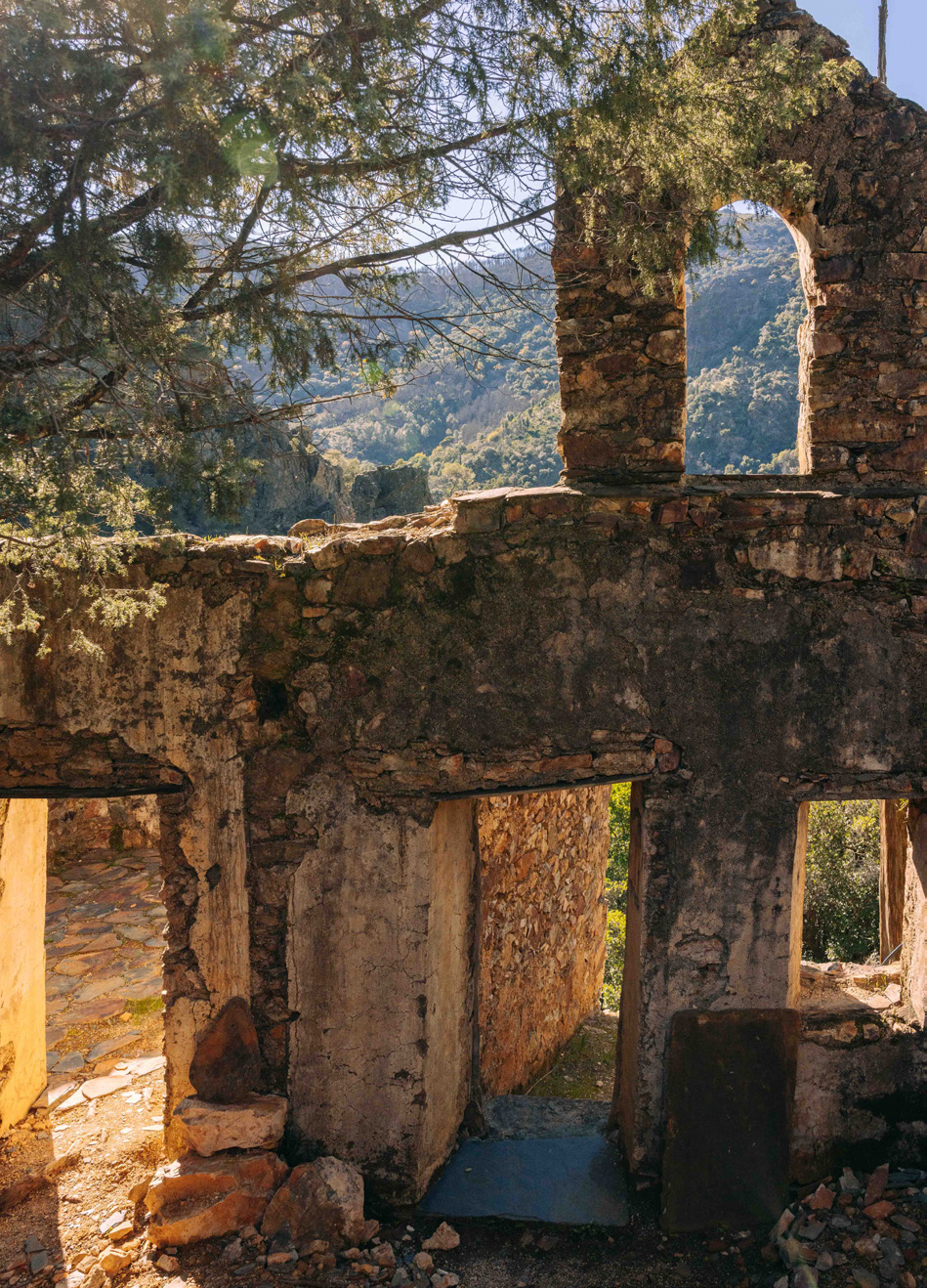
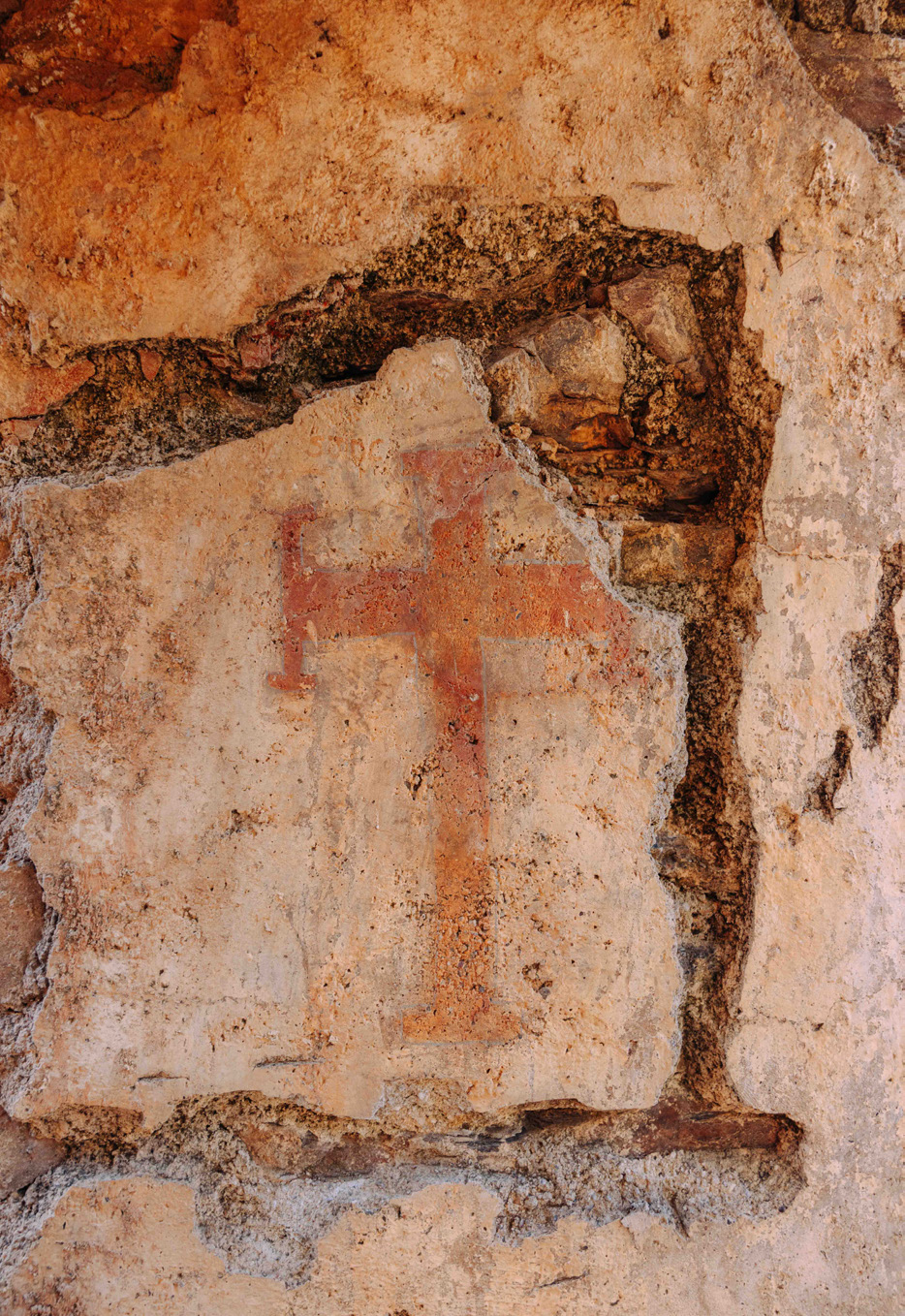
A cross painted on the stucco interior of a hermitage is exquisitely beautiful, even in its state of slow deterioration. The muted paint colors, the subtle geometries at the arms and base, and the warm and textured stucco canvas serve as a reminder of the formerly vibrant eremetical life of this amazing place.
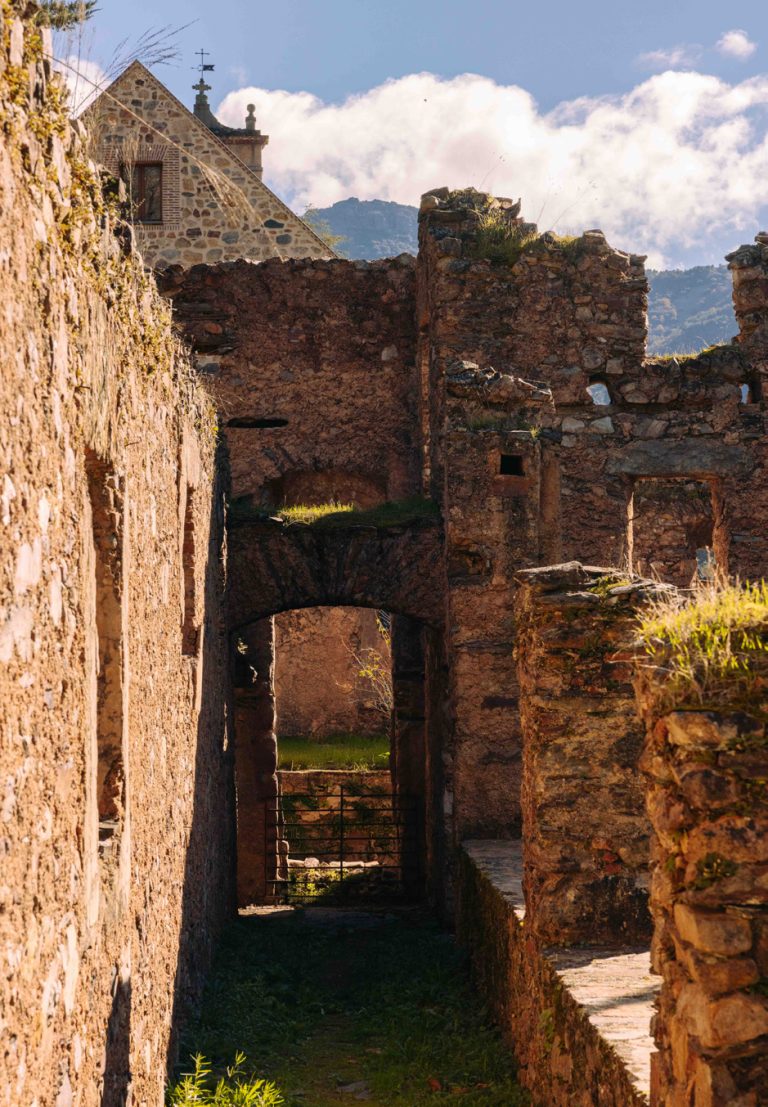
Remnants of piers and a corridor are the only evidence of a small secondary cloister among the agrarian work buildings.
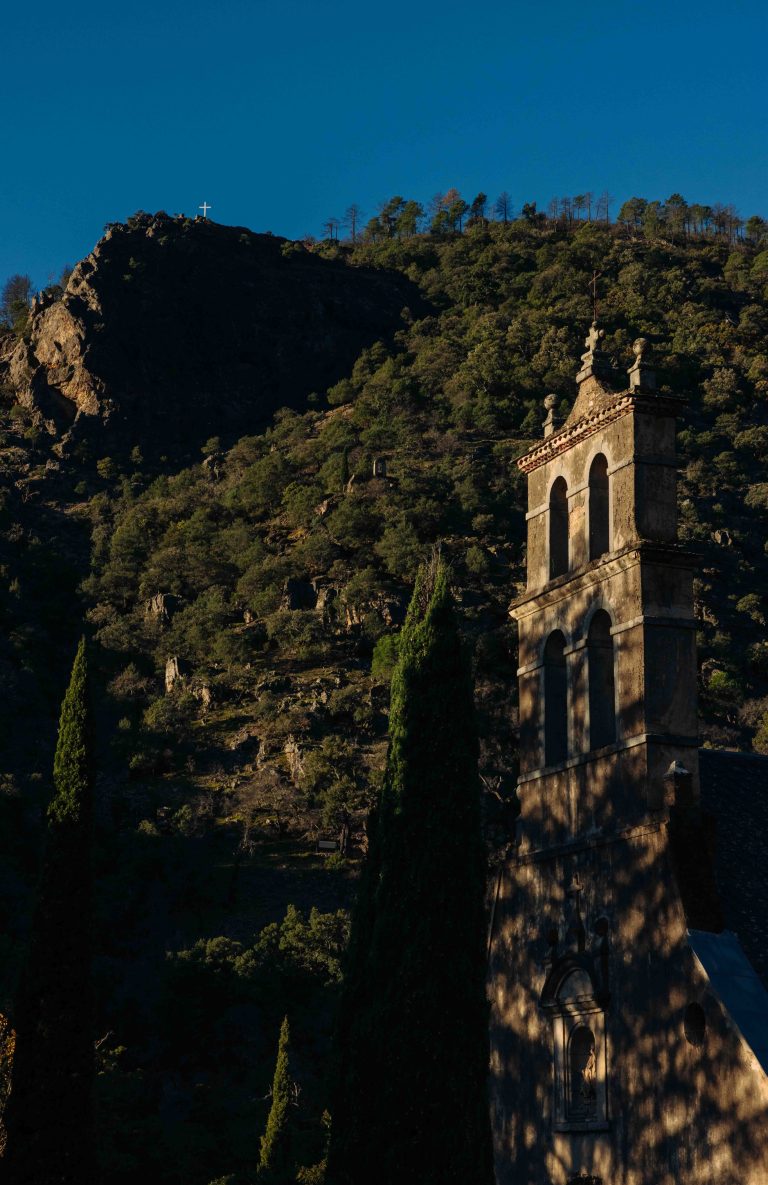
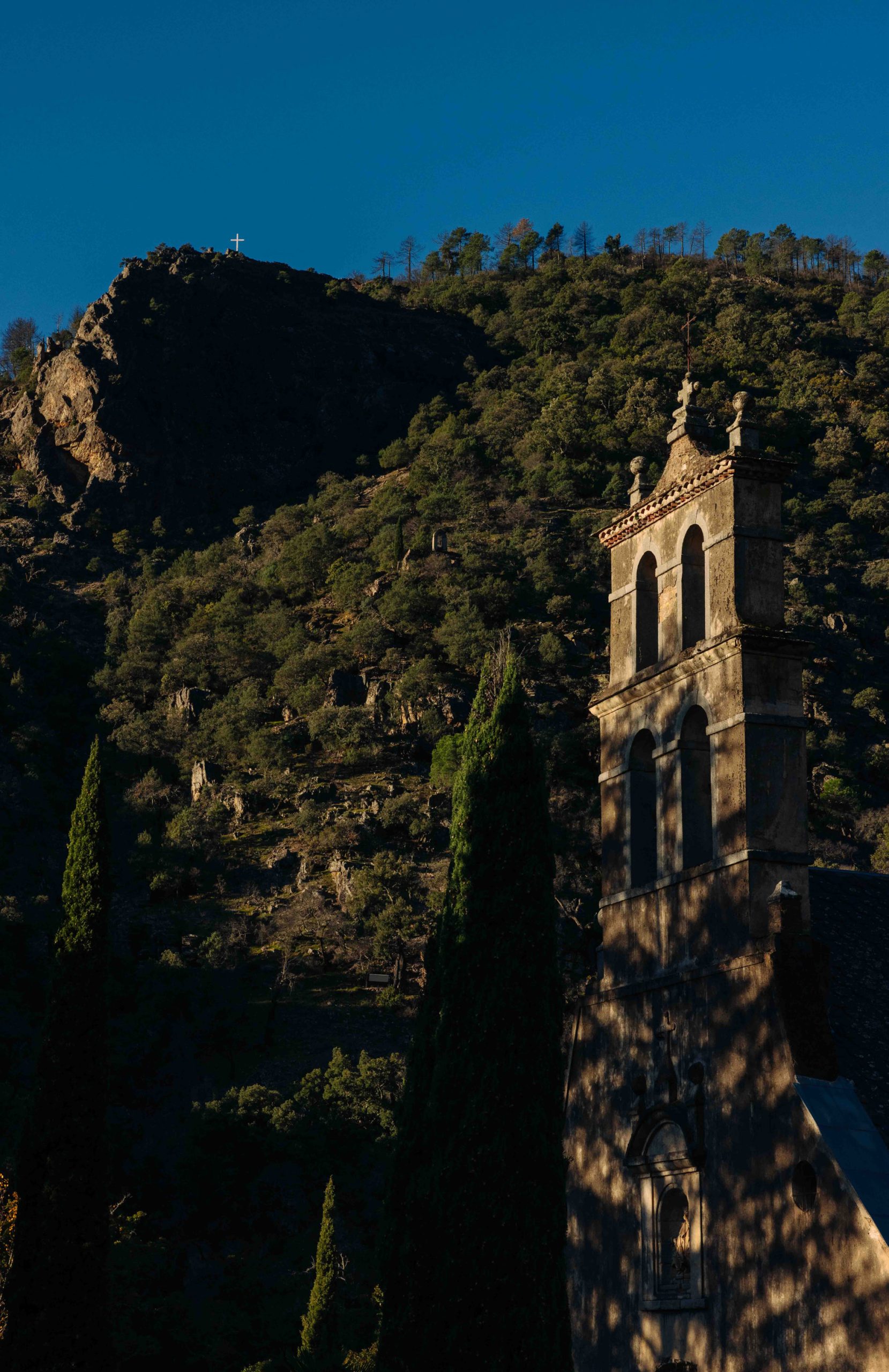
The facade of the central Monastery at Las Batuecas rises in the morning light as it spills into the valley. Far above, a cross crests a monolithic rock outcropping, and echoes from its glorious summit the symbol of the monastery below. Barely visible upon the slopes betwixt is the bell cote of the St. Joachim hermitage.

Photographed and Documented by
The Discalced Hermits of Our Lady of Mount Carmel
A Roman Catholic religious community.