The Discalced Carmelite Desert of
Nuestra Señora de las Nieves
(Our Lady of the Snows)
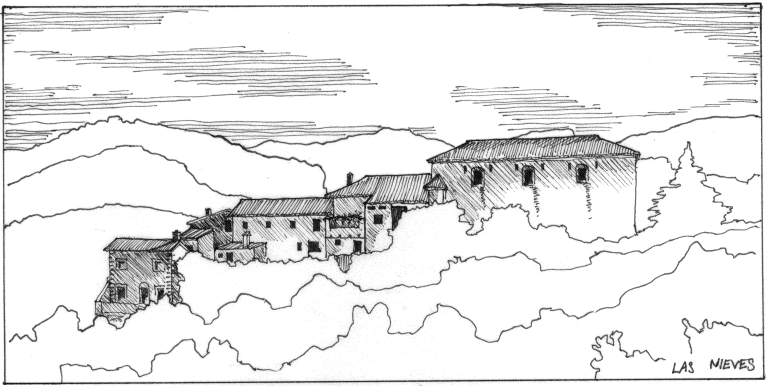
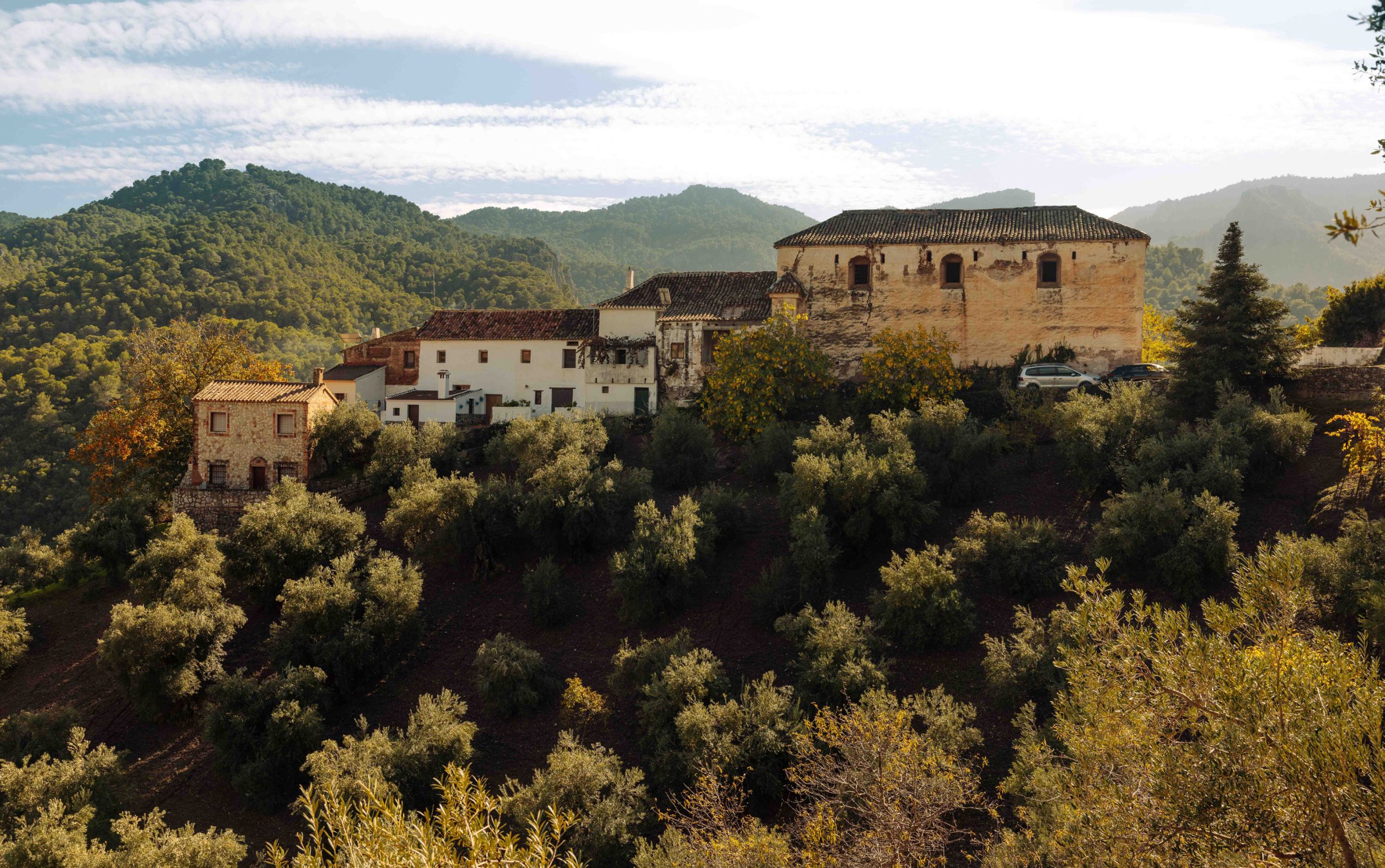
The Desert of Our Lady of the Snows (Las Nieves), like so many of the Holy Deserts, has not been occupied by Carmelites since the revolutions and secularism that swept Europe in the early 19th Century, and was confiscated and sold to private owners by 1835. Much of the suitable area within the Desert walls was turned into olive orchards, and an olive press was built in the former Chapel, while the rest of the monastery was over time divided up into numerous residences, which today number over 30.
A Brief History
Despite the loss of its purpose and even most of its architectural fabric, the Desert remains a beautiful and peaceful place to visit, and retains a built memory of its original grandeur. The architecture of the chapel interior is remarkably intact, though the furnishings and cleanliness that made it suitable for worship have long since been ruined, or dispersed. Interestingly, the land itself was a hermitage even before the Carmelites arrived; unincorporated hermits had been living next to a small sanctuary, which held an icon of Our Lady, and served any pilgrims that came through.
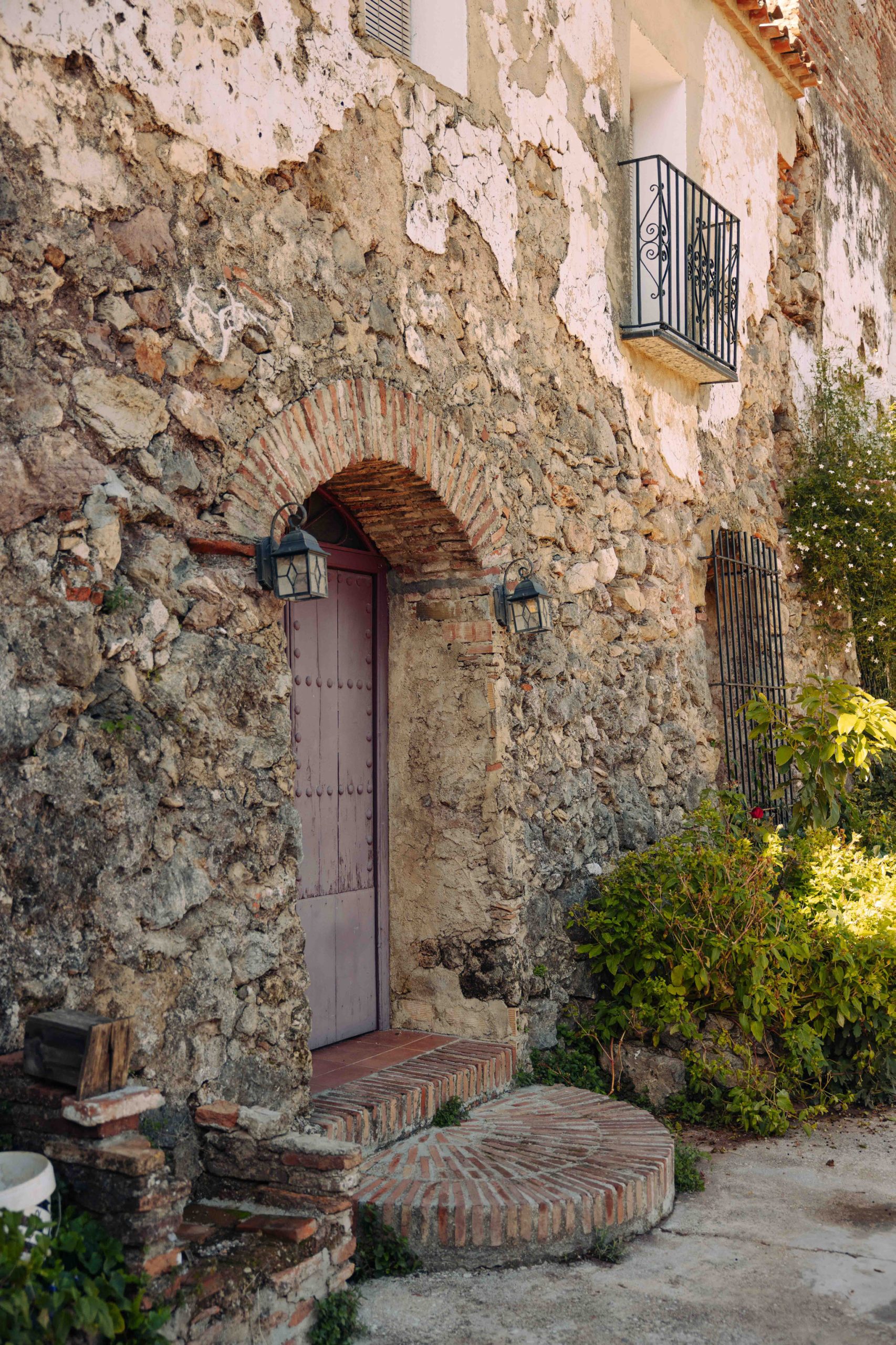
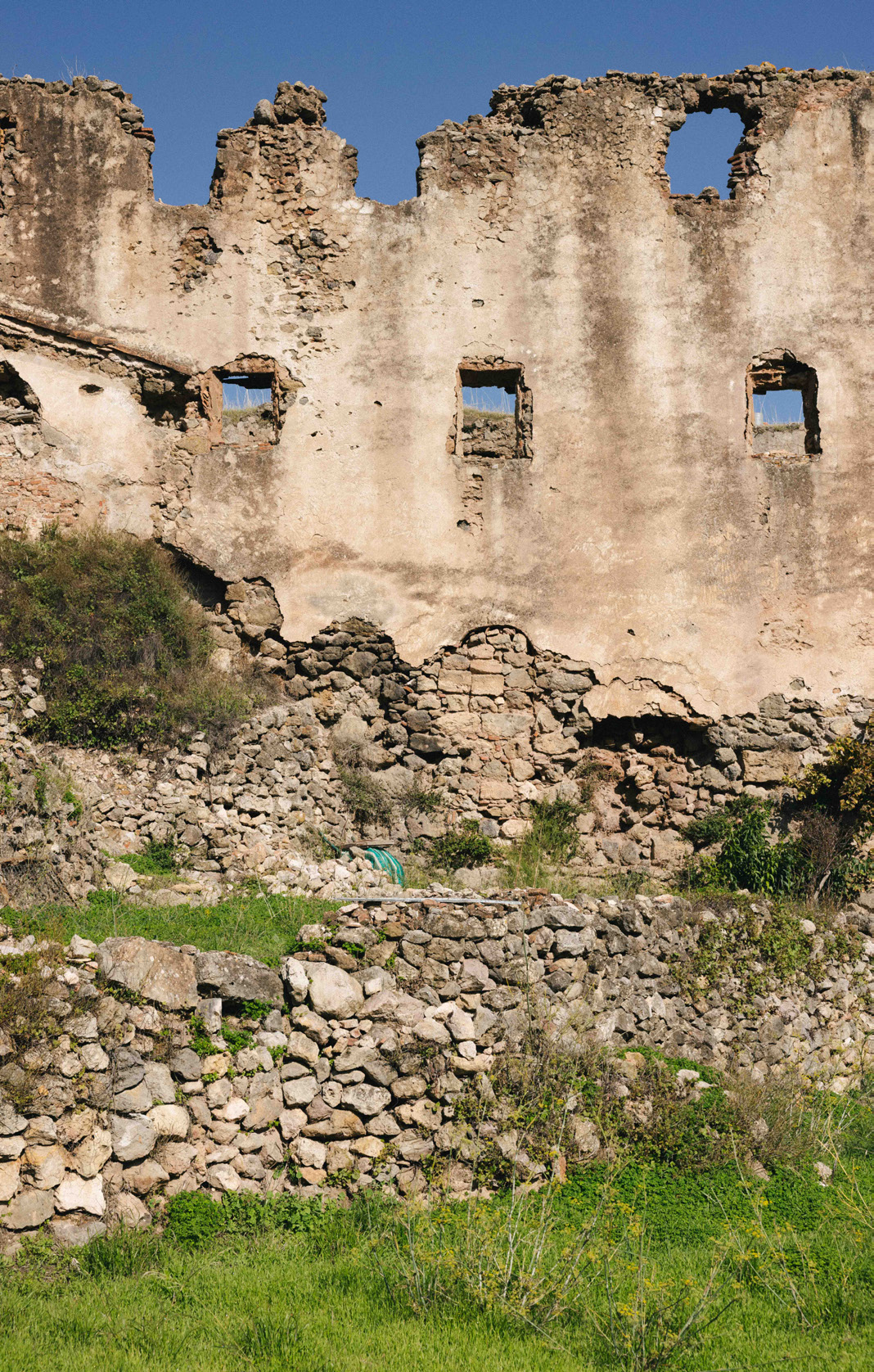
The ruins of the Desert of Our Lady of the Snows, by their very existence after 400 years of buffeting by the elements, demonstrate a robust and durable architecture. The bricks, cut stone, and rubble stone that make up the wall are clearly visible where the finish plaster has worn away. The subdued earthen tones of these structural materials blends pleasantly with the more vibrant oranges of the terra cotta roof tile. However, in its original construction, the monastery and all of the hermitages would almost certainly have been finished with a clean, light colored plaster.
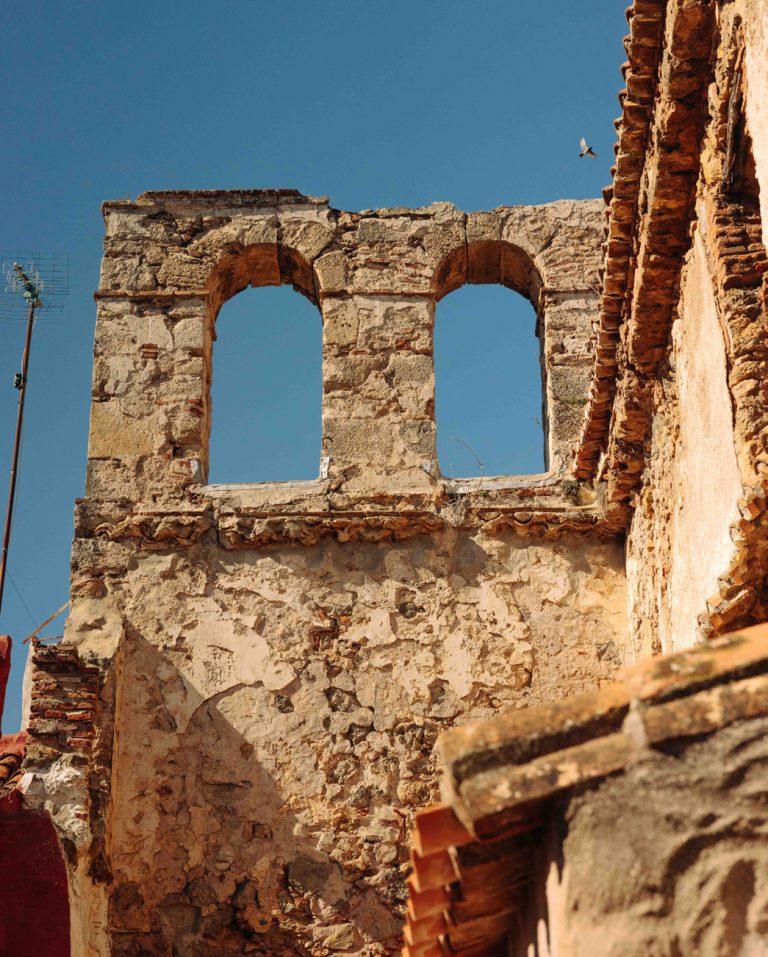
Ruins of Bellcote
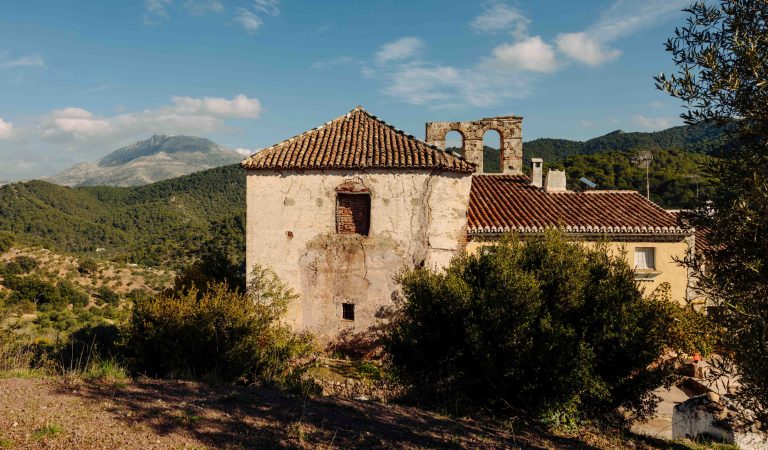
Monastery Chapel and Bellcote
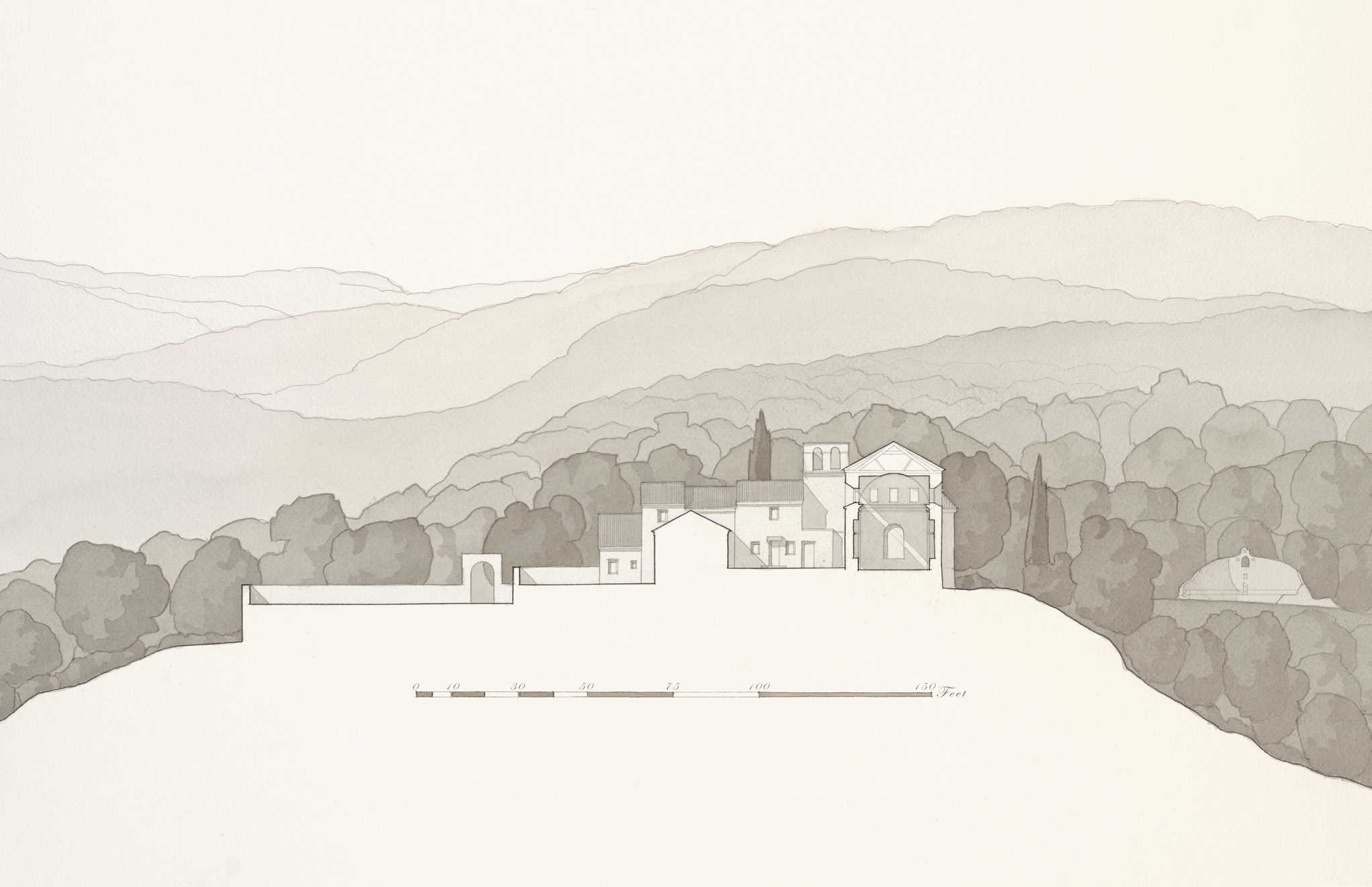
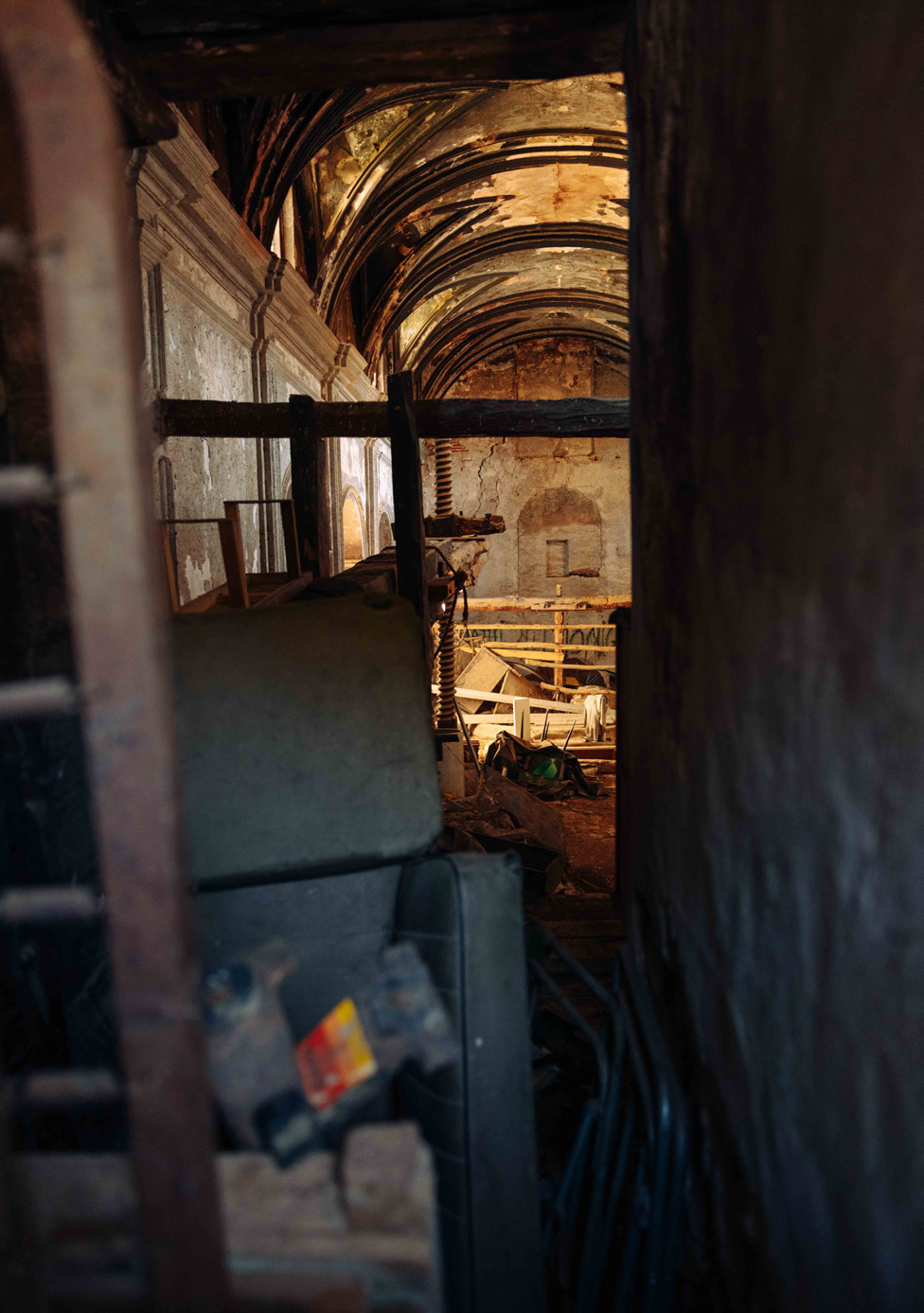
The chapel, despite its profane use in recent generations as the processing center for the olives that dot the hillside, remains the most intact portion of the monastery. However, the most ornate and sacred qualities are found inside. Barrel vaulting pierced by frequent lunettes and set upon an intricate plasterwork of columnar pilasters and entablature make it a highly articulate space. On the exterior, only the much more grand massing and bellcote indicate the import of this corner of the monastery. While its sacred heritage can never be totally forgotten, the Desert is now a patchwork of old and new, remnant and ruin; both preserved and effaced by the current use of the monastery and hinterland.
“No sooner had the first Desert been established in Bolarque than the province of Andalusia was enriched by a similar hermitage under the name of Nuestra Señora de Las Nieves (Our Lady of the Snows). This title has nothing to do with the celebration on August 5th in honor of the dedication of the Basilica of St. Mary Major in Rome. It was, on the contrary, the title of a miraculous image venerated for centuries in the small sanctuary, attached to a hermitage in Sierra de Ronda, in the South of Spain, nine leagues from Málaga, eight from Gibraltar, and three from Ronda.
Surrounded by luxurious vegetation where the Chilean Pine (Araucaria imbricata) is most remarkable – as it is very rare in Europe – became the ornament of nearly every English garden, watered by streams that led to a few small lakes, protected by the mountains against a strong North wind, enjoying the amazing view of the Mediterranean, such was the Eden that, following monastic terminology, was to be called the Desert. Meanwhile, it was not the beauty of nature that attracted most priests but the supernatural favors that the Holy Virgin Mary lavished there. She provided an eloquent testimony of many ex-votos, crutches, wax hearts, and iron chains hung by the Christians repatriated from Tunisia. No matter how one got to this blessed sanctuary, he did not hesitate to cross the mountains on dangerous paths covered in snow during the winter. That is where the name “Nuestra Señora de Las Nieves” originated. The chronicle of the Order tells of many graces obtained since the arrival of the Carmelites, especially during the droughts, so disastrous in the Southern countries. …
After the death of Pierre Ugarte, the hermitage of Las Nieves fell into ruins. The life of the hermits had not been sufficiently regulated, discipline was lacking, and the Bishop was thinking of suppressing the institution. But just then, he met the Discalced Carmelites and offered them the hermitage. Father Anthony of Jesus (of Heredia), who together with Father St. John of the Cross, who had been the first to follow our Holy Mother and who was now provincial ofAndalusia, came in person – despite being over 80 years old – to evaluate the place, after which he gratefully accepted the episcopal offer.
Some difficulties were easily overcome so that the Order was able to take possession of Nuestra Señora de Las Nieveson February 26, 1593...
...from 1598 the hermits’ life accelerated. Neighboring lands were bought, the monastery was built according to the rules, the church was consecrated, and the strict observance was inaugurated in 1600. It is impossible to know what immense good resulted for the individuals and for the whole province. Suffice it to say that the number of candidates for the Desert increased so that often one had to wait several years for a free room.
Our chroniclers have reported several very edifying features that will give us an idea of the heroic virtues practiced in this holy house. It is known that the observance of silence is an infallible means of measuring the extent of monastic virtues, for if the interior man is united with God he willingly withdraws from human commerce. We shall see to what extent this virtue reigned in the holy Desert of Nuestra Señora de Las Nieves.
It is said of a certain priest that for 21 years he never broke the silence except on the occasion of lectures where conversation is not only permitted but obligatory....
...Let us not forget the example of a truly heroic silence. One of the hermits, working in the garden of the Desert a considerable distance from the monastery, was bitten by a venomous snake. There were several brothers in the nearby area but he did not want to break the silence; however, they could not understand the signs he was giving them. He managed to get to the monastery and show his swollen foot to the Prior. As a reward for his loyalty to the rule, the fatal result of the bite did not happen right away but more than a year later.”
From The Holy Deserts of the Discalced Carmelites by Friar Bruno Mary of the Holy Cross, O.C.D. (Benedict Zimmerman)
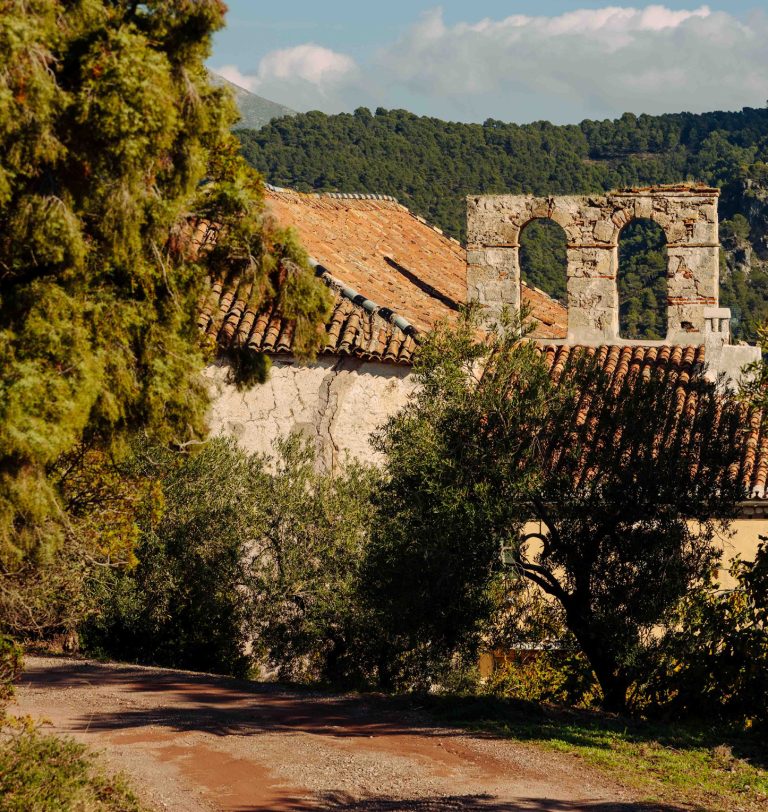
Chapel Roof and Bellcote
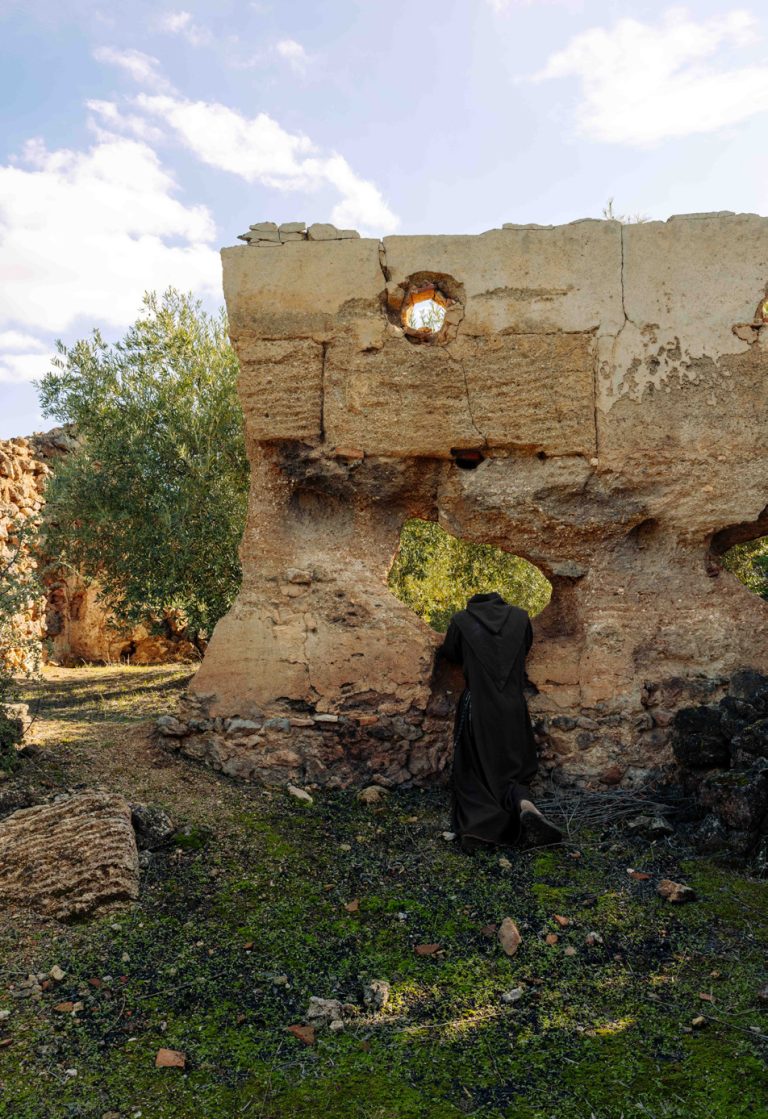
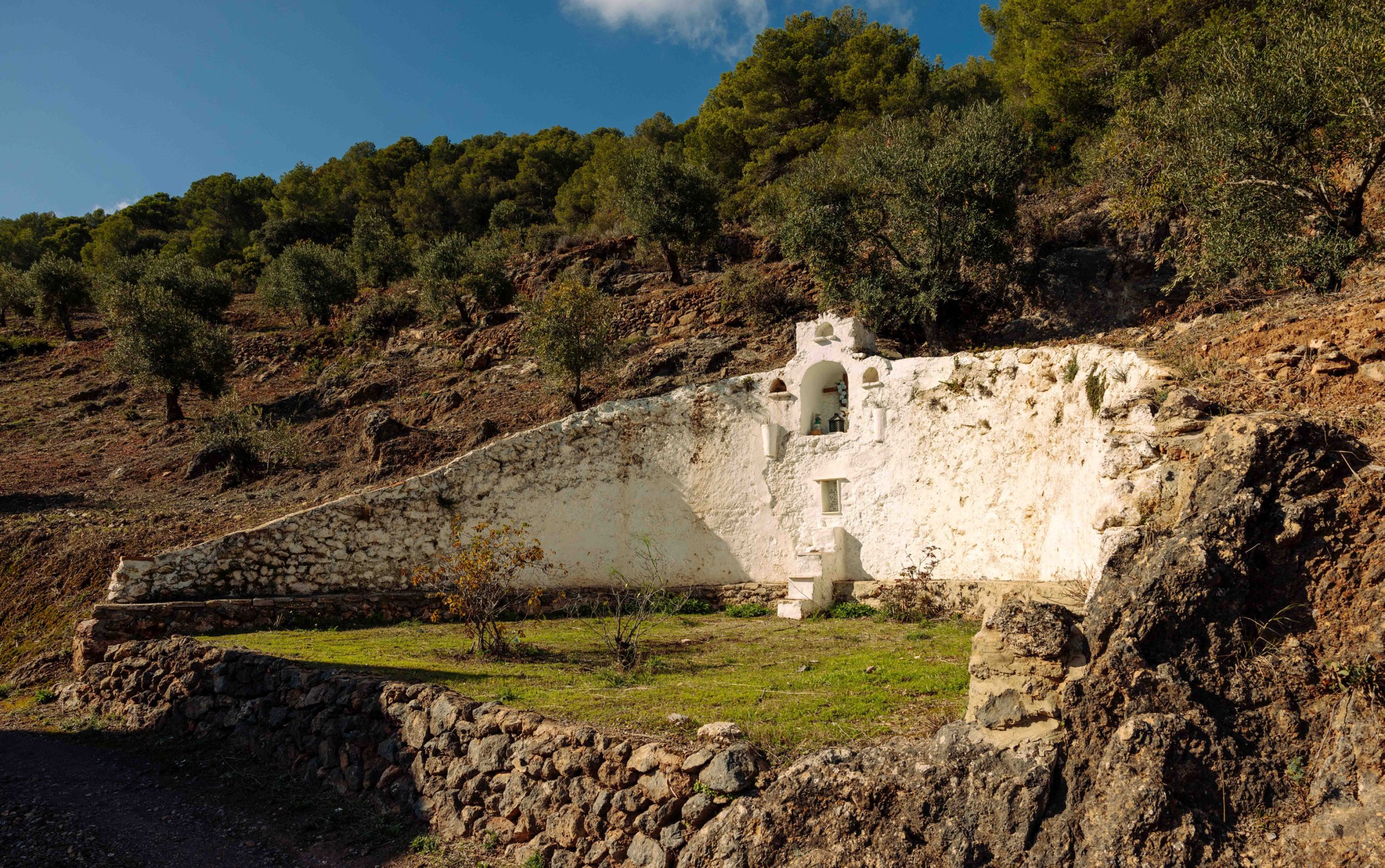
St. Mary Magdalene Hermitage Ruins
A hermit kneels in reverence at the ruined St. Mary Magdalene hermitage.
Desert Sitemap
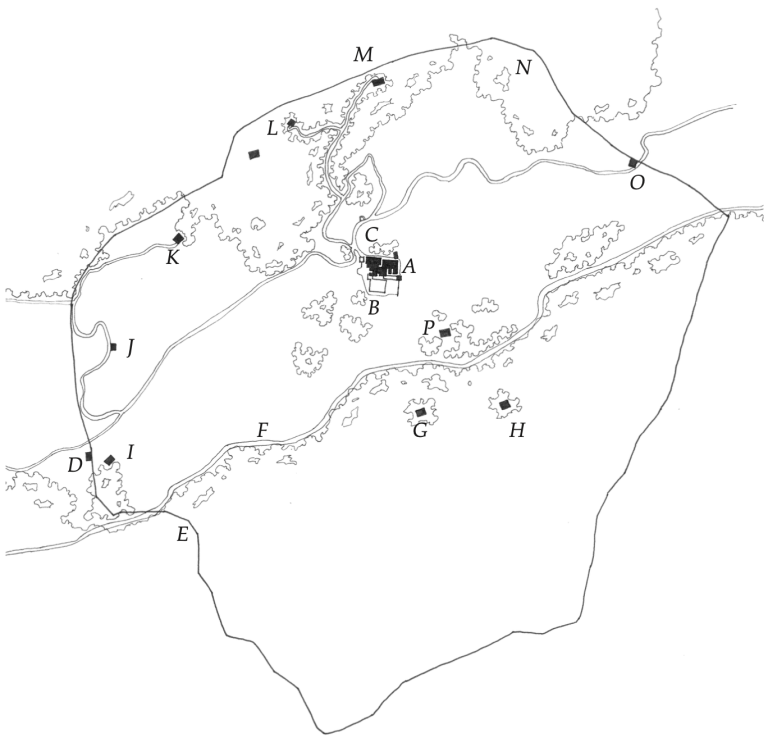
This map shows the original sites of the Desert of Las Nieves, though many more residences and farm buildings have been constructed in the present day. In addition, numerous caves would likely have been occupied, near the banks of the arroyo, and in the southern half of the Desert. The hermitage locations and names were recorded with the assistance of David Campos Vera, a local architect who has made it his life’s work to document the Desert and to whom the Discalced Hermits and authors owe a debt of gratitude.
Photo Gallery
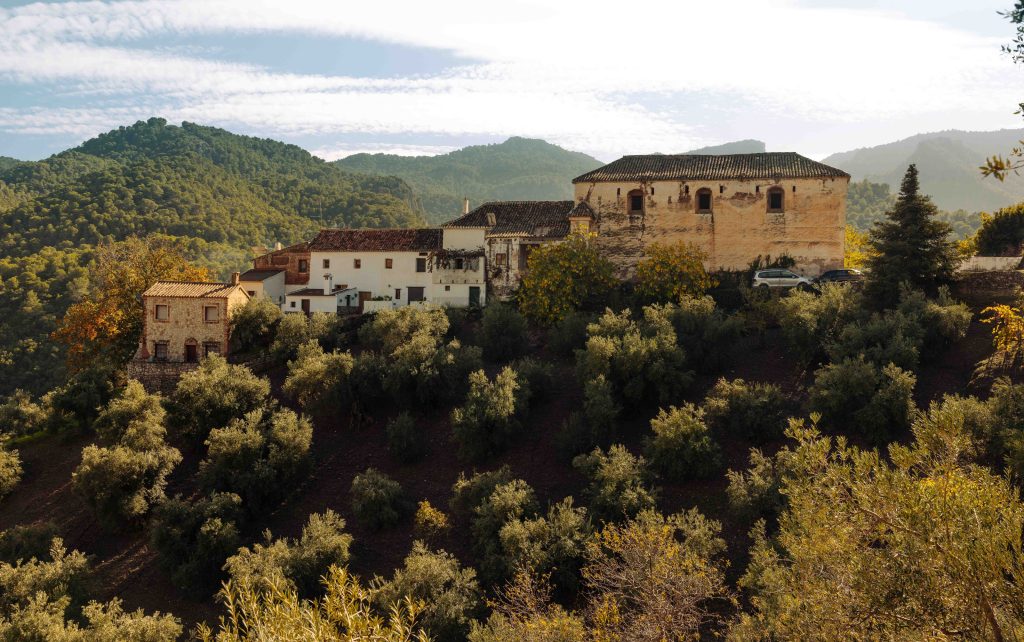
The monumental volume of the chapel rises both taller and higher due to its position at the northwestern corner of the monastery hillock. After the chapel was put to profane use as an olive press, it was abandoned. Now, its aged stone walls stand in stark contrast to the more frequently maintained apartments and casitas on the site. Beyond, the mountains of the Sierra de Las Nieves separate the Desert from inhabited areas, as they have for many hundreds of years.
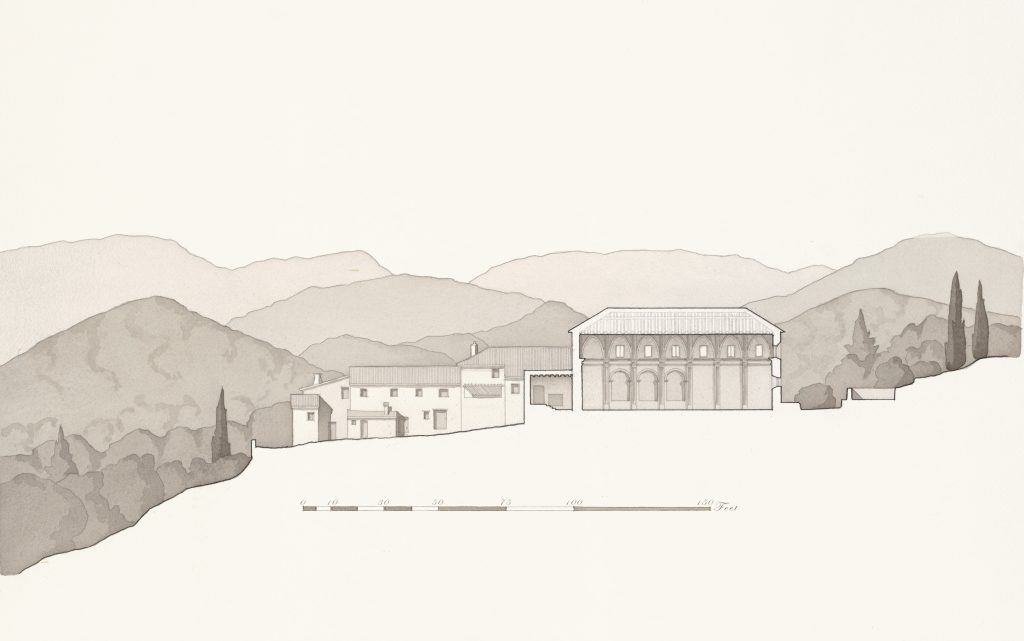
The monastery chapel retains pieces of its former glory in the form of ribbed vaults, giant order pilasters, and fornix arches. Across from the chapel, a fresh water cistern lies at the base of the upper slopes. To the left, the original walls of the monastery are still discernible underneath the accretions of the past two hundred years. A retaining wall allows for a modern vehicular access road that wraps down to the lowest corner of the monastery to the southeast.
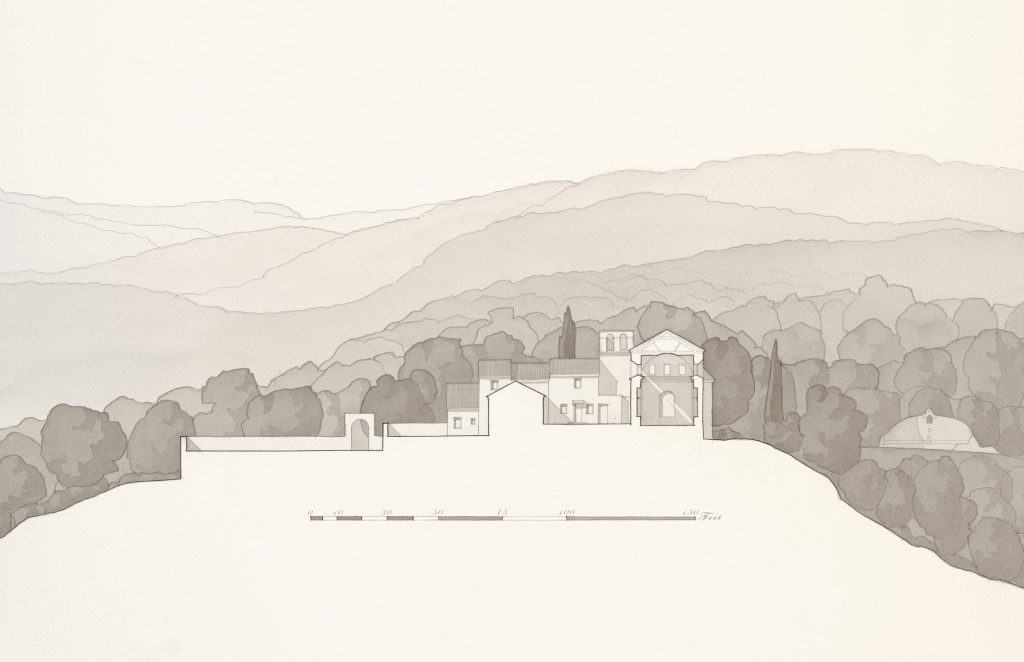
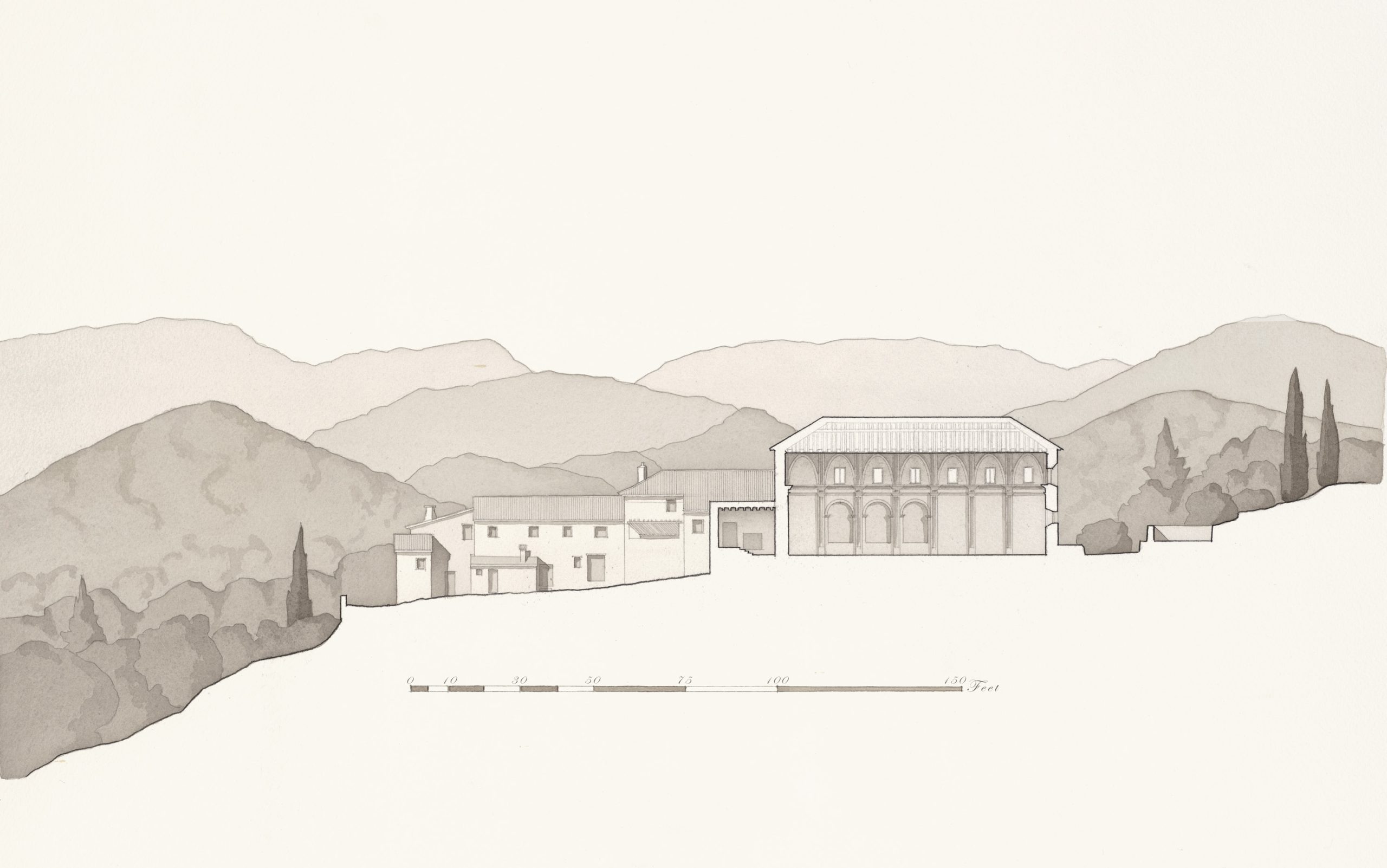
The north south section through the monastery shows the well proportioned cross section of the chapel. To the immediate left, the original cloister has been left as a courtyard. On the far left is the cemetery terrace, while on the far right the half round of the summer recreation, built into the hillside, is visible in the distance.
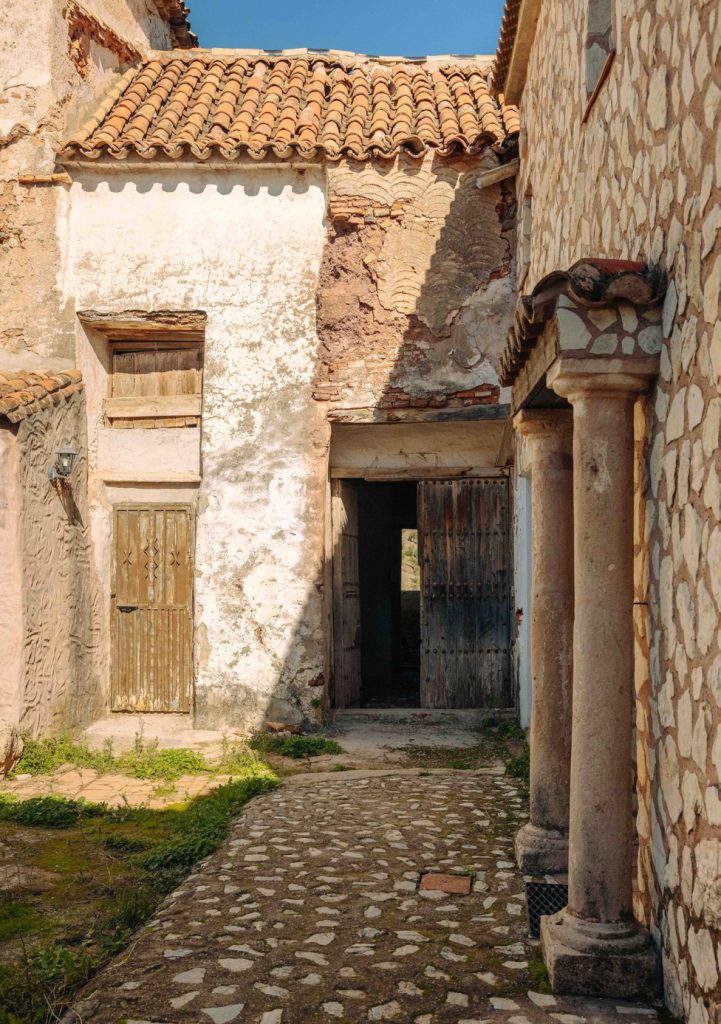
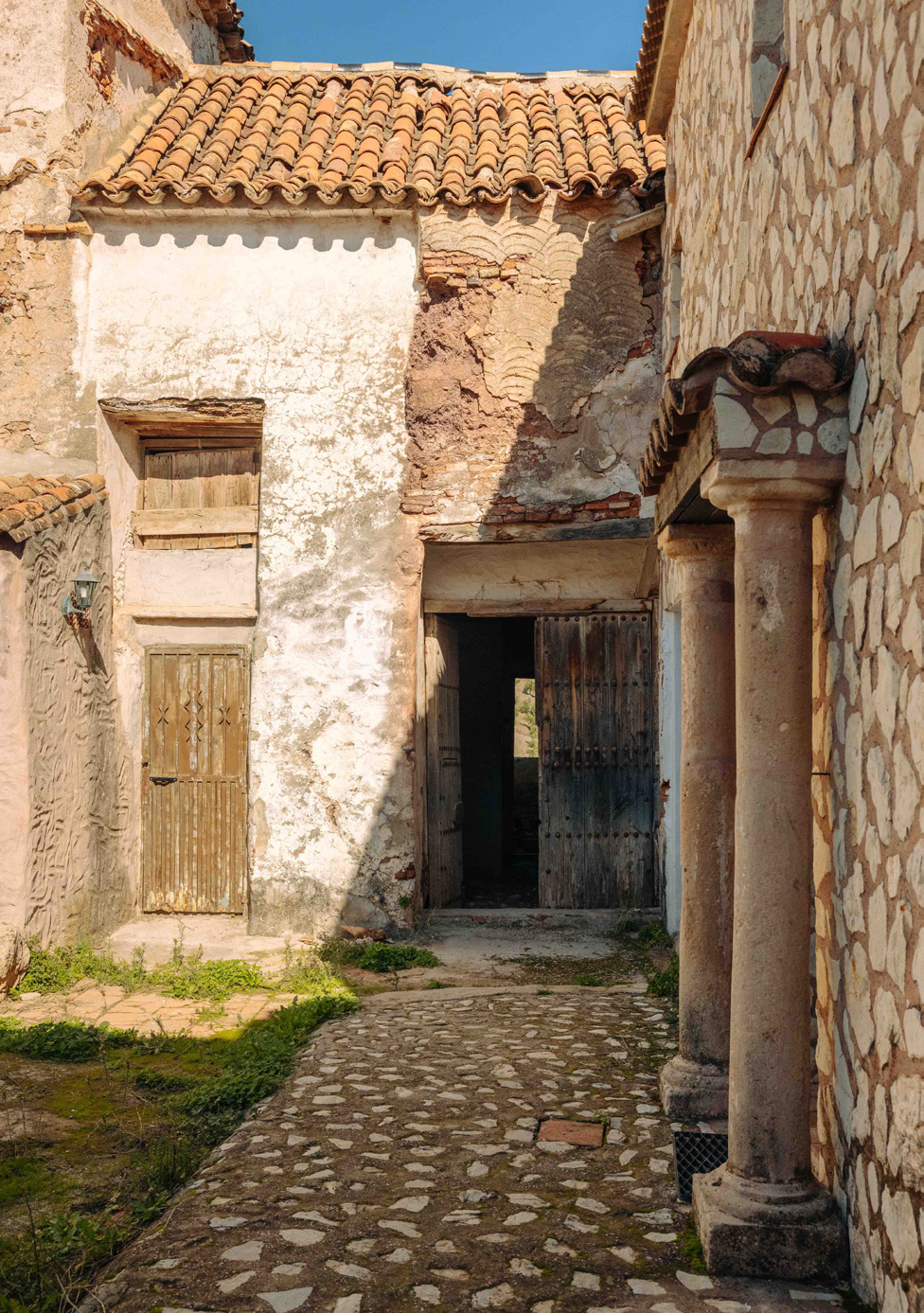
The courtyard adjoining the chapel follows roughly the original lines of the cloister.
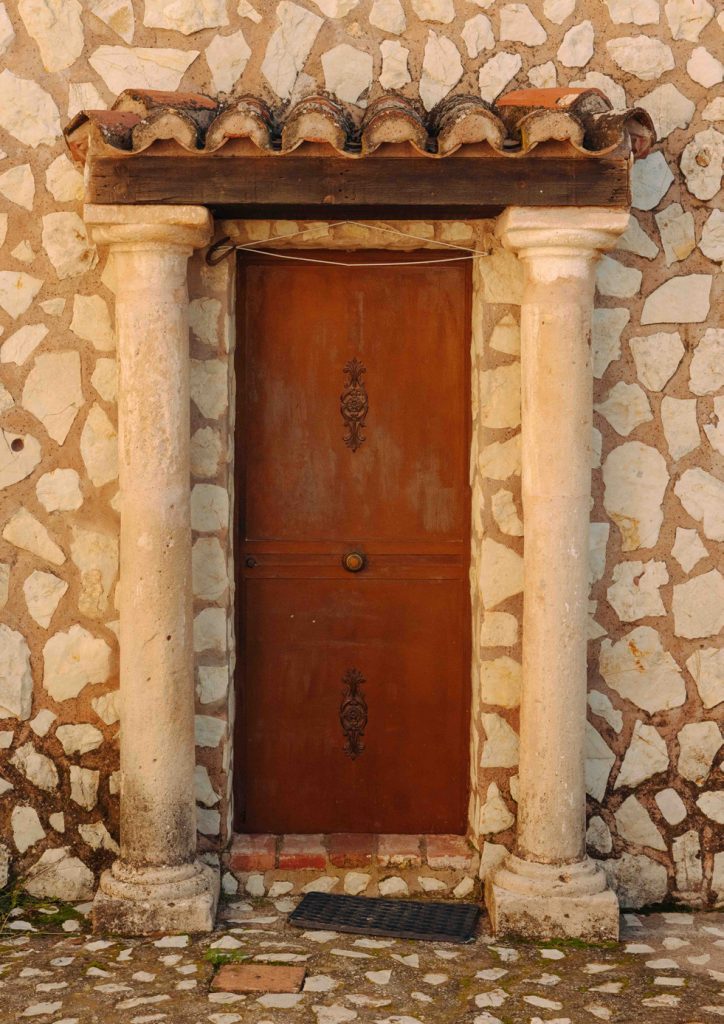
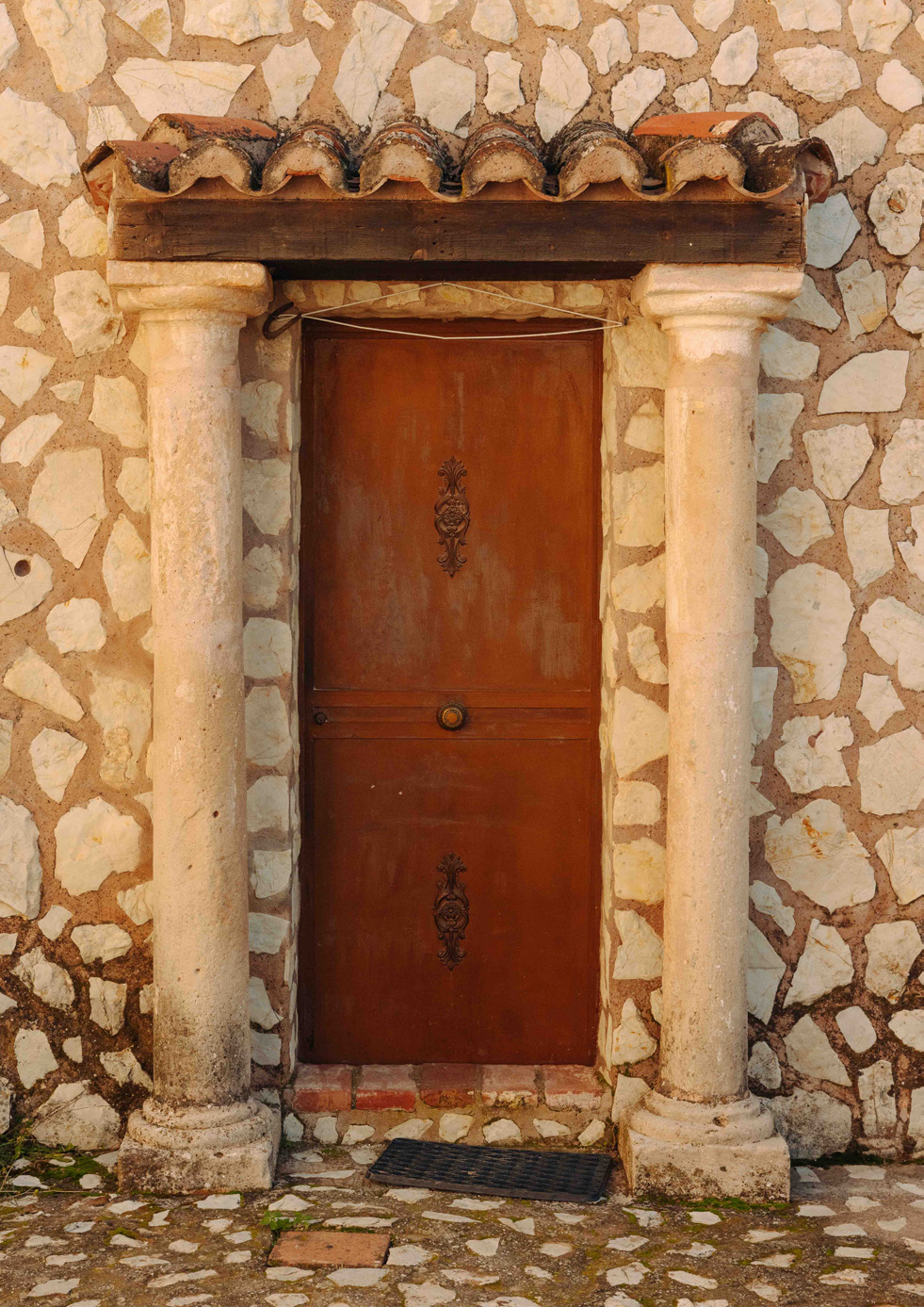
One does not know whether to laugh or to cry upon seeing the porch columns of one of the contemporary apartments; both the top half and the bottom half are composed of bottom halves and bases from the original cloister columns.
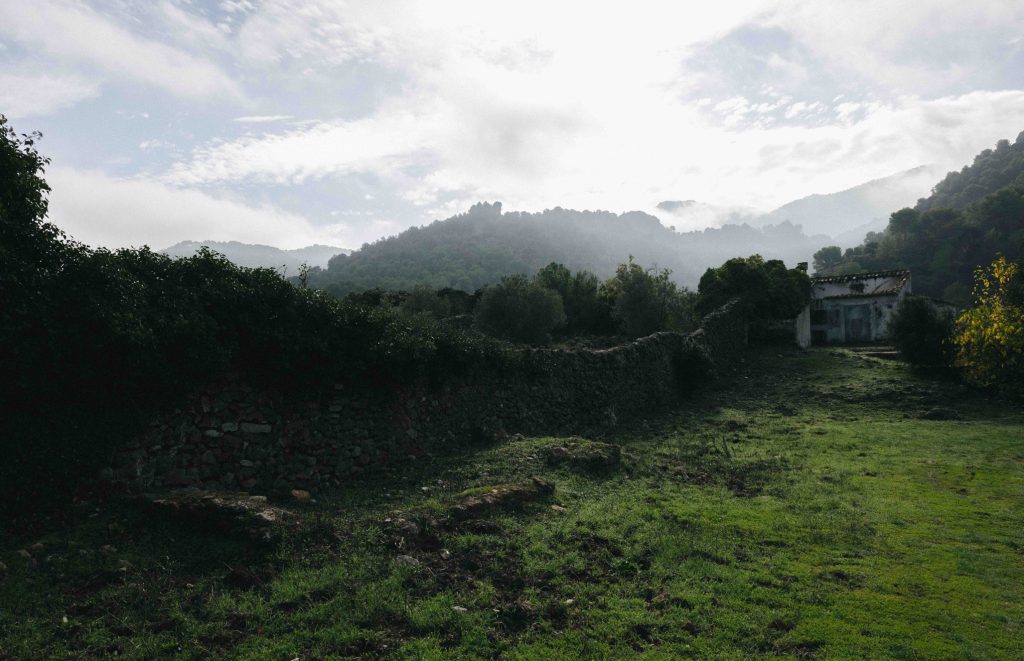
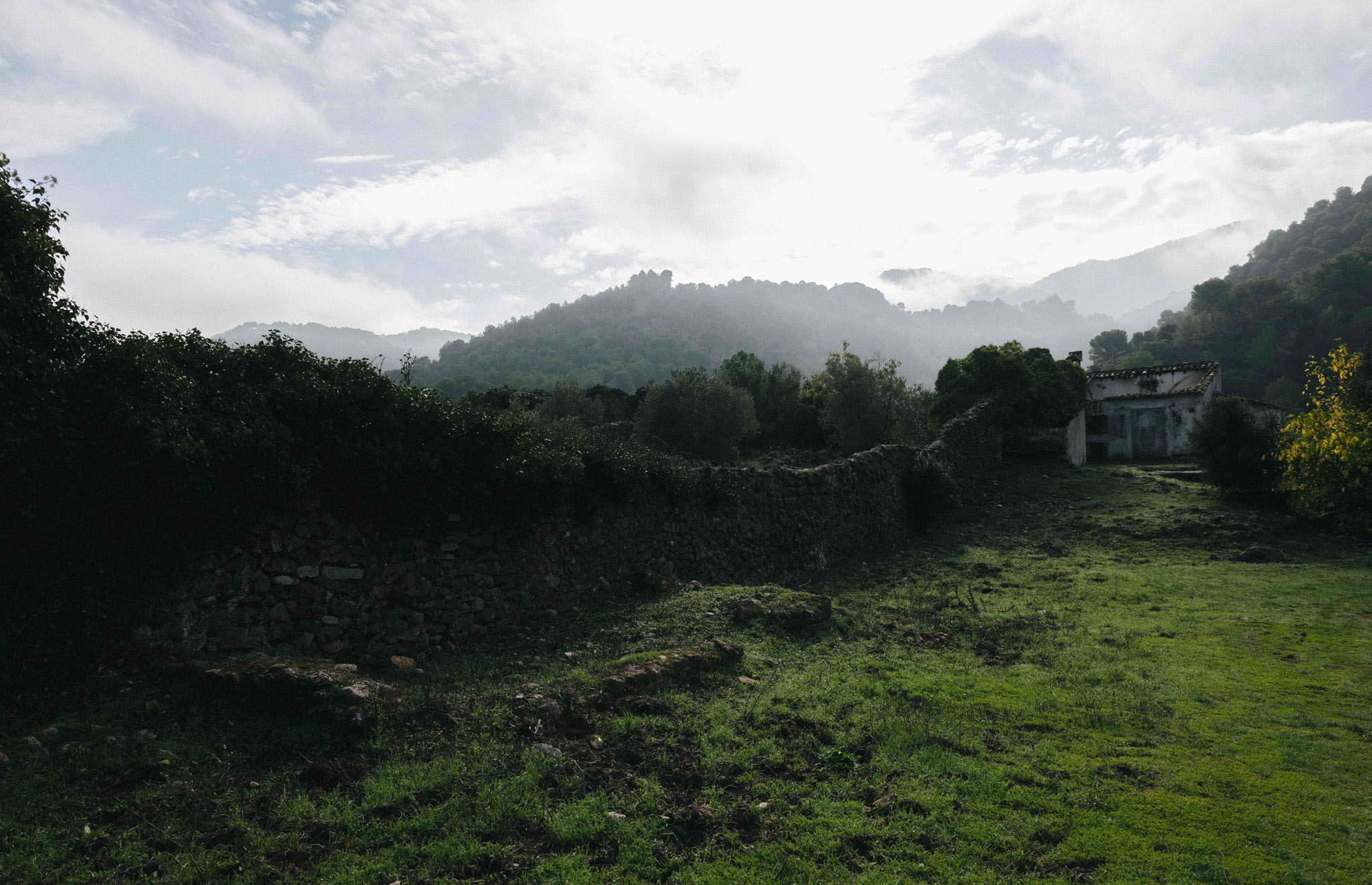
The Desert wall at the western entrance remains, though steadily diminished by the elements and flora. In the foreground, the ruined foundations of the porter’s cell is visible. In the distance, a more contemporary agrarian structure, having leaned on the Desert wall of yesteryear, now lies in ruins itself.
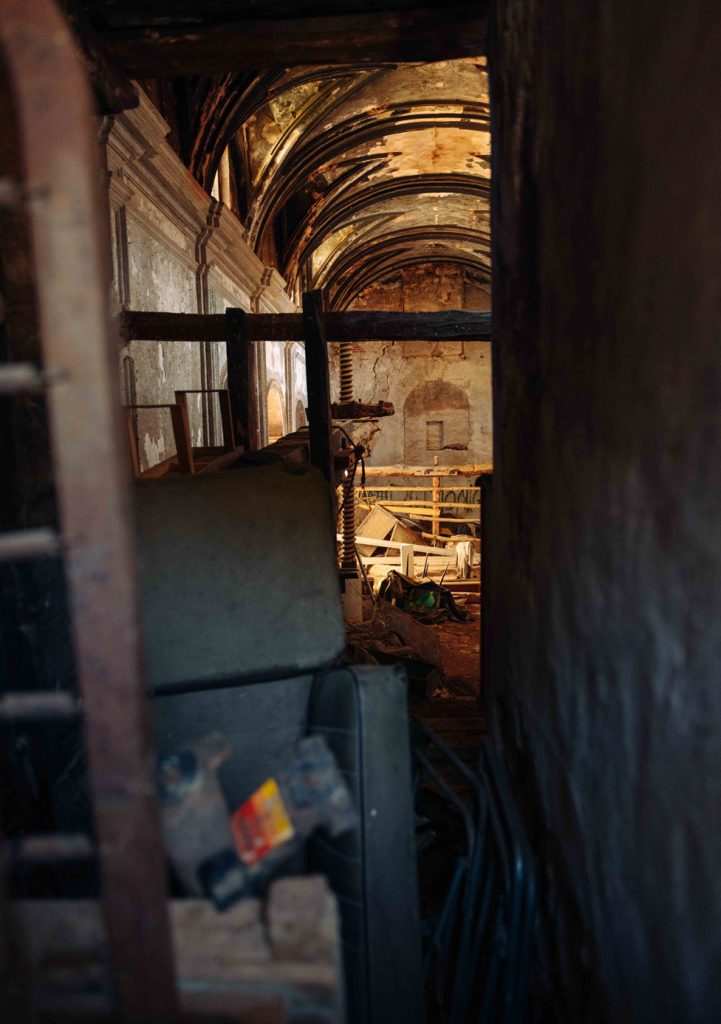
The chapel interior is filled with the debris from generations as a working olive press, now abandoned. Only the grand vault and classical pilasters and entablature remain from its former glory.
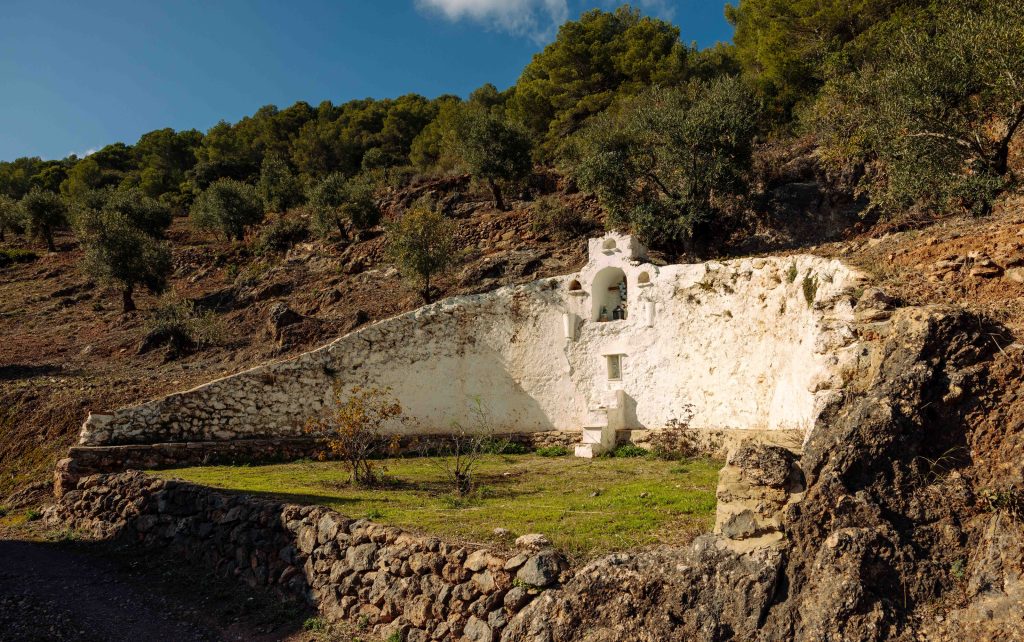
The summer recreation, due to its almost minimalist simplicity, is perhaps the best preserved element from the original Desert construction. The open air structure was a place for the hermits to convene for conversation or spiritual collation, though short and infrequent (at most, one hour a week). The radius geometry would have assisted the transmission of sound across the ‘room’, which is 30’ across at its widest point. The devotional niches are filled to this day with pious objects.
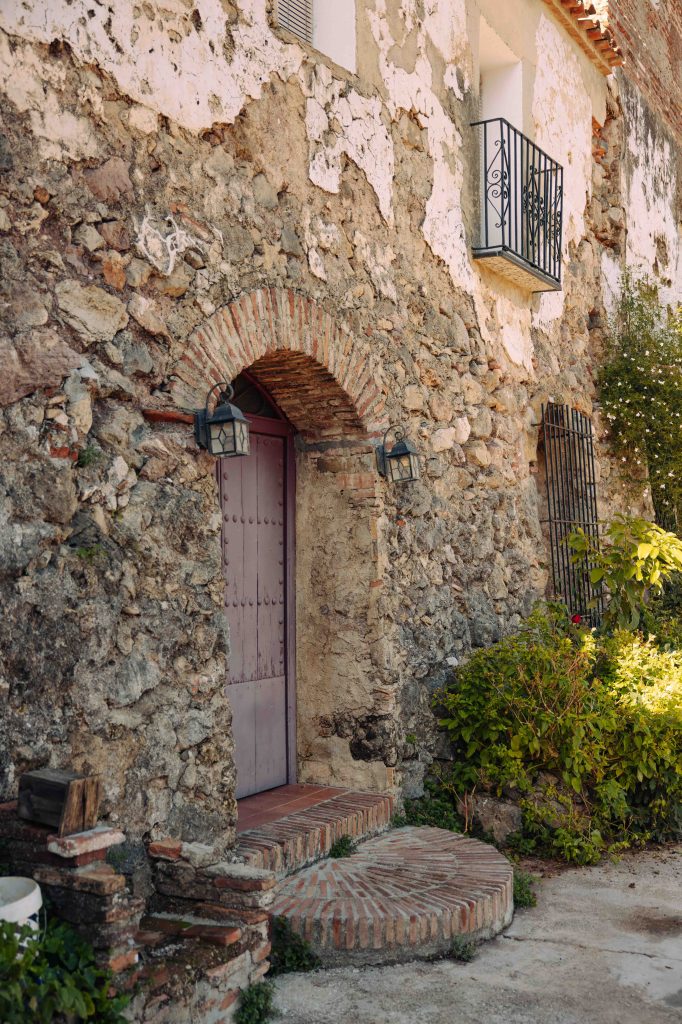
The eastern wall of the monastery overlooks the valley carved out of the mountains by the Arroyo del Convento. The battered, field stone walls have been stripped of their plaster wherever they were unprotected from centuries of rain. New inhabitants, more like hermit crabs than hermits, now make their home behind these doors and windows.
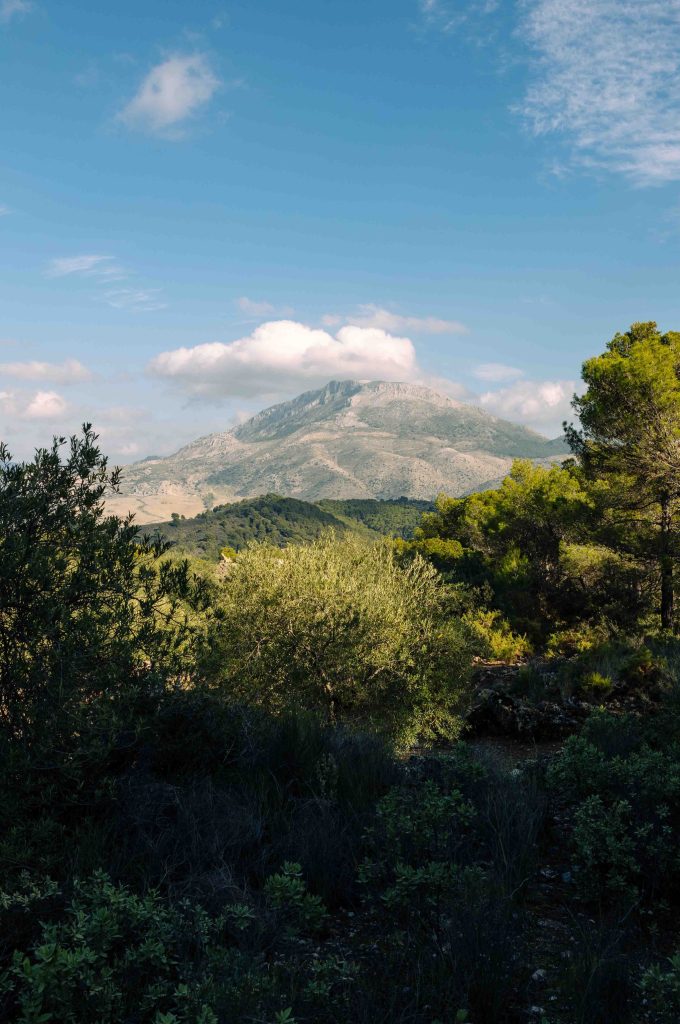
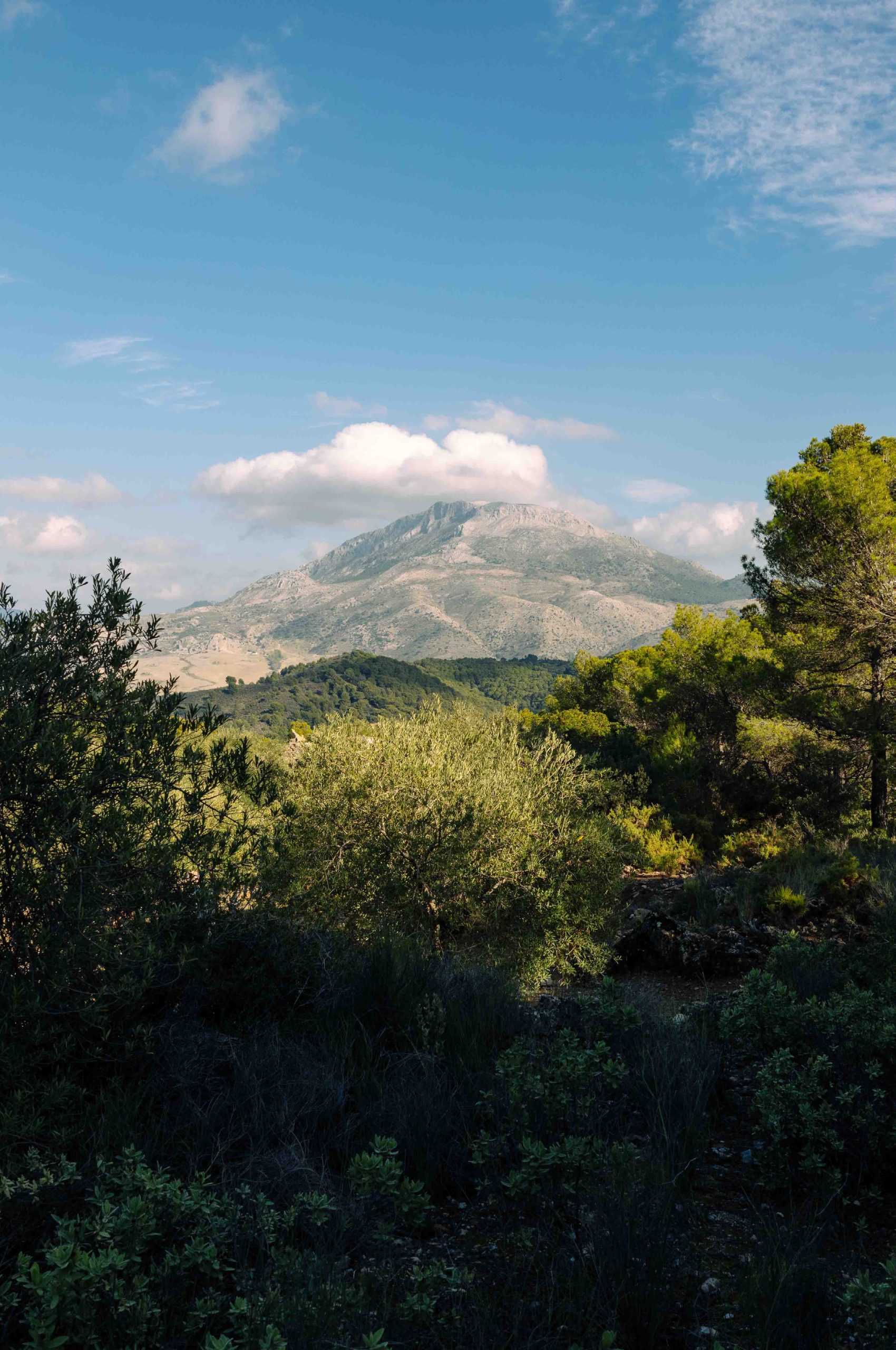
From the quiet valley of the Desert, the majestic summit of the Tajo del Cabrillo (literally, ‘goat cliff’) rises into view in the distance. Such a grand vista is not a rare sight in the Deserts, commonly located in places of great natural beauty.

Photographed and Documented by
The Discalced Hermits of Our Lady of Mount Carmel
A Roman Catholic religious community.